Did you know pond scum produces half the oxygen you breathe?
Prompted by NerdSip Explorer #3444
Discover the hidden powers of algae.
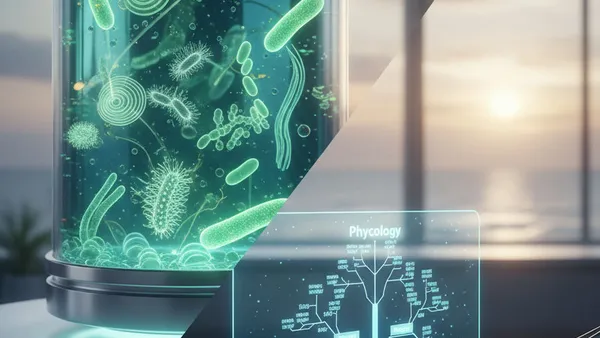
Welcome to phycology—the scientific study of algae! When you hear the word 'algae', you probably picture the green slime floating on top of a neglected swimming pool or a stagnant pond. But this fascinating branch of science is about so much more than just pond scum. It is the study of some of the most vital organisms on Earth.
Algae are incredible, plant-like organisms that live primarily in aquatic environments. They range from microscopic single cells that float invisibly in the ocean to massive, sprawling seaweed forests that stretch for miles. Despite their simple appearance, they are the unsung heroes of our planet's ecosystems, supporting nearly all marine life.
Unlike regular land plants, algae don't have true roots, stems, or leaves. They do not need complex plumbing systems; instead, they simply absorb everything they need—like water, sunlight, and nutrients—directly from the surrounding water. By diving into phycology, you are about to discover how these bizarre, rootless wonders secretly run the world!
Key Takeaway
Phycology is the study of algae, which are diverse aquatic organisms that lack true roots, stems, or leaves.
Test Your Knowledge
What exactly does a phycologist study?
Take a deep breath. Now, say a big 'thank you' to algae! Most people mistakenly think that towering trees and dense rainforests are the primary source of the oxygen we breathe. While trees are certainly awesome, the true heavy lifters of our atmosphere are actually floating right now in the ocean.
Phytoplankton, which are microscopic floating algae, are responsible for producing roughly 50% of the oxygen in Earth's atmosphere. They accomplish this massive feat through photosynthesis, just like land plants. They absorb sunlight and carbon dioxide from their environment, and in return, they release fresh, breathable oxygen.
This means that every second breath you take is directly provided by microscopic ocean slime! Without these tiny underwater powerhouses tirelessly working around the clock, life on Earth as we know it simply couldn't exist. They are quite literally the invisible lungs of our planet.
Key Takeaway
Microscopic ocean algae called phytoplankton produce roughly half of the oxygen in Earth's atmosphere.
Test Your Knowledge
Approximately how much of Earth's oxygen is produced by microscopic algae?
In the world of phycology, size definitely matters. Algae are incredibly diverse, but scientists generally split them into two main, easy-to-understand categories based on their size: microalgae and macroalgae.
Microalgae are exactly what they sound like—the tiny guys. They are mostly single-celled organisms that you can only see by looking through a microscope. These are the microscopic workers floating in massive invisible clouds across the world's oceans, quietly pumping out oxygen and serving as the base food source for tiny sea creatures.
On the flip side, we have macroalgae. You probably already know them by their much more common name: seaweed. These are multicellular giants that you can easily see with the naked eye. Some spectacular forms of macroalgae, like giant kelp, can grow to be over 100 feet long! Whether completely microscopic or impressively massive, they all belong to the amazing algae family.
Key Takeaway
Algae are categorized into microscopic forms (microalgae) and large, highly visible forms like seaweed (macroalgae).
Test Your Knowledge
What is the common, everyday name for macroalgae?
If you have ever taken a walk along a sandy beach, you have almost certainly seen washed-up seaweed. But did you know that these larger plants—known as macroalgae—are scientifically categorized by their colors? The big three categories are green, red, and brown algae.
Green algae mostly live in shallow, sunlit freshwater or right near the coast. They get their bright, vibrant color from a pigment called chlorophyll, which is exactly the same green pigment found in the grass in your yard! Brown algae include the massive kelp forests found in colder ocean waters. They use special brown pigments to absorb whatever sunlight manages to filter through the moderately deep water.
Red algae are the ultimate deep-sea divers of the seaweed world. Their unique red pigments allow them to absorb the very faint blue light that reaches deep down into the ocean. This amazing adaptation allows them to survive in darker waters where green algae would completely starve.
Key Takeaway
Macroalgae are grouped into green, brown, and red categories based on color pigments that help them absorb light at different depths.
Test Your Knowledge
Which type of algae is best equipped to survive in the deeper, darker waters of the ocean?
Imagine a tiny, living organism that resides completely inside a self-made, microscopic glass house. Welcome to the absolutely beautiful world of diatoms! Diatoms are a very special and incredibly common type of microalgae found in almost every single body of water on Earth.
What makes diatoms so incredibly unique is their cell wall. Instead of regular, squishy plant material, diatoms build their outer shells out of a mineral called silica—the exact same raw material used to manufacture glass. When viewed under a microscope, these glassy shells look like beautifully intricate, perfectly symmetrical jewels or glowing snowflakes.
When diatoms eventually die, their heavy glass shells sink directly to the bottom of the ocean or lake. Over millions of years, these tiny shells pile up into a thick, crumbly white rock called diatomaceous earth. We actually harvest this ancient algae dust today to use in everyday products like toothpaste, water filters, and natural garden pest control!
Key Takeaway
Diatoms are a type of microscopic algae that construct intricate, beautiful cell walls entirely out of glass-like silica.
Test Your Knowledge
What is the cell wall of a diatom famously made out of?
Have you ever seen a viral video of ocean waves crashing onto a dark beach at night, glowing with a bright, magical neon-blue light? That breathtaking natural light show is actually brought to you by a special type of microalgae called dinoflagellates.
This glowing phenomenon is called bioluminescence. It is the result of a rapid chemical reaction happening right inside the tiny algae cells that actively produces light. Scientists believe that these dinoflagellates primarily glow as a clever defense mechanism. When the water is violently disturbed by a swimming predator (or even a splashing human), the algae flash brightly to startle the attacker!
It operates basically like a sudden, underwater burglar alarm. Some marine researchers also think the sudden flash of light serves to attract even bigger predators to come and eat the creature that is currently trying to eat the algae. It is a brilliant, glowing survival strategy that makes our oceans look like a futuristic sci-fi movie.
Key Takeaway
Bioluminescence is a chemical reaction inside certain algae that creates light, often used to startle predators.
Test Your Knowledge
Why do dinoflagellates primarily glow when the water around them is disturbed?
While most algae are incredibly beneficial to our planet, not all of them are friendly. Sometimes, usually due to exceptionally warm water and an unnatural overload of nutrients from human pollution, microalgae reproduce completely out of control. This massive, rapid population explosion is known as an algal bloom.
When certain species of dinoflagellates bloom, they multiply so densely that they literally dye the ocean water a murky, rusty red or brown color. This event is famously known as a red tide. But the strange color isn't the real problem—the poison is.
During a severe red tide, these specific algae release powerful, natural toxins straight into the water. These invisible toxins are strong enough to paralyze fish, poison edible shellfish, and even cause serious breathing problems for humans just hanging out on the beach. It is a stark reminder that even microscopic organisms can pack a deadly punch when an ecosystem loses its delicate balance.
Key Takeaway
A red tide is a massive, out-of-control bloom of algae that releases dangerous toxins into the ocean environment.
Test Your Knowledge
What is the primary danger associated with a red tide event?
You might be sitting there thinking, 'Okay, algae are neat, but they don't really affect my daily life.' Think again! If you brushed your teeth, enjoyed some creamy ice cream, or ordered a sushi roll today, you almost certainly consumed algae.
Many common types of red and brown seaweeds naturally contain special, gel-like substances known as carrageenan and agar. Food scientists absolutely love these natural compounds because they act as incredible thickeners and stabilizers. They are the hidden secret ingredients that keep your ice cream perfectly smooth and prevent the chocolate milk from separating into weird layers in the carton.
Of course, macroalgae are also eaten whole by millions of people around the world every single day. The dark green wrapper holding your favorite sushi roll together? That is a highly nutritious red algae called nori. Algae are packed with vital vitamins, minerals, and proteins, making them a true superfood of the sea!
Key Takeaway
Gel-like extracts from seaweed are widely used to thicken and stabilize everyday foods like ice cream.
Test Your Knowledge
What is the scientific role of carrageenan and agar when added to foods like ice cream?
Imagine wandering through a dense, towering jungle, but completely underwater. That is exactly what it feels like to swim inside a kelp forest. Kelp is a type of giant brown algae that grows in cool, shallow, coastal waters, found most famously along the Pacific coast of North America.
Kelp is famously one of the fastest-growing organisms on Earth; under ideal conditions, some species can grow an astonishing two feet in a single day! To survive, they use little gas-filled bubbles called pneumatocysts. These tiny natural balloons act like floaties, keeping their long, leafy blades floating straight up toward the vital sunlight at the surface.
These underwater jungles are incredibly important because they provide crucial shelter and abundant food for thousands of marine animals. Sea otters, fish, crabs, and sea urchins all rely heavily on kelp forests to survive. Just like dense rainforests on land, kelp forests are vital hubs of biodiversity in our oceans.
Key Takeaway
Kelp forests are fast-growing underwater ecosystems that provide a crucial habitat for a vast array of marine life.
Test Your Knowledge
How does kelp manage to keep its leafy blades floating up near the ocean's surface?
As we look forward to the future, phycologists and chemical engineers are teaming up to solve one of the world's absolute biggest problems: global climate change. Incredibly, the answer to our energy crisis might just be pond scum! Scientists are rapidly developing ways to turn algae into a usable biofuel.
Here is how the amazing process works: just like humans store excess energy as fat, some types of microalgae store their energy in the form of natural, energy-dense oils. Under the right conditions, scientists can harvest vast amounts of this algae, extract the valuable oil, and refine it into a green fuel that can actually power cars, trucks, and even commercial airplanes!
The absolute best part? Unlike digging up ancient fossil fuels, actively growing algae absorbs carbon dioxide right out of the air. Plus, algae can be successfully grown in dirty wastewater or on barren wasteland where we cannot grow regular food crops. It is a completely renewable energy source.
Key Takeaway
Scientists are learning to extract natural oils from algae to create an eco-friendly, renewable biofuel.
Test Your Knowledge
Why is algae biofuel considered to be much better for the environment than traditional fossil fuels?
Track your progress, earn XP, and compete on leaderboards. Download NerdSip to start learning.