Free Learning Tools
Focus better, test your knowledge, and discover mind-blowing facts. All free, all in your browser, and there is no account to make.
Updated

A topic picker for when you cannot decide, a timer for when you can, a knowledge quiz, a bias detector, and a random fact generator that has become the most used page on the site. Nothing here asks for an email.
Free Tests
Ten free tests with instant results and no email gate: personality, Enneagram, love language, reaction time, attention span, memory, emotional intelligence, aphantasia, general knowledge and vocabulary. Every result names the exact place you can grow.
Pick a test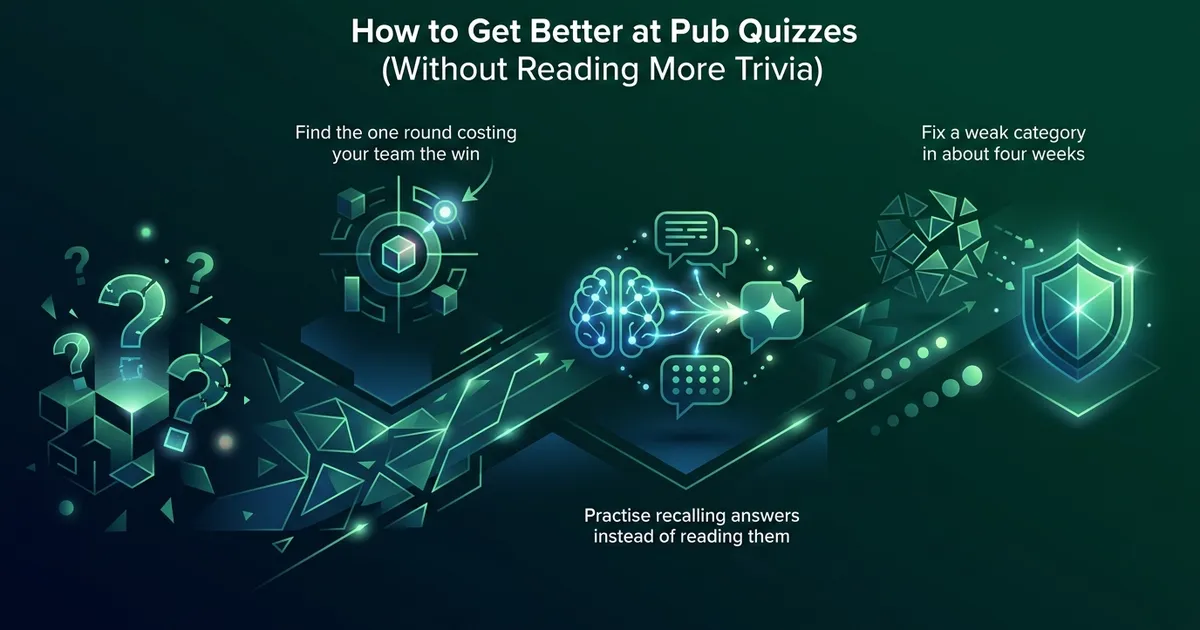
Pub Quiz
500 questions across ten classic rounds, from general knowledge and geography to music, sport and film. Pick your categories, play a scored round, and see a breakdown showing exactly which round is costing you the win.
Play a round
Trivia Questions
Sixty trivia questions with the answers printed underneath, sorted into ten categories, plus a ten-question round you can play in any single category. Built for the American trivia night rather than the British pub quiz.
Read or play
Random Fact Generator
500+ verified facts about science, psychology, history, space, and more. One tap gives you one mind-blowing fact. Filter by category, share with friends, and track how many you've discovered.
Start discoveringRandom Fact Widget
Embed a tiny NerdSip fact generator on a blog, classroom page, or resource list. Choose a theme and category, preview it live, then copy the iframe code with attribution included.
Get the widget
What Should I Learn?
Pick your mood and available time to get three smart topics you can start immediately. Great for bored moments, curiosity sparks, and replacing one more scroll with something that sticks.
Find a topic
How Smart Are You?
20 questions across 10 knowledge domains: Science, Psychology, History, Health, Technology, Nature, Space, Society, Art & Culture, and Philosophy. Get your Nerd Class and a detailed score breakdown.
Take the test
Pomodoro Focus Timer
25 minutes of focused work, 5 minutes to learn something new. The classic Pomodoro technique with a twist: we show you a random brain fact during every break. Track sessions and total focus time.
Start focusing
You vs ChatGPT
10 questions AI famously fails — counting traps, logic riddles, CRT math, and an ARC-AGI pattern puzzle. GPT-4o scores 1/10 on these. Can you beat it? Based on documented benchmark failures.
Take the challenge
ARC-AGI Test
5 original ARC-AGI-style puzzles — the benchmark that stumps frontier AI. Infer a pattern from two examples, then apply it. Humans average 60%. Base AI scores ~0%. Free, no signup.
Test your reasoning
Cognitive Bias Detector
20 real-world scenarios where hidden biases shape decisions. Spot the cognitive bias at play — from anchoring and sunk cost fallacy to the Dunning-Kruger effect. Sharpen your critical thinking.
Spot the bias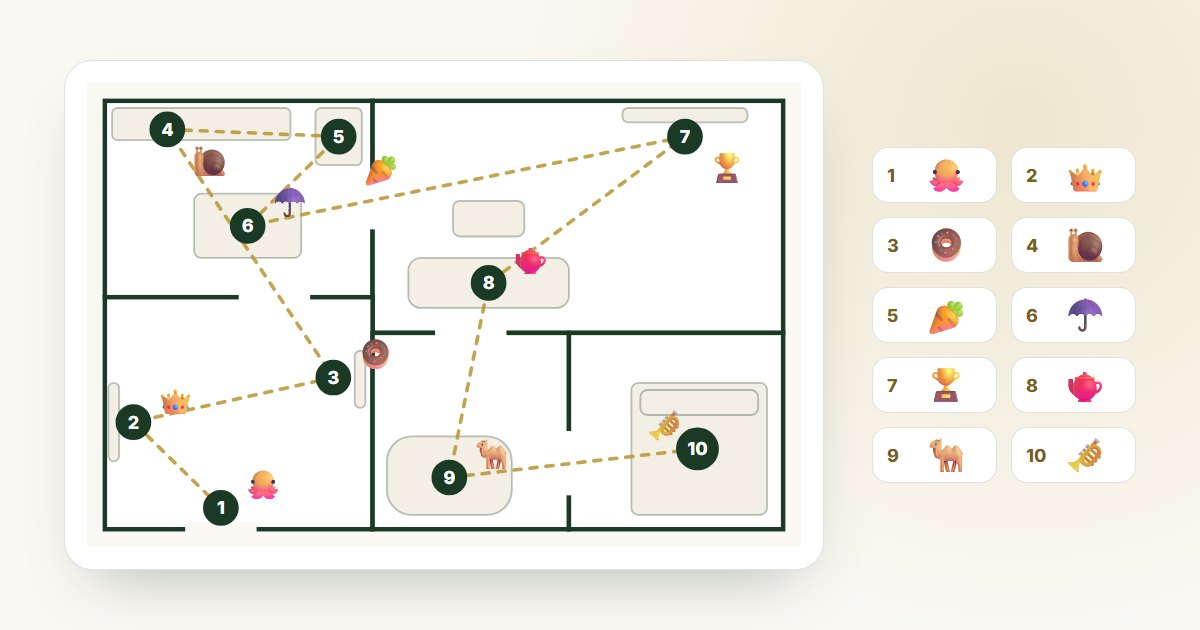
Memory Palace Trainer
Walk a familiar route, place 10 items along it, then recall them in order. The method of loci, the technique memory champions use, with an optional warm-up so you see your own before and after.
Build your palaceStart with a topic picker
Get a tiny learning idea first, then jump into the random fact generator when you want a quick spark.
If you're studyingFocus, then test yourself
Use the Pomodoro timer for a work sprint, then check retention with the general knowledge test.
If you like AI puzzlesTry the benchmark path
Challenge ChatGPT first, then go deeper with the ARC-AGI pattern reasoning test.
If people are confusingTrain your psychology radar
Spot cognitive biases in everyday scenarios, then explore psychology courses in the NerdSip library.