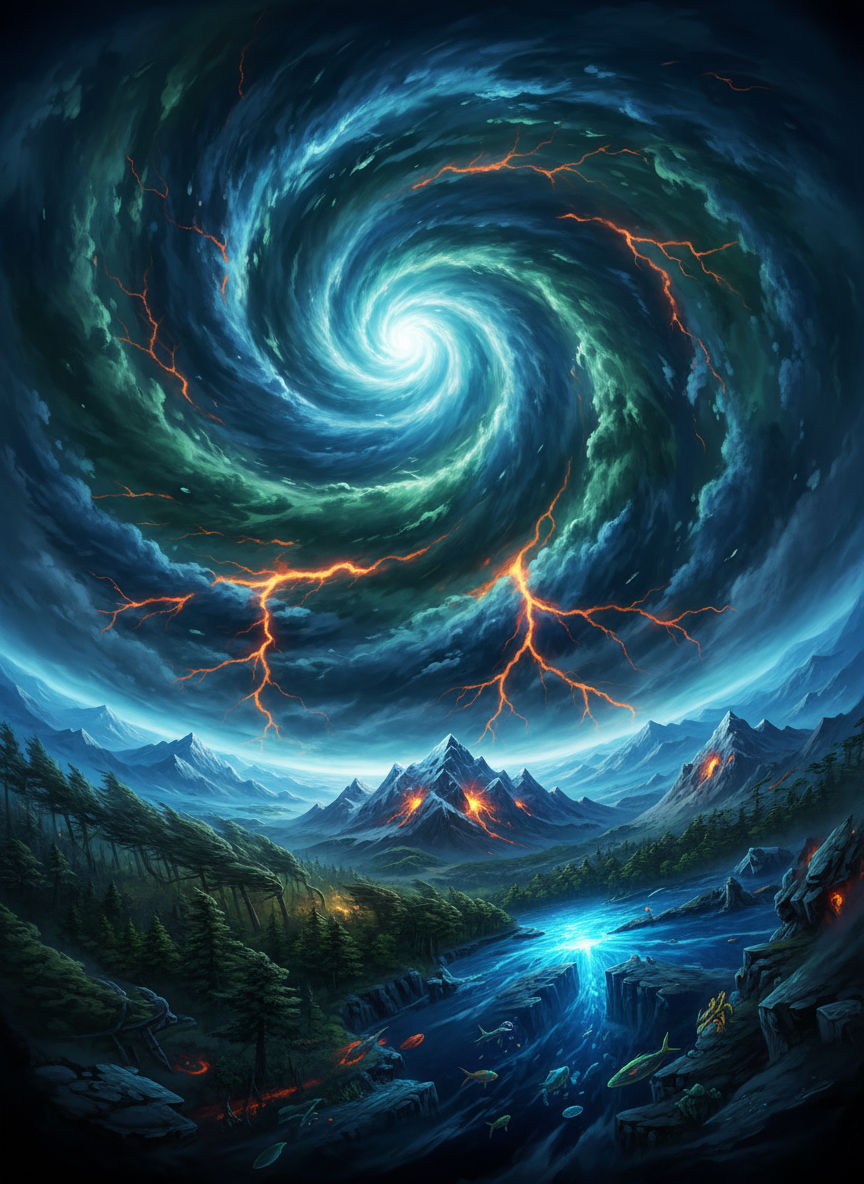
Did you know massive red lightning flashes above regular thunderstorms?
Prompted by A NerdSip Learner
Discover 3 invisible storms shaping our planet.
Have you ever wondered what happens above a thunderstorm? Above the dark, churning clouds, a hidden light show is taking place. Meet Red Sprites and Blue Jets—collectively known as Transient Luminous Events (TLEs).
These massive, colorful flashes occur in the mesosphere, up to 50 miles above the Earth's surface. Unlike the scorching hot lightning bolts that strike the ground, sprites are essentially 'cold plasma.'
When an incredibly powerful lightning bolt hits the ground, it leaves behind an intense electric field high above the storm. This field electrifies the thin upper atmosphere, lighting it up like a giant, reddish-orange neon sign.
Because they last for mere milliseconds and happen so high in the sky, sprites were long dismissed as pilot tall tales. It wasn't until scientists finally caught them on video in 1989 that these 'secret storms' were proven real. Today, we know these upper-atmospheric fireworks are happening constantly, right above our heads.
Key Takeaway
Red sprites are massive, cold-plasma flashes that occur in the upper atmosphere right above normal thunderstorms.
Test Your Knowledge
What makes red sprites fundamentally different from the lightning we see on the ground?
If you picture the deep ocean floor as a still, silent wasteland, it's time to update your mental map. Miles beneath the waves, furious benthic storms are raging across the seafloor.
These deep-sea tempests are actually triggered by what's happening on the surface. When massive, powerful ocean currents—like the Gulf Stream—twist and swirl, their immense kinetic energy can transfer all the way down to the abyss.
This downward energy creates massive underwater cyclones on the ocean floor. As these deep-ocean winds howl, they whip up fine, settled sediment into thick, violent blizzards. This creates a murky, turbulent zone known as a 'benthic nepheloid layer.'
These underwater storms can last for weeks at a time. They are crucial for the ocean's ecosystem, as they stir up buried nutrients and transport them across the deep sea. Far from being a quiet graveyard, the ocean floor is a highly dynamic landscape shaped by these hidden, raging blizzards.
Key Takeaway
Benthic storms are powerful underwater cyclones that whip up deep-sea sediment into massive ocean-floor blizzards.
Test Your Knowledge
What is the primary trigger for a deep-sea benthic storm?
The most massive storms on Earth don't involve rain, wind, or ocean water. They are entirely invisible, highly charged, and they are born millions of miles away on the Sun.
Our planet is protected by the magnetosphere, a giant, invisible magnetic shield generated by Earth's molten core. But occasionally, the Sun burps out a massive wave of charged particles and plasma.
When this solar wind slams into our shield, it triggers a geomagnetic storm. The collision physically compresses Earth’s magnetic field on the day side, and stretches it out like a giant rubber band on the night side.
When that magnetic tension finally snaps, it funnels massive amounts of energy into our upper atmosphere. While we can't feel these magnetic storms on our skin, they create the breathtaking light shows we know as Auroras. However, they aren't completely harmless—severe geomagnetic storms can scramble GPS signals, disrupt orbiting satellites, and even knock out power grids on the ground.
Key Takeaway
Geomagnetic storms occur when solar wind collides with Earth's magnetic shield, creating auroras and occasionally disrupting technology.
Test Your Knowledge
What happens to Earth's magnetic field during a geomagnetic storm?
Track your progress, earn XP, and compete on leaderboards. Download NerdSip to start learning.