Curious why Uganda is known as the Pearl of Africa?
Prompted by NerdSip Explorer #5918
Master Uganda's landscapes, vibrant cities, and diverse tribes.
Uganda is a lush, landlocked country in East Africa. Winston Churchill famously dubbed it the "Pearl of Africa" because of its breathtaking beauty, vibrant colors, and incredible biodiversity.
Geographically, Uganda sits directly on the Equator. Despite being landlocked, it is incredibly water-rich. It shares Lake Victoria, the largest tropical lake in the world, with Kenya and Tanzania. This massive body of water acts as a climate regulator, keeping the country perfectly warm and green year-round.
Another massive geographic flex? The River Nile. The world's longest river officially begins its 6,600-kilometer journey in Uganda, flowing right out of Lake Victoria at a city called Jinja.
To the west, Uganda features the dramatic Rwenzori Mountains, often called the "Mountains of the Moon." Unlike typical African savannas, these peaks are capped with snow and glaciers, highlighting Uganda's wildly diverse terrain! From dense rainforests to open savannas, the landscape is truly spectacular.
Key Takeaway
Uganda is an equator-straddling, water-rich nation home to Lake Victoria and the source of the River Nile.
Test Your Knowledge
Which famous natural landmark officially begins its journey in Uganda?
Welcome to Kampala, Uganda's bustling, energetic capital city! Like Rome, Kampala was originally built on exactly seven hills, though it has vastly expanded since its founding.
The city gets its name from the Impala, a medium-sized African antelope that used to roam the jungles where the city now sits. Before the British arrived, this area was a favorite hunting ground for the king of the Buganda kingdom.
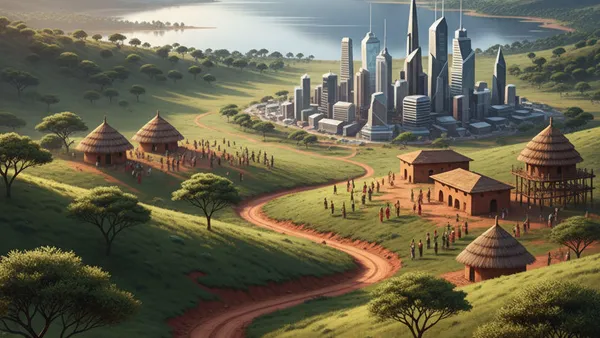
Today, Kampala is the political and economic heartbeat of the nation. It is a dynamic mix of modern skyscrapers, historic landmarks, and massive, vibrant local markets like Owino Market. The city acts as a cultural melting pot for the entire region.
Located just off the northern shores of Lake Victoria, Kampala is famous across East Africa for its incredibly welcoming locals, safe environment, and legendary nightlife. Whether you're dodging *boda-bodas* (motorcycle taxis) or enjoying local street food, the city's energy is highly infectious and memorable!
Key Takeaway
Kampala is Uganda's capital, historically built on seven hills and named after the Impala antelope.
Test Your Knowledge
What animal is Uganda's capital city, Kampala, named after?
While Kampala is the main hub, Uganda's other cities offer wildly different vibes and attractions.
Just 40 kilometers from the capital lies Entebbe. Situated on a lush peninsula jutting into Lake Victoria, Entebbe is peaceful, green, and home to Uganda's main international airport. It served as the capital during the British colonial era, leaving behind beautiful botanical gardens and a relaxed, coastal atmosphere.
Heading east, you'll find Jinja, famously known as the "Adventure Capital of East Africa." Because it sits right at the source of the River Nile, thrill-seekers flock here for world-class white-water rafting, bungee jumping, and kayaking.
In the southwest, Mbarara acts as the gateway to Uganda's famous national parks. Often called the "Land of Milk and Honey," it is a major agricultural hub surrounded by vast rolling hills and massive cattle farms. Up north, Gulu stands as a rapidly growing commercial center and the resilient cultural heart of the Acholi people.
Key Takeaway
Entebbe is the main gateway, Jinja is the adventure capital, and Mbarara is the agricultural hub.
Test Your Knowledge
Why is the city of Jinja considered a major tourist hotspot?
Uganda's true wealth lies in its people. It is one of the most ethnically diverse countries in the entire world, recognizing over 50 distinct indigenous tribes within its borders.
Despite this massive variety, most of these ethnic groups fall into two broad linguistic and cultural categories: the Bantu and the Nilotic peoples.
The Bantu-speaking tribes largely occupy the southern, central, and western parts of the country. They are historically agriculturalists, taking advantage of the region's highly fertile soils and regular, predictable rainfall to cultivate rich crops.
In contrast, the Nilotic-speaking tribes generally reside in the northern and eastern regions. Many of these groups have deep historical roots as nomadic pastoralists and cattle herders, navigating the drier, more rugged terrains of the landscape.
What makes Uganda special is how these groups coexist peacefully. While each tribe fiercely maintains its own unique dances, languages, and cultural rites, they all share a collective, welcoming Ugandan identity that makes the country famous for its remarkable hospitality.
Key Takeaway
Uganda is home to over 50 distinct tribes, primarily divided into Bantu and Nilotic linguistic groups.
Test Your Knowledge
Uganda's tribes are largely categorized into which two major linguistic groups?
Let's look at a few of Uganda's most prominent tribes. The largest ethnic group is the Baganda, making up roughly 17% of the population. They live in the central region and are fiercely proud of the Buganda Kingdom, led by a traditional king known as the *Kabaka*.
In western Uganda, you'll find the Banyankole. They are famous for breeding their magnificent Ankole long-horned cattle. For centuries, their entire culture has been deeply intertwined with cattle-keeping, which remains a massive symbol of wealth, pride, and social status.
Up in the northern region, the Acholi are known for their rich oral traditions, storytelling, and incredibly energetic traditional dances. Meanwhile, in the remote northeast, the Karamojong live as semi-nomadic pastoralists.
The Karamojong are highly renowned for their warrior traditions and their deep, almost spiritual connection to their herds. Each of these distinct groups—whether they answer to a king or operate in decentralized clans—weaves a vital, beautiful thread into Uganda's vibrant cultural tapestry.
Key Takeaway
The Baganda are the largest tribe, while groups like the Banyankole and Karamojong have deep cultural ties to cattle.
Test Your Knowledge
Which major Ugandan tribe is historically famous for breeding Ankole long-horned cattle?
Track your progress, earn XP, and compete on leaderboards. Download NerdSip to start learning.