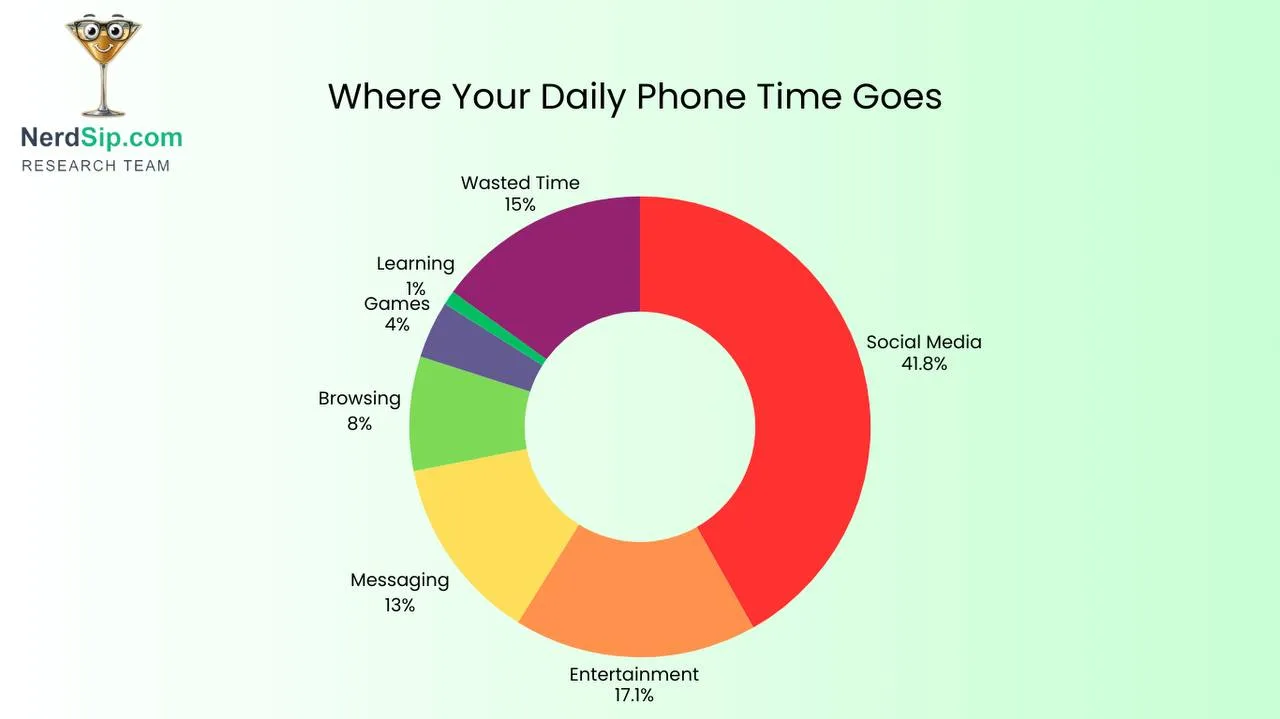
Look, we all know the feeling. You want to learn Python, Spanish, marketing, data analysis—whatever. But you "don't have time." Meanwhile, you somehow find 3 hours a day to scroll Instagram and TikTok.
The truth? You have the time. You're just using it wrong.
This article breaks down how to use your phone to actually learn valuable skills in 5-minute sessions. No BS, no fake promises of becoming an expert overnight. Just practical strategies that work.
Why 5 Minutes Actually Makes Sense
Here's the thing about traditional learning: it sucks for busy people.
Online courses expect you to block out hours. Books require sustained focus. YouTube tutorials are 45 minutes of someone rambling before getting to the point.
Five-minute learning works because:
- Your brain can't focus for hours anyway. Research shows most people max out at 20-30 minutes of deep concentration. After that, you're just pretending to learn while actually thinking about lunch.
- Consistency beats intensity. Doing 5 minutes every single day for a year gives you 30+ hours of learning. That's enough to get genuinely competent at most skills. Compare that to "I'll study for 3 hours this weekend" which never actually happens.
- You can fit it into actual life. Waiting for coffee. On the toilet. During your commute. Between meetings. You already have dozens of 5-minute windows you're currently wasting.
- You'll actually finish things. Most online courses have 20-30% completion rates. Micro-learning apps report 80%+ completion because people can actually stick with it.
What You Can Realistically Learn in 5-Minute Sessions
Let's be honest about what's possible:
You CAN learn:
- Programming fundamentals (Python, JavaScript basics)
- Languages (vocabulary, basic grammar, conversational phrases)
- Business concepts (marketing frameworks, financial literacy, project management)
- Data skills (Excel, SQL, basic statistics)
- Soft skills (communication, negotiation, leadership principles)
You CANNOT learn:
- Complex skills requiring hands-on practice (surgery, carpentry)
- Things that need sustained focus (writing a novel, deep mathematical proofs)
- Physical skills (guitar, sports, drawing—though you can learn theory)
The key is understanding that 5 minutes handles the LEARNING part. You still need separate time for PRACTICE. Learn coding concepts in 5-minute sessions, then spend weekends actually writing code.
The Actual System That Works
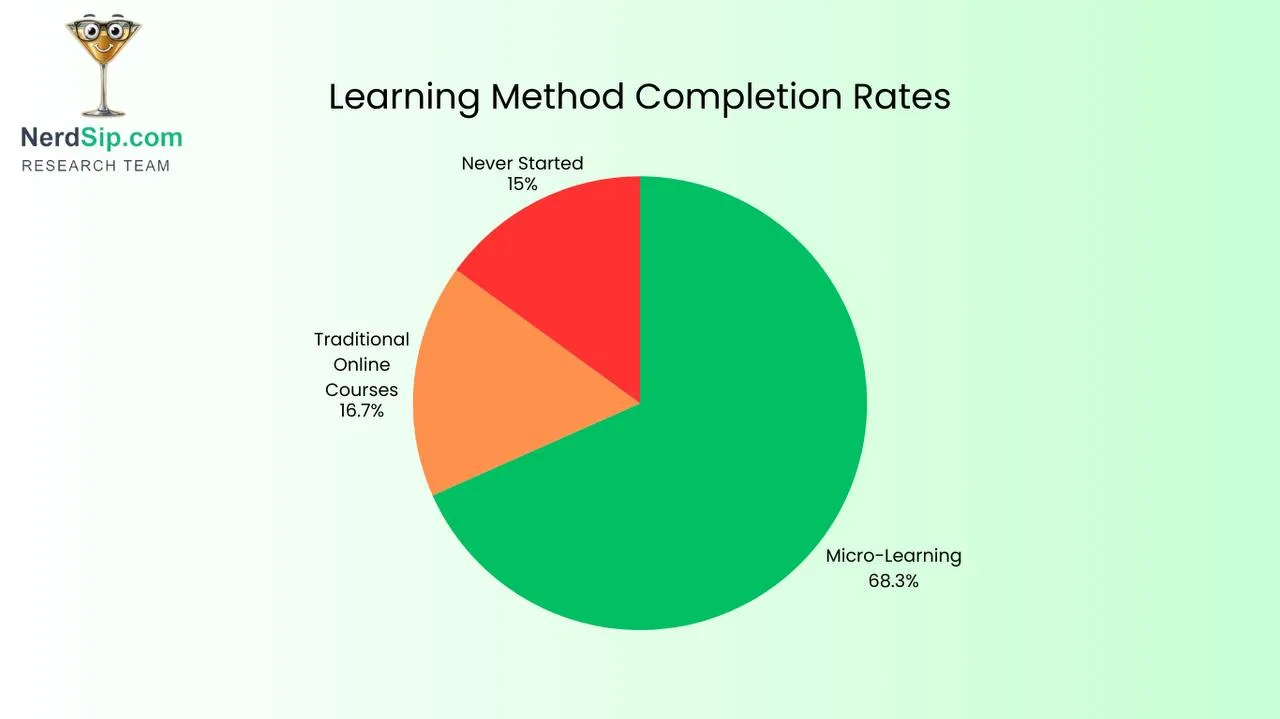
Here's how to make this work without lying to yourself:
Step 1: Pick One Thing
Not three things. Not "a little bit of everything." ONE skill for the next 90 days.
Why? Because your brain needs repetition. Learning Spanish on Monday, Python on Tuesday, and marketing on Wednesday means you never get good at anything. You just confuse yourself.
Pick the skill that would most impact your career or life right now. Then commit for 3 months.
Step 2: Get the Right App
Different apps work for different skills:
- For languages: Duolingo is still king. It's genuinely designed for 5-minute sessions and the gamification actually works.
- For coding: Try Mimo or SoloLearn. They break programming into bite-sized challenges you can do on your phone.
- For business/professional skills: This is where most apps fall short. LinkedIn Learning and Coursera have great content but it's not designed for microlearning. Apps like NerdSip are trying to fix this by bringing Duolingo's approach to any topic you want to learn.
- For specific topics: Sometimes YouTube is fine, but find creators who make SHORT videos (under 10 minutes). Long-form content doesn't work for this method.
Step 3: Stack It With an Existing Habit
Don't rely on motivation. Build a system.
Habit stacking means attaching your new habit to something you already do:
- Make coffee → Open learning app while it brews
- Sit on train → Start lesson when doors close
- Lunch break → 5 minutes before eating
- Before bed → Last thing before turning off lights
The key is SAME TIME, SAME TRIGGER, every day. Your brain loves patterns.
Step 4: Track Your Streak (For Real)
Most learning apps have streak counters. Use them. Data shows people with 30+ day streaks have 90%+ completion rates. People without streaks quit within 2 weeks.
Put a calendar on your wall. Put a big X on every day you do your 5 minutes. The visual reminder works.
Step 5: Apply What You Learn
Here's the uncomfortable truth: consuming lessons isn't the same as learning. You need to USE the information. Check out our guide on how to learn faster for more tips on active application.
- If learning Python: Days 1-4: Learn concepts (5 min each day). Day 5: Write 3 lines of actual code (10 min).
- If learning marketing: Days 1-6: Learn frameworks. Day 7: Apply one framework to your actual work (20 min).
What Skills Are Actually Worth Learning
Not all skills pay back equally. Here's what matters in 2026:
High-ROI Technical Skills
- Python programming - Opens doors to automation and AI work.
- Data analysis - Excel, SQL, basic statistics.
- AI/Prompt engineering - Knowing how to get useful output from AI tools is becoming a baseline requirement.
High-ROI Business Skills
- Digital marketing - SEO, paid ads, analytics.
- Communication - This multipliers every other skill you have. Read why communication failureis the #1 career killer.
- Financial literacy - Understanding budgets and investments.
The Bottom Line
Learning in 5-minute sessions works if you pick ONE skill and stick with it. It's the 1% better every day formula in action.
The time is going to pass anyway. You can spend your 5-minute gaps scrolling, or you can spend them building skills that actually matter with tools like NerdSip.
Start today.
Every NerdSip course clears a four-layer fact-checking pipeline before it reaches the app: grounded in live sources, scored nightly, gated on failure, and reviewable by a person at one tap. Articles on this blog are drafted with AI assistance, then researched, verified, and edited by our team.
Editorial responsibility: ai51 UG (haftungsbeschränkt). Responsible editor named in the imprint.
📚 Keep Learning
Explore the NerdSip learning hubs
The blog is our editorial layer. When you want to move from reading into doing, these hubs organize the rest of NerdSip by format, including the app itself and the press that has written about it.
Keep going: five-minute courses on this
Pick one and finish it before your coffee cools. Every lesson ends with a quick question, so it sticks instead of scrolling past.
4.7 stars from 380 reviews · 10,000+ learners