You're smart. Qualified. Hardworking. You have the technical skills to excel at your job.
So why did you get passed over for that promotion? Why do your ideas get ignored in meetings? Why does collaboration with your team feel like pulling teeth?
The answer isn't what you know. It's how you communicate what you know.
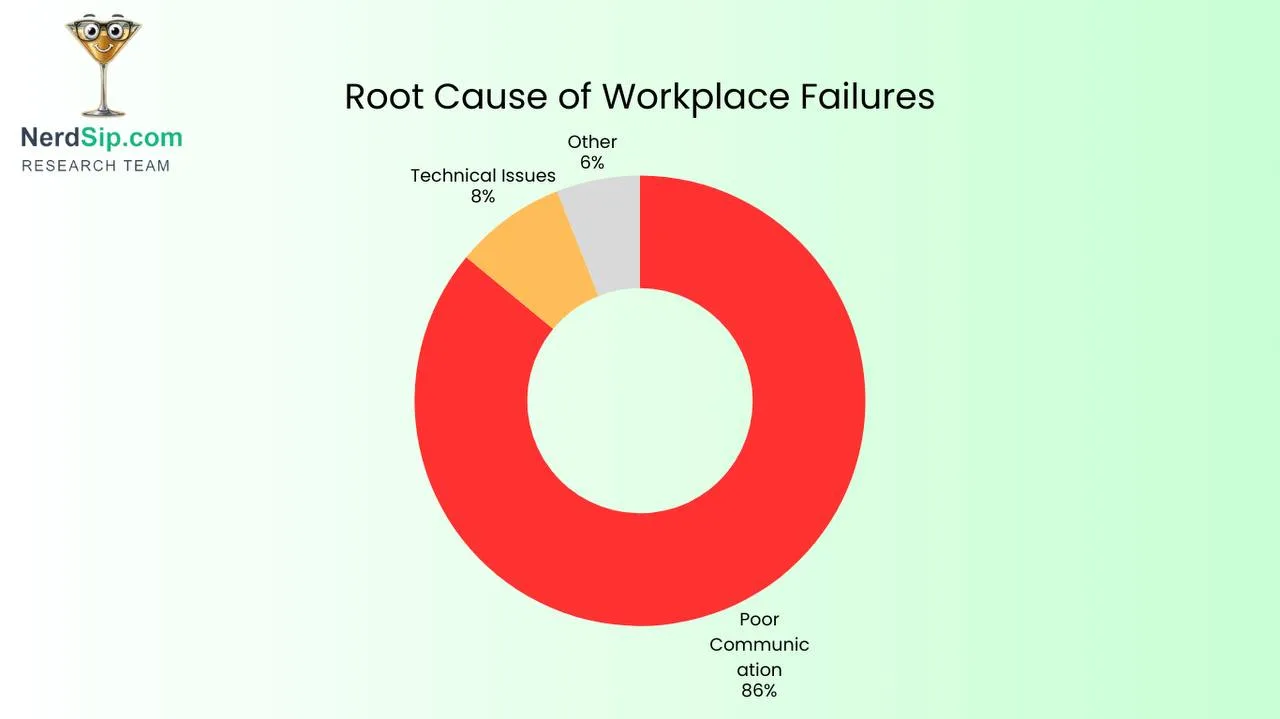
And here's the brutal data: 86% of employees and executives cite lack of collaboration or ineffective communication for workplace failures.
Not poor technical skills. Not lack of industry knowledge. Communication.
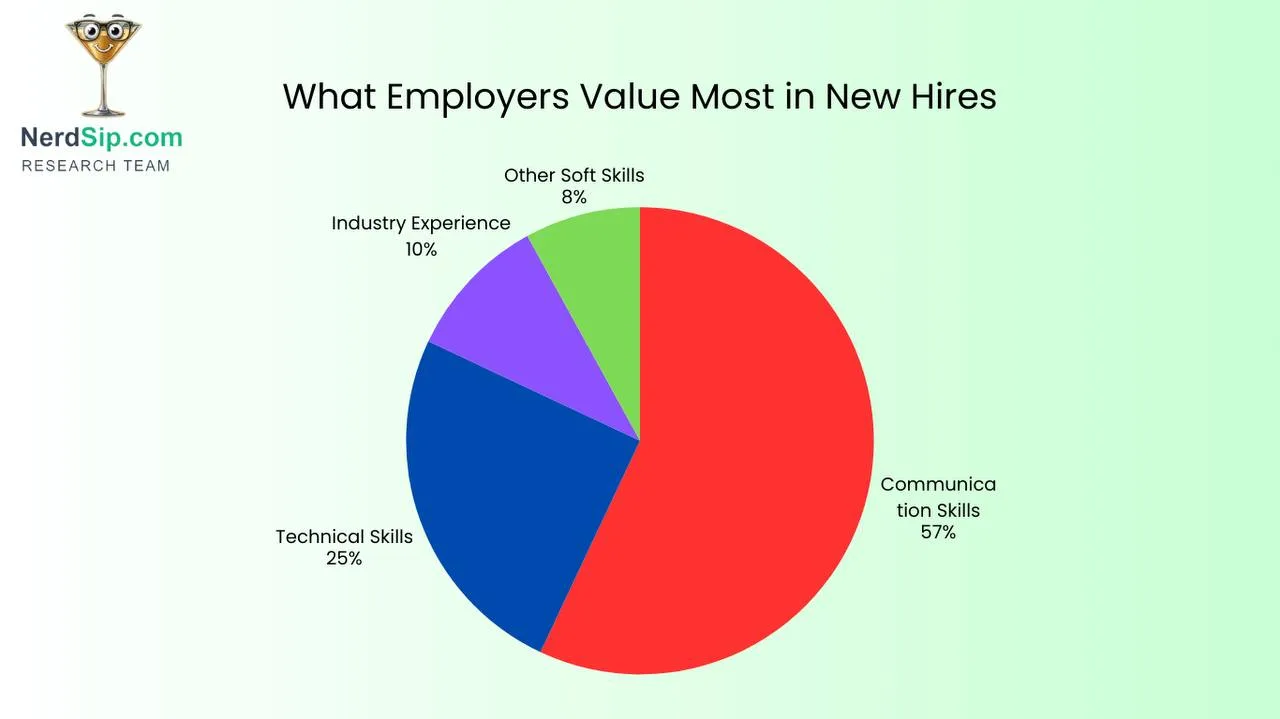
The even more shocking part? 57% of employers rank communication as the #1 skill they want in new hires—above technical ability. You can be the most talented person in the room, but if you can't communicate effectively, you're invisible.
Here's the good news: communication skills aren't innate. They're learnable. And unlike technical skills that require months of training, you can dramatically improve your communication in just 5 minutes a day.
The $1.2 Trillion Problem Nobody Talks About
Poor communication isn't just awkward. It's expensive.
Miscommunication costs U.S. businesses an estimated $1.2 trillion annually. Think about that. Over a trillion dollars—wasted because people can't express ideas clearly, listen actively, or collaborate effectively.
The ripple effects are everywhere:
- Career stagnation: 18% of employees say poor communication prevented them from getting a promotion
- Productivity drain: Employees spend 3.2 hours per week trying to understand poorly communicated information from coworkers
- Project failure: 75-80% of projects fail to meet objectives due to poor communication
- Employee turnover: Companies with poor communication have 50% higher turnover rates
- Burnout: 40% of employees suffer burnout, stress, and fatigue as a result of communication issues
But here's what should really wake you up: 93% of employers consider soft skills to be as important as or more important than technical skills. And communication is the king of soft skills.
Your technical expertise gets you in the door. Your communication skills determine how far you go.
Why Smart People Struggle to Communicate
If communication is so important, why do 75% of people believe they're not good at it? And why do 4 out of 10 people consider themselves poor communicators?
It's not because they're incompetent. It's because nobody taught them how.
Think about your education. You spent years learning math, science, history, and technical skills specific to your field. But how many hours did you spend learning:
- How to structure a persuasive argument
- How to read nonverbal cues
- How to adapt your communication style to different audiences
- How to give feedback that actually motivates people
- How to listen in a way that makes others feel heard
The answer for most people: zero.
You were expected to "figure it out" through osmosis. And now you're paying the price.
The Three Communication Gaps Destroying Your Career
Most people think they communicate fine. The data says otherwise.
Gap 1: What You Say vs. What They Hear
Only 7% of communication is verbal. The remaining 93% is nonverbal—tone, body language, facial expressions, eye contact.
You can say the right words and still communicate the wrong message if your nonverbal signals contradict your speech.
Examples:
- Saying "I'm listening" while checking your phone → Message received: "You're not important"
- Delivering criticism with crossed arms → Message received: "I'm judging you, not helping you"
- Presenting an idea while avoiding eye contact → Message received: "I don't believe in this"
85% of people think eye contact is crucial in business communication. But how often are you actually maintaining it during important conversations?
Gap 2: What You Mean vs. What You Write
The average professional receives 121 emails per day and spends 5 hours per week reading and writing emails. That's 10.8 days per year, or 432 days over 40 years of working.
And yet, most people never learn how to write effective emails.
The result? 40% of employees say waiting for email responses causes them stress. Not because responses are slow—because the original emails were unclear.
47.7% of people cite "writing very long emails" as poor communication. Followed by taking too long to reply (40.8%) and giving unhelpful feedback (36.1%).
Translation: Most workplace emails are too long, too slow, and too vague.
Gap 3: What You Hear vs. What They Actually Said
The human brain can process up to 500 words per minute, but most people speak at 125-175 words per minute.
That gap creates a problem: while someone is talking, your brain is racing ahead, formulating responses, making judgments, and getting distracted.
You're not actually listening. You're waiting to talk.
And people know it. 53% of employers say listening skills are very important, yet most employees admit they're poor listeners.
Why Communication Skills Are the Ultimate Career Multiplier
Here's what the data reveals about people who master communication:
- Financially: Strong communication skills can increase your salary by 5-10%
- Professionally: Employees with strong communication skills are estimated to be 20-30% more productive
- Leadership: 90% of successful leaders have strong communication skills
- Project success: 80% of employers believe effective communication is the most important skill for project success
- Engagement: 68% of employees say their manager's communication directly impacts their engagement
- Empowerment: Employees who feel their voice is heard are 4.6 times more likely to feel empowered to perform their best work
- Return on investment: Effective communication can result in a 47% higher return to shareholders over five years
Communication isn't a "nice to have" soft skill. It's the leverage point that amplifies everything else you do.
You can have brilliant ideas, but if you can't articulate them, they die in your head. You can work incredibly hard, but if you can't communicate your value, you stay invisible. You can be technically excellent, but if you can't collaborate, you limit your impact.
The 5 Communication Skills That Separate Average from Exceptional
Not all communication skills matter equally. Here are the five that create disproportionate results:
1. Active Listening (The Skill Nobody Practices)
Active listening means fully concentrating on what someone is saying—not just hearing words, but understanding meaning, intent, and emotion.
Why it matters: Regular feedback can improve employee engagement by 12%. But feedback only works if you actually listen to it.
How to practice (5 minutes):
- In your next conversation, focus entirely on the other person
- Resist the urge to formulate responses while they're talking
- Paraphrase what they said to confirm understanding: "So what I'm hearing is..."
- Ask clarifying questions instead of making assumptions
Signs you're doing it wrong:
- Interrupting before they finish
- Changing the subject to your own experiences
- Checking your phone mid-conversation
- Forgetting what was said minutes after the conversation
2. Clear, Concise Writing
Why it matters: The average office worker receives 117 emails daily. Clarity and brevity aren't just polite—they're essential.
How to practice (5 minutes):
- Write one email per day following the "3-sentence rule": make your point in three sentences or less
- Structure: What you need → Why it matters → What action is required
- Read it aloud before sending (awkward phrasing becomes obvious)
- Remove filler words: "just," "actually," "basically"
Excellent email example:
Subject: Project timeline approval needed by Friday
"The client presentation deck is ready for review. If approved by Friday, we'll have time to incorporate feedback before the Monday meeting. Please confirm or share concerns by end of day Thursday."
Poor email example:
Subject: Quick question
"Hey, so I was just thinking about the thing we talked about yesterday and I actually wanted to follow up because I think there might be some issues with the timeline we discussed, and I'm wondering if you had a chance to look at it yet? Let me know what you think when you get a chance."
3. Adapting to Your Audience
Why it matters: 90% of workers agree that Gen Z prefers instant messaging over phone calls. What works for one audience fails with another.
How to practice (5 minutes):
- Before any communication, ask: "Who is my audience?"
- Technical experts want details; executives want summaries
- Older generations prefer formality; younger generations prefer directness
- Adjust your medium (email vs. Slack vs. video call) based on audience preference
The adaptation matrix:
| Audience | Preferred Style | Communication Channel |
|---|---|---|
| Executives | Brief, bottom-line-first | Email with bullet points |
| Technical Teams | Detailed, data-driven | Documentation, Slack |
| Gen Z Colleagues | Informal, quick | Text, instant message |
| Clients | Professional, clear | Formal email, scheduled calls |
4. Nonverbal Communication
Why it matters: Over 50% of a message's meaning comes from nonverbal cues. You could say perfect words and still communicate failure.
How to practice (5 minutes):
- Record yourself speaking (yes, it's uncomfortable—do it anyway)
- Notice your body language: Are you closed off? Fidgeting? Avoiding eye contact?
- Practice "power poses" before important conversations (shoulders back, chest open)
- Smile more—70% of people believe facial expressions like smiling affect business communication
Nonverbal signals to master:
- Eye contact: Maintain 50-70% during conversation
- Posture: Open stance, no crossed arms
- Facial expressions: Match your emotion to your message
- Gestures: Use hands to emphasize points (but don't overdo it)
5. Giving and Receiving Feedback
Why it matters: 72% of employees think their managers could communicate more effectively. Most of that gap? Poor feedback.
How to practice (5 minutes):
- Give one piece of constructive feedback daily using the SBI model:
- Situation: "In yesterday's meeting..."
- Behavior: "...when you interrupted the client..."
- Impact: "...it made them feel unheard, and we lost the sale."
- When receiving feedback, practice saying: "Thank you for sharing that. Can you give me an example?"
- Never get defensive—feedback is data, not attack
How to Build Communication Skills in Just 5 Minutes a Day
Most people don't improve their communication because they think it requires intensive training or expensive courses.
Wrong.
Communication skills improve through deliberate micro-practice—small, focused actions repeated daily.
The 5-Minute Daily Communication Workout
Monday: Active Listening Practice
- Choose one conversation today where you listen without interrupting
- Paraphrase what the person said before responding
- Note: This feels unnatural at first. That's normal.
Tuesday: Email Clarity Challenge
- Write one important email
- Edit it down to three sentences maximum
- Read it aloud before sending
Wednesday: Nonverbal Awareness
- Record a 2-minute video of yourself explaining something
- Watch it back and note body language issues
- Practice one improvement (eye contact, posture, gestures)
Thursday: Feedback Practice
- Give one piece of constructive feedback using the SBI model
- Receive one piece of feedback without defending yourself
Friday: Audience Adaptation
- Before any meeting or email, write down: "Who is my audience? What do they need to know?"
- Adjust your communication style accordingly
The Compound Effect
Five minutes daily feels insignificant. But compound over time:
After 30 days: You've practiced 150 minutes of focused communication improvement—noticeably better at one skill
After 90 days: 450 minutes—you've developed consistent habits across multiple skills
After 365 days: 1,825 minutes (30+ hours)—you're in the top 10% of communicators in your organization
The people getting promoted aren't working harder than you. They're communicating better.
Why NerdSip Is Built for Communication Mastery
Communication isn't one skill—it's dozens of micro-skills that compound into mastery.
Active listening. Persuasive writing. Public speaking. Conflict resolution. Nonverbal communication. Emotional intelligence. Storytelling. Presentation skills.
Each one can be learned in focused 5-minute sessions. Each one compounds into career-changing capability.
NerdSip delivers microlearning on all these skills and more—bite-sized lessons designed to fit into your actual schedule, not some hypothetical future where you have hours for training.
Because the data is clear: 57% of employers value communication above all other skills. And if you can't communicate effectively, your technical brilliance stays locked inside your head.
NerdSip is live in the App Store and on Google Play. Build the skill that multiplies everything else.
Because 86% of workplace failures are communication failures. And 5 minutes a day is all it takes to be in the 14% who succeed.
Every NerdSip course clears a four-layer fact-checking pipeline before it reaches the app: grounded in live sources, scored nightly, gated on failure, and reviewable by a person at one tap. Articles on this blog are drafted with AI assistance, then researched, verified, and edited by our team.
Editorial responsibility: ai51 UG (haftungsbeschränkt). Responsible editor named in the imprint.
📚 Keep Learning
Explore the NerdSip learning hubs
The blog is our editorial layer. When you want to move from reading into doing, these hubs organize the rest of NerdSip by format, including the app itself and the press that has written about it.
Keep going: five-minute courses on this
Pick one and finish it before your coffee cools. Every lesson ends with a quick question, so it sticks instead of scrolling past.
Courses on this topic
4.7 stars from 380 reviews · 10,000+ learners