Why do your muscles burn when you sprint really fast?
Prompted by A NerdSip Learner
Understand how cells get energy with and without oxygen.
Imagine your body is a bustling arcade, and you just walked in with a giant golden token. That token is glucose, the sugar you get from the food you eat. But the arcade games only accept small coins. Your body needs to break that glucose down into a usable energy coin called ATP.
The very first step of breaking down glucose happens in the main hall of the cell. This step is called glycolysis—a fancy word that simply means "splitting sugar."
Whether you are breathing heavily while running or holding your breath underwater, this first step *always* happens. The cell acts like a karate master, chopping the glucose token right down the middle into two smaller pieces.
By splitting the glucose, your body instantly gets a tiny bit of energy (two ATP coins). But the story doesn't end there! Depending on whether oxygen is in the room, those two smaller pieces will take completely different paths to give you even more energy.
Key Takeaway
Cells always start by splitting glucose in half to get a tiny bit of quick energy.
Test Your Knowledge
What is the main goal of breaking down glucose in your cells?
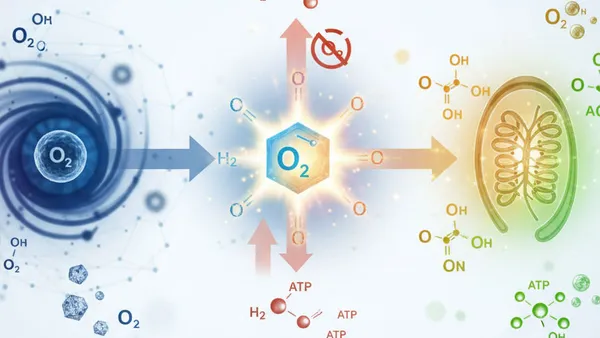
Now that the glucose is chopped in half, your cell looks around and asks: "Is there any oxygen here?" If the answer is yes, we enter the ultimate VIP lounge: the aerobic pathway.
"Aerobic" simply means *with oxygen*. The chopped-up sugar pieces are sent to a special power plant inside your cell called the mitochondria.
With oxygen acting like a super-hot fire, the mitochondria completely burns up those sugar pieces. This is where the magic happens! This pathway is incredibly efficient. It squeezes out an enormous amount of energy, giving you up to 36 shiny new ATP coins for just one original piece of glucose.
Whenever you go for a brisk walk, study for a test, or simply sleep, your body relies on this oxygen-rich pathway. It gives you the massive amount of steady, long-lasting energy you need to survive, grow, and thrive every single day.
Key Takeaway
When oxygen is present, cells use the mitochondria to create a massive amount of energy.
Test Your Knowledge
Which part of the cell acts as the "power plant" during the aerobic (oxygen) pathway?
But what happens if you are sprinting for a bus and your lungs just can't pump oxygen fast enough? Your cells use an awesome backup plan: the anaerobic pathway, meaning *without oxygen*.
When there is a lack of oxygen, the cell can't use its main power plant. Instead, it relies on a quick, emergency process called fermentation. It only gives you a tiny amount of extra energy, but it happens incredibly fast!
In your muscles, this emergency backup creates a byproduct called lactic acid. That is exactly why your legs feel a burning sensation during an intense sprint! You are literally feeling your cells running on their emergency backup power.
Other living things use this backup plan, too. Yeast, a tiny organism, breaks down sugar without oxygen to produce gas and alcohol. That gas is what makes bread dough rise and gives us fluffy pizza crusts! It's nature's ultimate survival trick.
Key Takeaway
Without oxygen, cells use a quick backup plan called fermentation, which creates lactic acid and makes your muscles burn.
Test Your Knowledge
What causes the burning feeling in your muscles when you sprint really hard?
Track your progress, earn XP, and compete on leaderboards. Download NerdSip to start learning.