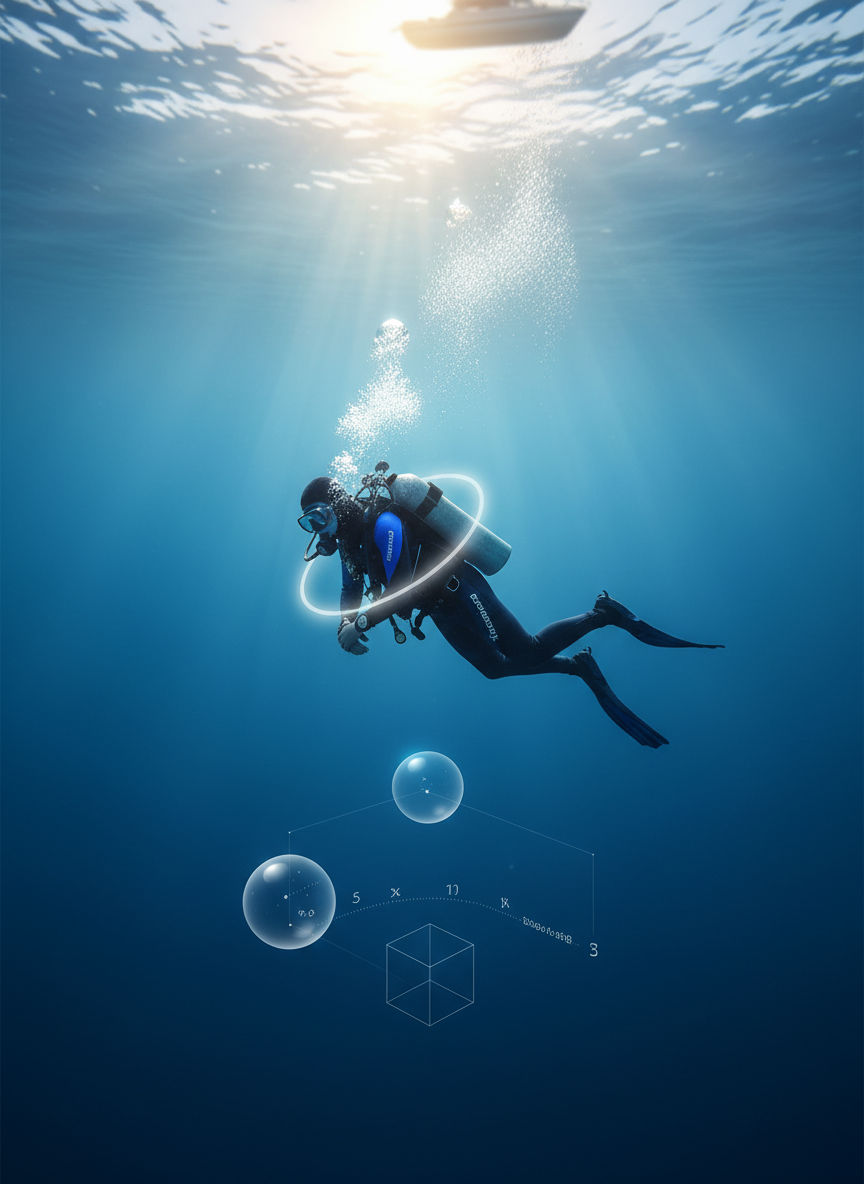
Ever wondered why your ears pop or why you float like a space explorer?
Prompted by A NerdSip Learner
Master the forces of pressure and buoyancy underwater.
Imagine standing at the bottom of a giant swimming pool filled with pudding. Sounds heavy, right? Well, water is much heavier than air! In fact, it’s about 800 times denser. When you dive into the ocean, all that water above you is constantly pushing down on your body. This weight is what scientists call Pressure.
On land, we have miles of air pushing on us, but our bodies are used to it. Underwater, things change fast. Just going down 33 feet (10 meters) adds another full "atmosphere" of pressure. This means the air spaces in your body—like your ears and lungs—begin to get squeezed like a soft soda can.
Have you ever felt your ears "pop" at the bottom of a pool? That’s your body reacting to this change in pressure. Divers have to learn to "equalize" by gently blowing air into those spaces to keep things balanced and comfortable. It's the first step to becoming an underwater explorer and staying safe while you see the sights!
Key Takeaway
Water is heavy, and its weight creates pressure that squeezes air-filled spaces as you go deeper.
Test Your Knowledge
What happens to the pressure on your body as you dive deeper into the ocean?
Why does a massive steel ship float while a tiny pebble sinks to the bottom? It’s all about a magical force called Buoyancy. Think of buoyancy as water’s "invisible hand" pushing you back up toward the surface whenever you jump in for a swim.
When you enter the water, you push some of it out of the way to make room for yourself. This is called displacement. A famous scientist named Archimedes discovered that the upward push you feel is equal to the weight of the water you moved. It's a constant tug-of-war between gravity pulling you down and buoyancy pushing you up!
If you weigh *less* than the water you displace, you float (Positive Buoyancy). If you weigh *more*, you sink (Negative Buoyancy). But the coolest part for divers is Neutral Buoyancy, where you weigh exactly the same as the water you move. When this happens, you don't sink or float—you simply hover in place like an astronaut in space!
Key Takeaway
Buoyancy is the upward force of water that determines whether you float, sink, or hover like an astronaut.
Test Your Knowledge
What do we call it when a diver hovers perfectly without sinking or floating?
How does a diver stay perfectly still underwater without constantly flapping their arms and legs? They use a "superpower" vest called a BCD (Buoyancy Control Device). Think of it as a high-tech balloon that you wear like a backpack!
By adding or removing air from the BCD, you change your volume (how much space you take up). Adding air makes you "bigger" without adding much weight. This causes you to displace more water, making the upward push of buoyancy stronger so you start to rise. Releasing air makes you "smaller," so you start to sink.
But wait, there's more! Divers also use their lungs to fine-tune their position. Taking a deep breath makes your chest expand, giving you a tiny bit of extra lift. Letting that breath out helps you slowly glide back down. Mastering this balance is like learning to fly in slow motion. Once you get the hang of it, you can glide past delicate coral reefs with total control and zero effort!
Key Takeaway
Divers use air in their vests and lungs to control their volume and move effortlessly through the water.
Test Your Knowledge
How does adding air to a BCD vest affect a diver's movement?
Track your progress, earn XP, and compete on leaderboards. Download NerdSip to start learning.