Why is burping in space basically impossible?
Prompted by A NerdSip Learner
Understand microgravity's gross effect on digestion.
Have you ever stopped to think about the physics behind a good old-fashioned burp? Here on Earth, we completely take our gravity for granted, but it is actually the unsung hero of our daily digestive comfort.
When you eat a meal or drink a beverage, your stomach quickly fills with a complex mixture of solid food, digestive liquids, and swallowed gases. Because of Earth's relentless gravity, these contents naturally separate inside your body based on their overall weight.
Think of your stomach exactly like a bottle of half-empty soda. The heavier solids and liquids are aggressively pulled down to the bottom of the stomach. Meanwhile, the lighter gases rise to the top, sitting comfortably right beneath your esophagus.
When that internal gas pressure builds up, your body simply opens a valve, and the gas escapes harmlessly upward. You get a satisfying burp, leaving the messy liquids and solids exactly where they belong—safely at the bottom of your belly!
Key Takeaway
Gravity separates heavy liquids from light gases in your stomach, making normal burping possible.
Test Your Knowledge
Why does gas naturally sit at the top of your stomach on Earth?
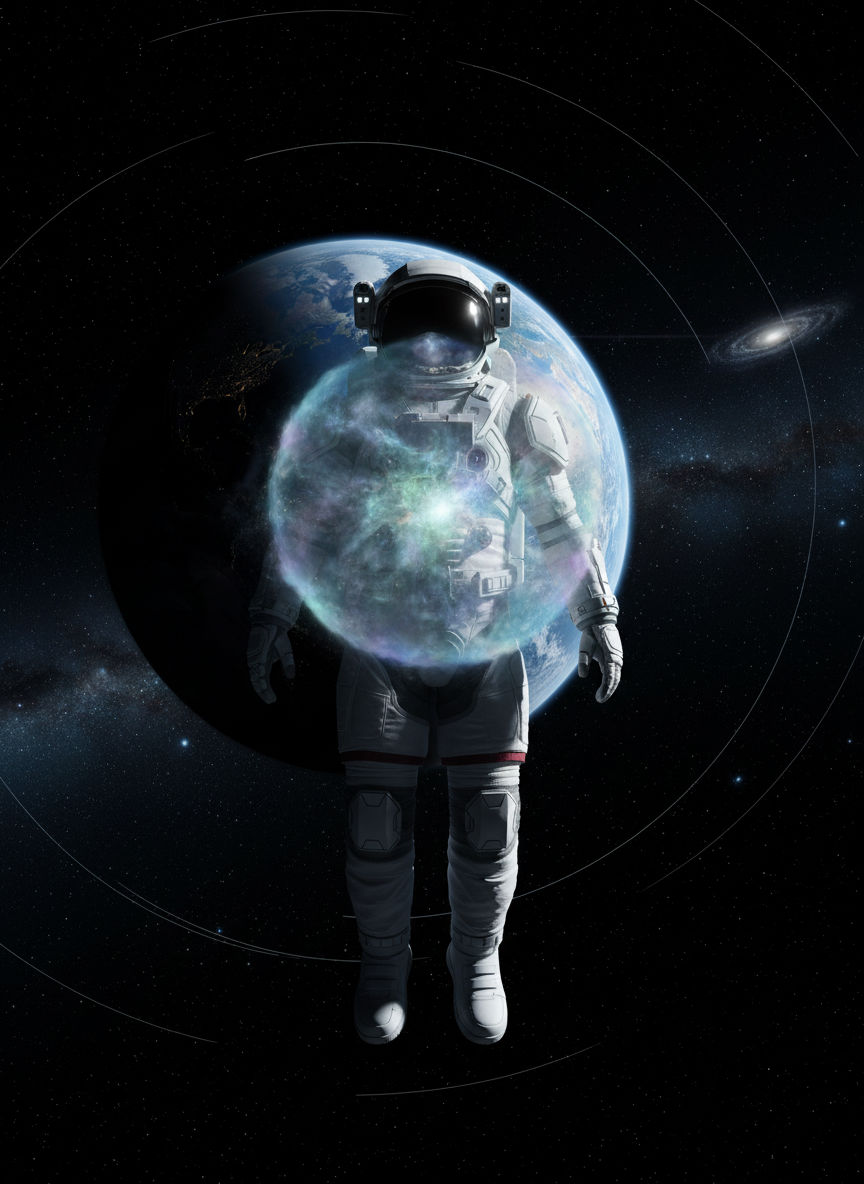
Now, imagine taking that exact same stomach and transporting it into the extreme microgravity of outer space. Up on the International Space Station, astronauts are in a constant state of freefall, meaning there is no functional 'up' or 'down.'
Without gravity pulling the heavy materials to the bottom, the contents of an astronaut's stomach behave very differently. The gases, digestive juices, and half-eaten space meals do not neatly separate into distinct layers like they do back on Earth.
Instead, everything floats around and mixes together continuously. Astronauts often describe the contents of their stomachs in space as a swirling, chaotic mixture of 'chunky bubbles.'
Because there is absolutely no gravity to force the liquids down and the gases up, the air you swallow becomes hopelessly trapped inside this floating soup. Your stomach essentially becomes a zero-gravity blender, holding everything in a messy, floating suspension!
Key Takeaway
In microgravity, stomach contents don't separate; they mix together into a chaotic, floating soup of air and food.
Test Your Knowledge
How do the contents of an astronaut's stomach behave in microgravity?
So, what actually happens if an astronaut ignores the strange physics of space and tries to force a burp anyway? Because the gas is completely mixed with everything else, a simple burp becomes a messy, uncomfortable disaster.
When the stomach valve opens to release the trapped air, it drags the surrounding food and digestive liquid up the esophagus with it. Astronauts refer to this deeply unpleasant experience as a 'wet burp' or sometimes even a 'bomit' (a clever but gross combination of a burp and vomit).
Essentially, trying to burp in space means you end up throwing up a little bit into your own mouth. In the highly enclosed environment of a space station or a tightly sealed spacesuit, floating liquid vomit is the absolute last thing anyone wants!
This is exactly why astronauts are strictly prohibited from taking carbonated drinks like soda into orbit. Less fizz means less gas, significantly reducing the dangerous risk of an accidental space-bomit.
Key Takeaway
Attempting to burp in space causes a 'wet burp' where food and liquid are expelled along with the gas.
Test Your Knowledge
Why are carbonated drinks like soda completely banned in space?
Track your progress, earn XP, and compete on leaderboards. Download NerdSip to start learning.