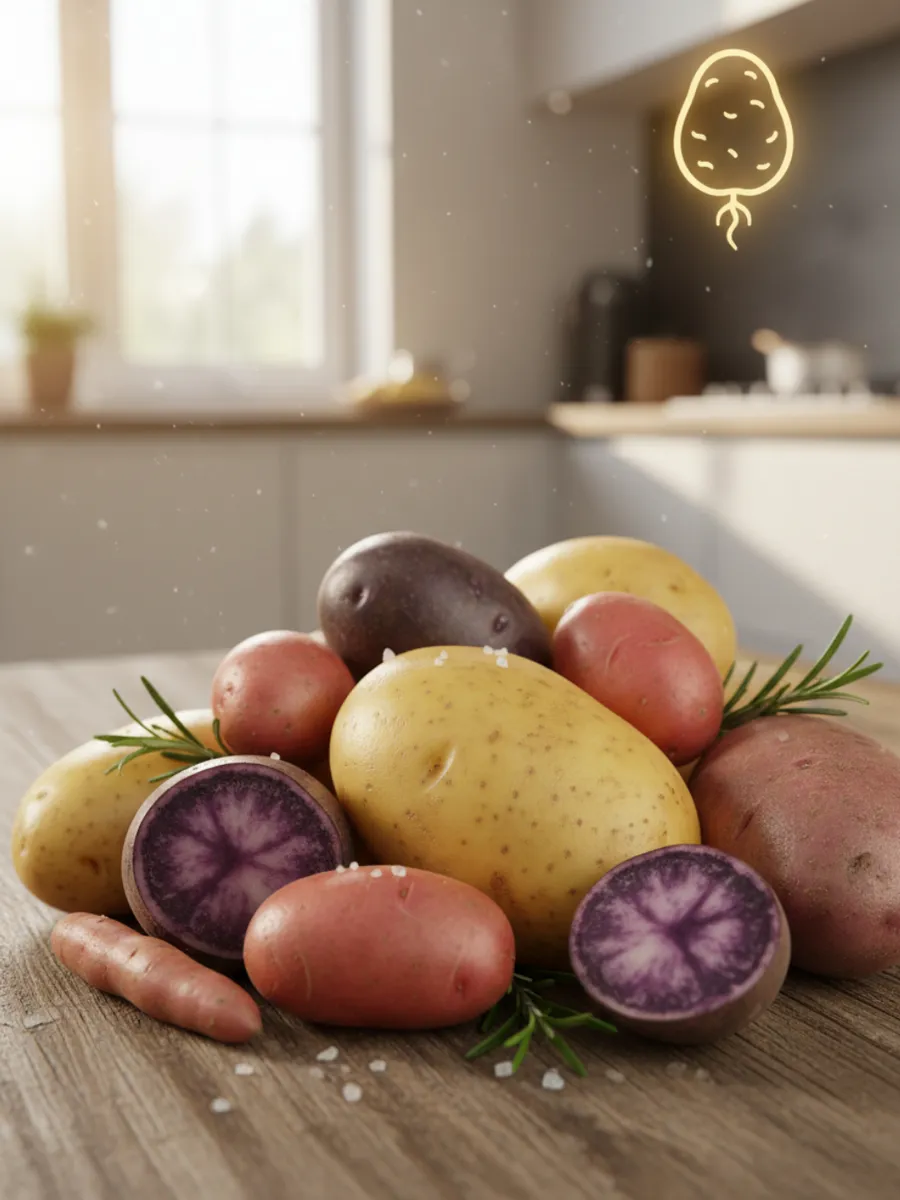
Think you know fries? Discover the root that fueled empires and survived outer space!
Prompted by A NerdSip Learner
Uncover the secret science and global history of the humble potato.
Did you know the humble potato wasn't born in a McDonald's fry basket? It actually started its journey high in the Andes Mountains of South America. Nearly 10,000 years ago, Incan ancestors began domesticating wild potato plants, which were originally quite bitter and even slightly toxic!
Through careful selection, these early farmers created thousands of varieties adapted to different altitudes. They even developed an ancient way to freeze-dry them called chuño, using the freezing mountain nights and the hot daytime sun. This allowed them to store food for years, providing a vital safety net against crop failure.
When Spanish explorers arrived in the 1500s, they were searching for gold and silver. Little did they know, the 'botanical gold' they brought back to Europe would eventually change the world's diet forever. The potato's ability to grow in poor soil made it a revolutionary crop that could feed more people on less land than ever before.
Key Takeaway
The potato originated in the Andes and became a global powerhouse due to its incredible storage potential and hardiness.
Test Your Knowledge
What was the ancient Incan method of freeze-drying potatoes called?
Let’s get technical: a potato isn't actually a root. It’s a tuber, which is a specialized, swollen part of the underground stem. Think of it as the plant’s personal 'battery pack.' While the leaves catch sunlight, they turn that energy into glucose, which is then transported downstairs and stored as complex starch.
This storage system is why potatoes are so packed with energy. But they aren't just 'empty carbs.' A single potato contains a surprising amount of Vitamin C, potassium, and even fiber (if you keep the skin on!). This dense nutritional profile is exactly what allowed human populations in Europe to explode after the potato was introduced.
However, there is a botanical catch. Because we usually grow potatoes from 'eyes' (clones of the parent) rather than seeds, they lack genetic diversity. This means if a disease hits one plant, it can potentially wipe out the entire field, a major challenge for modern agricultural scientists.
Key Takeaway
Potatoes are actually underground stems (tubers) that store energy as starch and provide essential vitamins.
Test Your Knowledge
Biologically speaking, what part of the plant is a potato?
The potato’s journey didn't stop in Europe. Today, it is the world's fourth-largest food crop. From the industrial revolution to modern-day snacks, the potato has fueled human progress. But it also taught us a harsh lesson about monocultures during the Irish Potato Famine, showing why growing only one type of crop is an ecological risk.
In the modern era, scientists are using the potato to push the boundaries of where humans can live. In 1995, the potato became the first vegetable to be grown in outer space! NASA researchers grew them aboard the Space Shuttle Columbia, proving that this hardy tuber might be our primary food source for future missions to Mars.
From the Incan mountains to the stars, the potato is a master of adaptation. Whether it's being turned into biodegradable plastic, distilled into spirits, or used as high-tech fuel, this humble 'spud' continues to be at the center of human innovation and survival.
Key Takeaway
Potatoes are essential to global food security and were the first vegetable ever grown in space.
Test Your Knowledge
Which organization successfully grew the first potatoes in outer space?
Track your progress, earn XP, and compete on leaderboards. Download NerdSip to start learning.