What do fruit, plastic, and cooking oil have in common?
Prompted by NerdSip Explorer #6692
Understand the hidden chemistry of alkenes.
Imagine you're building a massive structure out of tiny, invisible Lego blocks. In organic chemistry, the most important blocks are carbon and hydrogen atoms. When these atoms link together, they form molecules called hydrocarbons.
But not all connections are the same. Most simple hydrocarbons connect using just a single link, like two people shaking hands. We call these simple structures "alkanes."
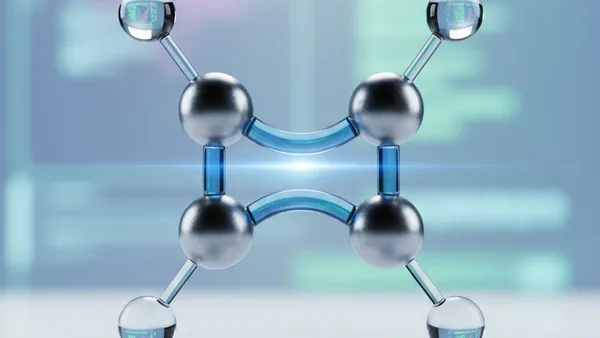
Alkenes are completely different. They have at least one double bond between two carbon atoms. It’s as if two carbon atoms are holding both of each other's hands tightly! This double bond is their defining feature.
Because they aren't fully loaded to the maximum with hydrogen atoms, alkenes are called unsaturated. Think of a sponge that isn't totally full of water yet—it still has plenty of room to take more in. That extra room makes all the difference in how they act!
Key Takeaway
Alkenes are hydrocarbons that contain at least one carbon-carbon double bond, making them "unsaturated."
Test Your Knowledge
What is the defining feature of an alkene?
So, why does a double bond even matter to us? It turns out, that extra connection changes absolutely everything about how the molecule behaves in the real world!
When two carbon atoms share a double bond, the connection is actually quite tense. While one "handshake" is incredibly strong and stable, the second "handshake" is a bit awkward, stretched, and very easy to break.
Because that second bond breaks so easily, alkenes are highly reactive. They are constantly looking for an excuse to let go of that extra hand and grab onto a brand new atom, like oxygen, chlorine, or more hydrogen!
This reactivity is their ultimate superpower. Unlike their boring, single-bonded cousins (the alkanes) which mostly just sit there as fuels, alkenes are the life of the chemical party. They are ready to mix, mingle, and transform into entirely new, useful substances at a moment's notice.
Key Takeaway
The double bond in an alkene is easy to break, making these molecules highly reactive.
Test Your Knowledge
Why are alkenes considered highly reactive?
You might think alkenes only exist in high-tech, sterile laboratories, but you actually interact with them right in your very own kitchen!
The simplest alkene in the world is called ethene (more commonly known to the public as ethylene). It consists of just two carbon atoms double-bonded together, with four hydrogen atoms attached to the outside.
Amazingly, ethylene is a naturally occurring plant hormone. Have you ever put a brown banana in a paper bag to help a rock-hard, unripe avocado soften up? That famous kitchen trick works specifically because the aging banana naturally releases invisible ethylene gas!
This simple alkene travels through the air, attaches to tiny receptors on the unripe fruit, and immediately triggers the natural ripening process. Farmers and grocery stores use this exact same alkene gas on a massive scale to ensure your fruit is perfectly ripe and delicious by the time it reaches your home.
Key Takeaway
Ethylene is the simplest alkene and acts as a powerful, natural fruit-ripening hormone.
Test Your Knowledge
How does the alkene 'ethylene' affect fruit?
What happens if you get thousands of those highly reactive alkene molecules in the same room together? They start a massive, unstoppable chain reaction!
Remember how the double bond is super eager to break open and grab onto something new? Under the right temperature and pressure conditions, alkenes will let go of that extra bond and start holding hands with each other instead.
This creates a gigantic, endless chain of molecules known as a polymer. When we use millions of ethylene molecules (our fruit-ripening friend from the last lesson) to do this, we create a giant super-molecule called polyethylene.
Polyethylene happens to be the most common, widely used plastic in the entire world! From your everyday grocery bags to shampoo bottles, food packaging, and children's toys, this incredibly durable, flexible material is all made possible simply by breaking open the double bonds of tiny alkenes.
Key Takeaway
When reactive alkenes link together in long chains, they form durable polymers, like everyday plastics.
Test Your Knowledge
What is created when thousands of alkene molecules link together in a long chain?
Alkenes don't just build our plastics and naturally ripen our morning fruit; they also play a massive, critical role in the food you eat, specifically when it comes to dietary fats and oils!
You've almost certainly heard doctors use the terms "saturated" and "unsaturated" fats. A dietary fat is simply a very long hydrocarbon chain. If it has no double bonds at all, it is saturated (packed completely full of hydrogen atoms). These are usually solid at room temperature, like a stick of butter.
However, if the fat chain contains carbon-carbon double bonds, it is an unsaturated fat! These double bonds act like rigid joints that create little "kinks" or bends in the molecule's shape.
These bends prevent the fat molecules from packing tightly together. This fascinating little change in geometry is exactly why healthy fats like olive oil and vegetable oil remain perfectly liquid at room temperature!
Key Takeaway
Unsaturated fats contain double bonds that bend the molecule, keeping oils liquid at room temperature.
Test Your Knowledge
Why are unsaturated fats (like olive oil) usually liquid at room temperature?
Track your progress, earn XP, and compete on leaderboards. Download NerdSip to start learning.