Can you really trust what you see? Your brain might be lying to you.
Prompted by A NerdSip Learner
Understand why your brain creates its own version of reality.
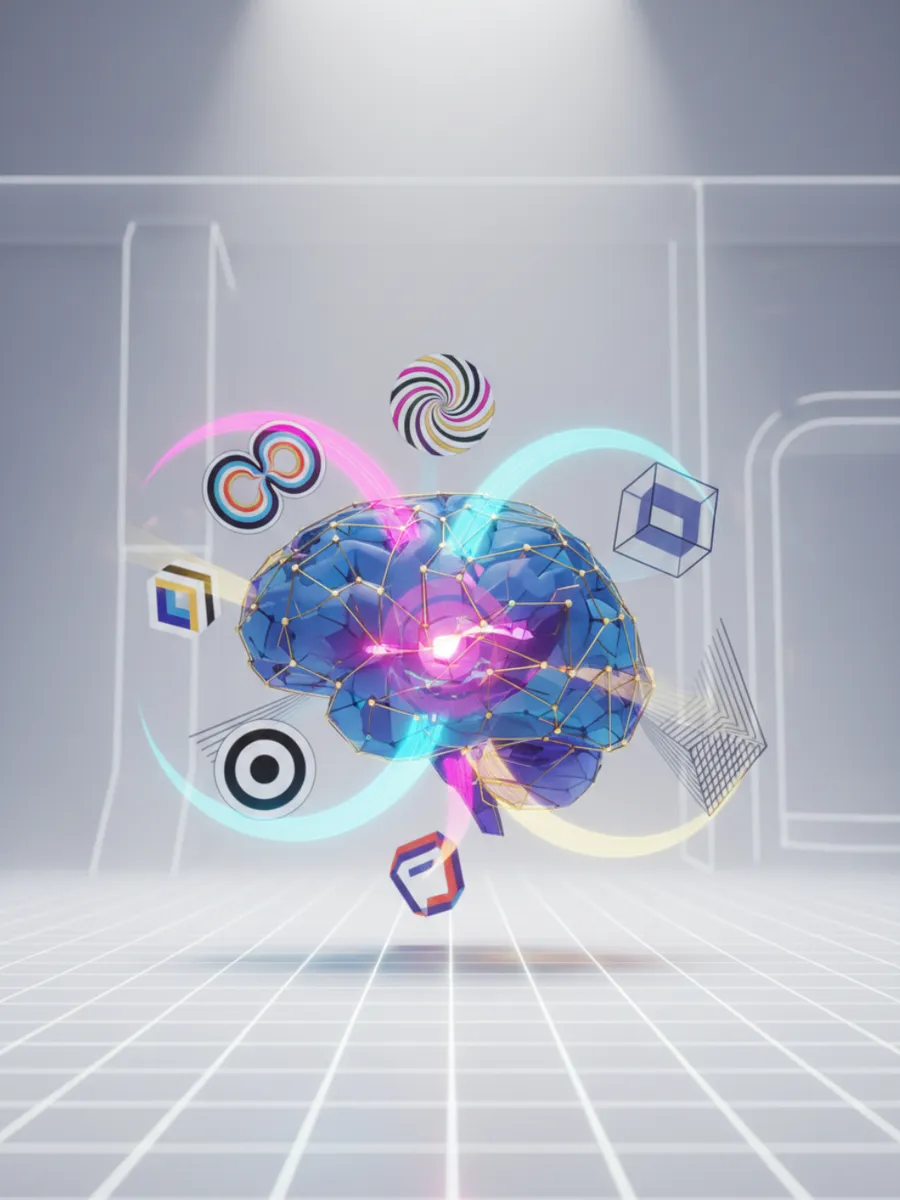
Think of your eyes as a high-end camera. You might imagine they simply record the world exactly as it is, sending a perfect video feed to your head. But that’s actually a myth! In reality, your brain acts more like a busy film editor. It receives a messy, upside-down, and flat stream of data and has to turn it into a 3D movie that makes sense for your survival.
Optical illusions are the "glitches" that happen when the editor takes a shortcut. Because the world is full of too much information to process every single detail, your brain uses heuristics—essentially mental "rules of thumb"—to guess what it's seeing. Most of the time, these guesses are incredibly accurate, which is why you don't walk into walls.
However, when we encounter specific patterns or lighting, those shortcuts fail. An illusion isn't a sign that your eyes are broken; it's actually proof that your brain is working hard to predict reality rather than just reflecting it. By studying these tricks, we can peek under the hood of how our minds actually work.
Key Takeaway
Your brain doesn't just record reality; it uses mental shortcuts to build a useful guess of the world.
Test Your Knowledge
What is the primary reason optical illusions occur?
Have you ever stared at a bright light and then seen a 'ghost' shape when you looked away? This is a physiological illusion. Your eyes contain specialized cells called photoreceptors that detect color and light. When you stare at a specific color for too long, those specific cells get exhausted—kind of like a muscle getting tired after a long workout.
When you finally look at a white wall, the 'tired' cells can't fire as strongly as the 'fresh' cells. This creates an afterimage in a different color. For example, if you stare at something bright red, you’ll likely see a green ghost shape afterward. Your brain is receiving an imbalanced signal because the red-detecting cells are taking a nap.
This shows us that our perception is limited by our biological hardware. Our eyes aren't just windows; they are living tools that have limits. When we push those limits through overstimulation, the 'software' in our brain gets confused by the faulty data coming from the 'hardware' in our eyes.
Key Takeaway
Physiological illusions happen when the cells in your eyes get tired from overstimulation.
Test Your Knowledge
Why do we see 'ghostly' afterimages after staring at a bright color?
Your brain is obsessed with context. It never looks at a color or a shape in isolation. Instead, it constantly compares an object to its surroundings to figure out what it 'should' look like. This is famously seen in the Checker Shadow Illusion, where two identical gray squares look completely different because one is sitting in a shadow.
Because your brain knows that shadows make things look darker, it 'automatically' brightens the image in your mind to compensate. It thinks, 'I know this square is in a shadow, so it must actually be a lighter gray than it looks!' It is trying to be helpful by giving you the true color of the object rather than the raw light hitting your eye.
This is called perceptual constancy. It’s why you recognize your blue car as 'blue' whether it’s under a bright noon sun or a dim streetlamp. Without this trick, the world would be a confusing, shifting kaleidoscope of colors that changed every time a cloud passed over the sun.
Key Takeaway
The brain adjusts how you see objects based on shadows and surrounding light to maintain consistency.
Test Your Knowledge
Why does a gray square in a shadow often look lighter than it actually is?
Our world is 3D, but the back of your eye (the retina) is a flat 2D surface. To make sense of distance, your brain has to look for depth cues, like how parallel lines seem to meet in the distance (like train tracks). However, these cues can be easily hijacked to make objects look larger or smaller than they really are.
In the Müller-Lyer illusion, two lines of the same length look different because of the 'fins' at the ends. If the fins point inward, the line looks like the outside corner of a building (closer). If they point outward, it looks like the inside corner of a room (farther away). Your brain assumes that if something is 'farther' but takes up the same space on your eye, it must be huge!
This reveals a fascinating truth: your brain is a 3D engine. Even when you are looking at a flat screen or a piece of paper, your mind is constantly trying to calculate volume and distance. It would rather be wrong about the size of a line than risk being wrong about how far away a predator might be.
Key Takeaway
Your brain uses background patterns to judge size, which can lead to mistakes in 2D images.
Test Your Knowledge
How does the brain judge the size of an object in an illusion?
Have you ever looked at a still image that seemed to swirl or shimmer? This is called illusory motion. It’s not magic; it’s a result of how your eyes move. Your eyes never stay perfectly still; they make tiny, invisible jumps called saccades several times per second. This keeps your visual system from 'freezing' up.
In certain high-contrast patterns, these tiny eye movements cause your brain to receive signals of shifting light and dark very rapidly. Because the brain’s primary way of detecting motion is by tracking changes in light and position, it gets tricked into thinking the pattern itself is moving.
This is a survival mechanism. In the wild, detecting motion quickly is more important than being 100% accurate. Your brain would rather 'hallucinate' movement in a bush and be wrong than miss a tiger jumping at you. Optical illusions simply exploit this high-speed motion-detection system, turning your biological strengths into a fun visual puzzle.
Key Takeaway
Still images can 'move' because your brain misinterprets tiny, natural eye jumps as external motion.
Test Your Knowledge
What causes some still images to appear as if they are swirling?
Track your progress, earn XP, and compete on leaderboards. Download NerdSip to start learning.