Ever wonder how the modern world actually works behind the scenes?
Prompted by A NerdSip Learner
Understand the hidden science shaping your daily life.
When you send a message or load a video, it feels like magic happening in the air. But the Internet is actually incredibly physical. It is not just floating in an invisible cloud; the majority of it rests at the bottom of the ocean!
Imagine millions of miles of giant fiber-optic cables resting on the ocean floor, physically connecting continents. When you click a link, your device sends a tiny pulse of light through these cables. It is like shining a flashlight through a very long glass straw.
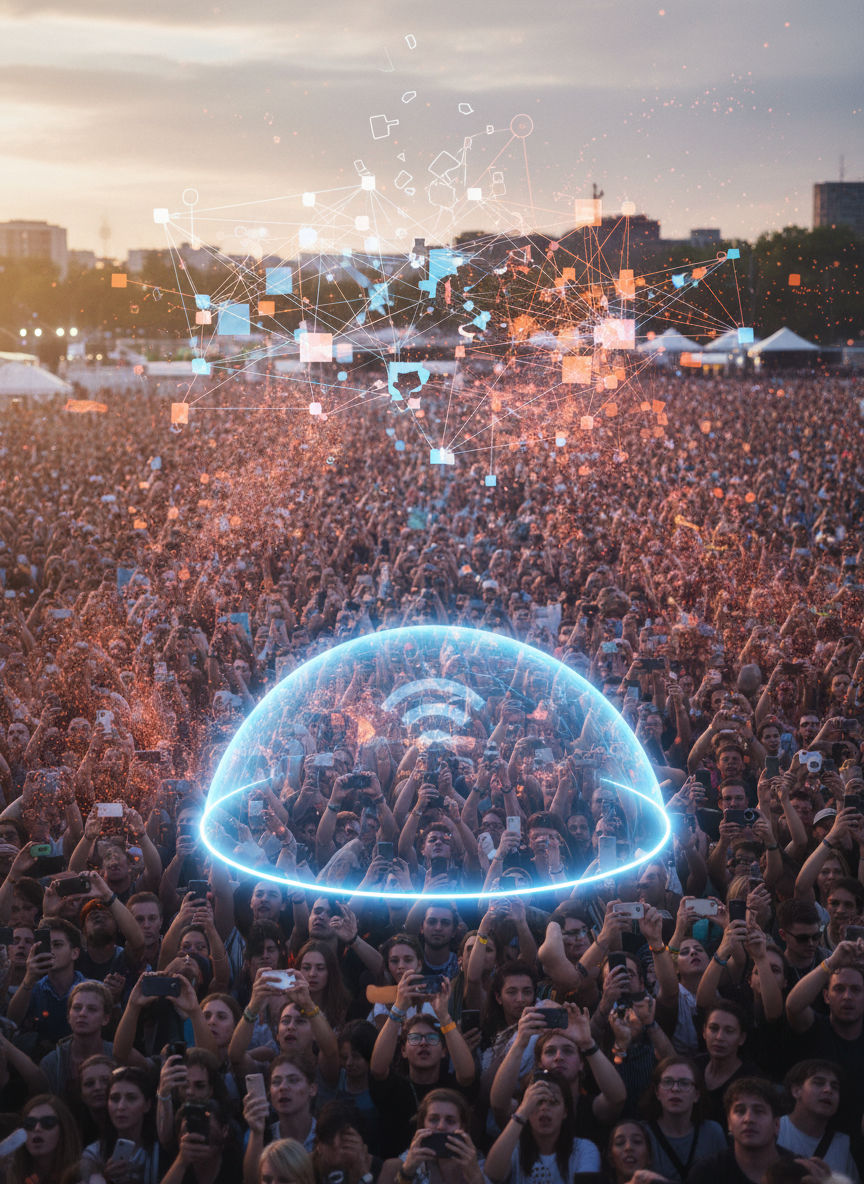
This light pulse travels thousands of miles in milliseconds. It carries your data broken down into tiny digital envelopes called packets. Once these packets reach your local neighborhood, they are converted into radio waves (Wi-Fi) to reach your phone.
So, the next time you browse the web, remember you are practically communicating via flashes of light across the bottom of the sea!
Key Takeaway
The Internet is a physical network that relies on fiber-optic cables running across the ocean floor.
Test Your Knowledge
What physically carries the majority of global internet data across the ocean?
Look at your hand, your phone, or the chair you are sitting on. Despite looking solid, they are mostly made of absolutely nothing. Everything in the universe is built from impossibly tiny blocks called atoms.
Think of atoms like the universe's ultimate Lego set. There are roughly a hundred different types of these fundamental blocks (elements like Oxygen, Carbon, and Iron). By connecting them in different ways, the universe builds everything from a sweet strawberry to a towering skyscraper.
Even crazier? An atom is almost entirely empty space. If an atom were the size of a massive sports stadium, its core (the nucleus) would be the size of a tiny marble sitting on the 50-yard line. The rest of the stadium is just tiny electrons zipping around the empty stands!
Because you are made of atoms, you are technically mostly empty space, held together by powerful, invisible forces.
Key Takeaway
Everything in the universe is made from atoms, which act like tiny Lego blocks and are mostly empty space.
Test Your Knowledge
If an atom were blown up to the size of a massive sports stadium, how big would its core be?
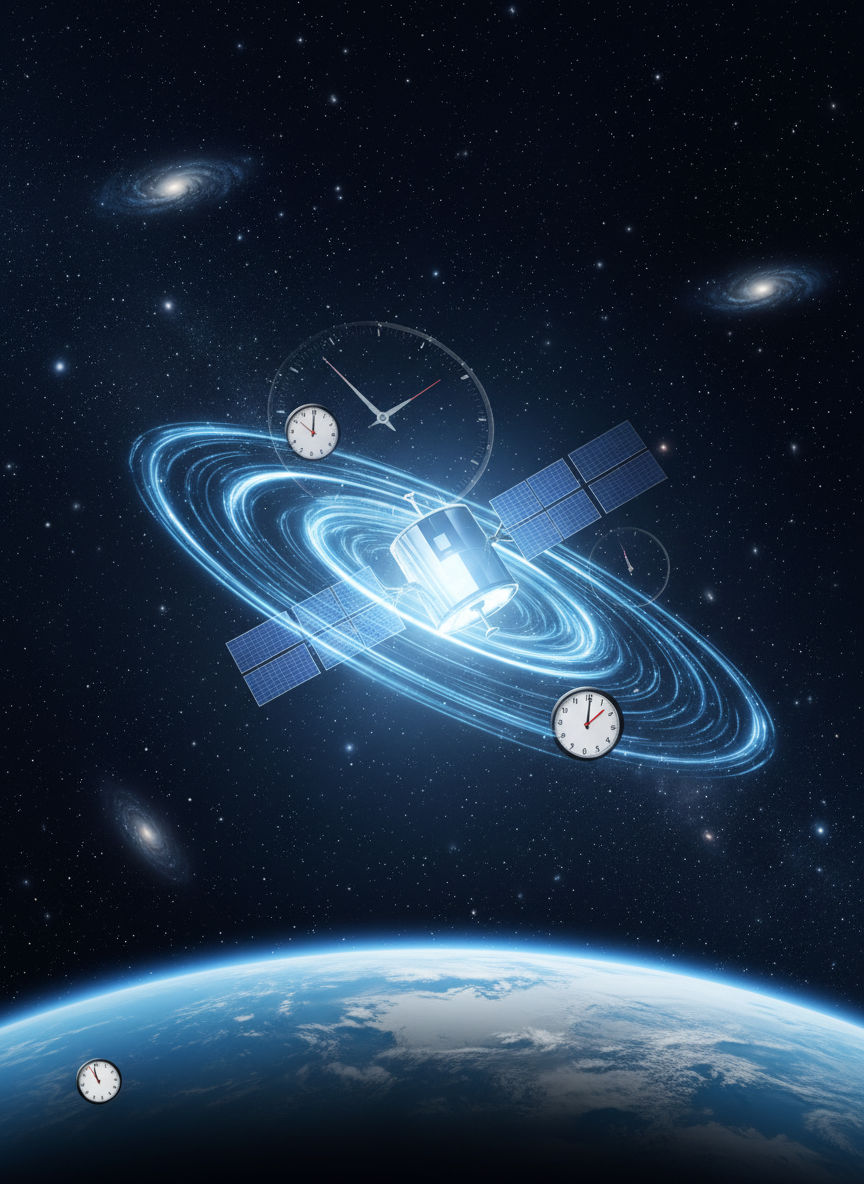
We experience gravity every day—it is what keeps our feet glued to the ground and makes dropping your phone so tragic. But gravity isn't just a simple magnetic pull. It is actually a bending of space itself.
Imagine pulling a large trampoline completely flat and tight. If you roll a small marble across it, it travels in a perfectly straight line. Now, place a heavy bowling ball right in the middle. The trampoline sinks down, creating a deep curve.
If you roll that marble again, it won't go straight anymore. It will circle around the bowling ball, falling into its curve. This is exactly how gravity works! Massive objects like the Earth and the Sun literally bend the invisible fabric of space.
We don't float away into space because we are safely resting in the invisible "dent" that the Earth makes in the universe!
Key Takeaway
Gravity is the result of massive objects bending the invisible fabric of space, much like a heavy ball on a trampoline.
Test Your Knowledge
How does this lesson describe the way gravity works?
We hear about Artificial Intelligence (AI) everywhere, but it is not a conscious brain sitting inside a computer. At its core, modern AI is simply an incredible master of recognizing patterns.
Imagine trying to teach someone what a "dog" is without using words. You would probably show them thousands of pictures of dogs. Eventually, their brain would notice that dogs usually have snouts, paws, and fur.
This is exactly how AI is trained. Scientists feed computers massive amounts of data—millions of texts, photos, or audio clips. The computer uses math to find hidden patterns. When you ask an AI chatbot a question, it is not "thinking" about the answer or feeling emotions.
Instead, it is rapidly calculating the most mathematically likely words to follow your prompt. It is a powerful tool, but it is fundamentally built on math and probability, not human-like understanding.
Key Takeaway
AI is not a conscious brain; it works by using math to recognize complex patterns in massive amounts of data.
Test Your Knowledge
How does an AI chatbot primarily decide what to say to you?
Every living thing on Earth, from humans to giant oak trees to microscopic bacteria, runs on the exact same operating system. This biological system is written in a microscopic code called DNA.
Think of DNA as a massive, incredibly detailed recipe book tucked inside almost every cell of your body. Instead of using a 26-letter alphabet, this recipe book is written using only four chemical "letters" (A, T, C, and G).
The specific arrangement of these four letters determines everything about how you are built. A certain sequence might say "make the eyes brown," while another says "build strong bones." It takes about three billion of these letters to spell out the biological instructions for a human being!
Amazingly, you share a huge percentage of this recipe with other living things. We share roughly half of our DNA with something as simple as a banana!
Key Takeaway
DNA is a biological recipe book written in a simple four-letter code that builds every living thing on Earth.
Test Your Knowledge
What is the best way to describe DNA based on the lesson?
Track your progress, earn XP, and compete on leaderboards. Download NerdSip to start learning.