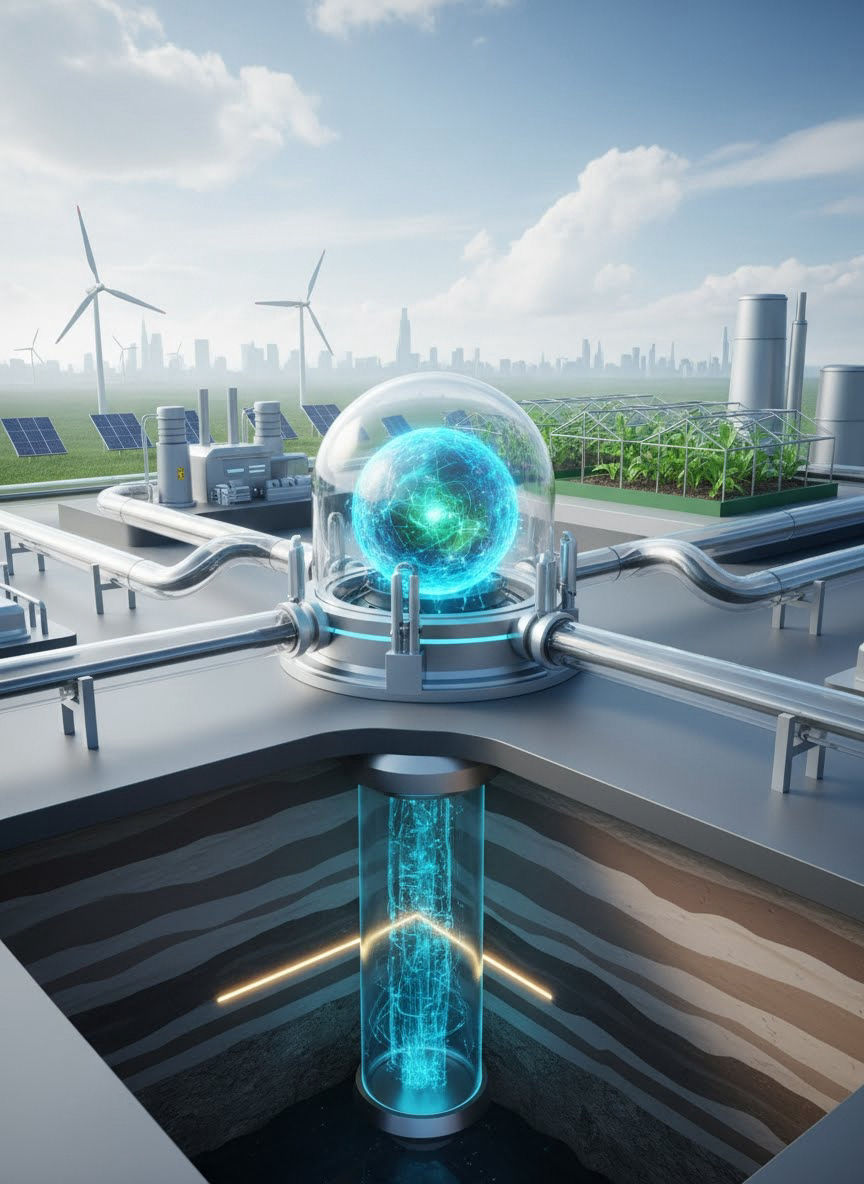
Can we build giant machines to suck pollution right out of the sky?
Prompted by A NerdSip Learner
Understand how we can trap and recycle CO2.
Imagine it’s a hot summer day, but you’re wearing a thick winter coat. You’d get overheated pretty fast, right? That is exactly what Carbon Dioxide (CO2) is doing to Earth.
When we burn fossil fuels like coal or gas to power our cars and phones, we release CO2. This gas acts like an invisible layer in the sky that traps heat. The more we burn, the thicker the "coat" gets, and the warmer our planet becomes.
So, scientists asked a crazy question: What if we could just catch that CO2 before it floats away? Or better yet, what if we could suck it back out of the air? This is the basic idea behind Carbon Capture. It is like trying to take the feathers back after shaking a pillowcase in the wind—tricky, but possible!
Key Takeaway
CO2 acts like a heat-trapping blanket, so we need technology to stop adding layers to it.
Test Your Knowledge
What happens when too much CO2 accumulates in the atmosphere?
Okay, we don't actually use space vacuums. But we do have two main ways to catch this invisible gas.
The first method is called Point Source Capture. Imagine putting a giant filter cap on top of a factory smokestack. Before the smoke escapes, chemicals that act like "liquid magnets" grab onto the CO2 molecules and hold them tight. This stops the pollution at the source!
The second method is way cooler: Direct Air Capture (DAC). These are massive fans that suck in normal air from your neighborhood. Inside the machine, special filters soak up the CO2 like a sponge soaks up water. It’s much harder to do because CO2 is spread out in the air, but it means we can clean up emissions from the past!
Key Takeaway
We can catch carbon right at the factory chimney or suck it out of the open air with giant fans.
Test Your Knowledge
Which method involves cleaning the air that is already floating around us?
So we caught the CO2... now what? We can't just keep it in a jar on a shelf! We have to put it somewhere safe where it can't leak back out. This step is called Storage (or Sequestration).
Think of it as "reverse mining." We took carbon (oil and coal) out of the ground, so now we are pumping carbon back in. Engineers inject the captured CO2 deep, deep underground—often more than a mile down!
They pump it into porous rocks (rocks with tiny holes, like a sponge) that are trapped under heavy, solid layers of stone. Over time, under all that pressure, the CO2 can actually turn into solid rock. It’s like freezing a ghost so it can never haunt you again.
Key Takeaway
We store captured carbon deep underground in rocks, where it remains safe and eventually mineralizes.
Test Your Knowledge
What is the ultimate goal of carbon storage?
Storing carbon underground is safe, but it costs a lot of money. What if we could turn that pollution into profit? This is the Utilization part of the story.
Instead of burying the CO2, we can recycle it! Did you know the bubbles in your fizzy soda are made of CO2? We can use captured carbon for that. But we can do even bigger things.
Scientists are learning how to mix CO2 into concrete to make stronger buildings. They are even using solar energy to turn CO2 back into clean fuel for airplanes. It’s the ultimate recycling loop: taking waste air and turning it into bridges, diamonds, or fuel. We are literally trying to turn trash into treasure.
Key Takeaway
Utilization means recycling captured CO2 into useful products like concrete, fuel, or fizzy drinks.
Test Your Knowledge
Which of the following is NOT a way we currently utilize captured CO2?
If we have this amazing tech, why are we still worried about climate change? Why don't we just burn all the oil we want and vacuum it up later?
Here is the catch: Carbon Capture is expensive and energy-hungry. Running those giant fans requires electricity. If we use coal power to run the fans that catch carbon, we are just chasing our own tails!
Also, the machines we have now are too small to catch *all* the CO2 we release. Think of it like trying to bail water out of a sinking boat with a spoon. It helps, but we first need to plug the hole in the boat (stop burning so many fossil fuels). Carbon capture is a helper tool, not a magic wand.
Key Takeaway
Carbon capture is a crucial tool, but it doesn't replace the need to reduce our emissions first.
Test Your Knowledge
Why isn't carbon capture the only solution we need?
Track your progress, earn XP, and compete on leaderboards. Download NerdSip to start learning.