What happens to worlds that wander the galaxy without a sun?
Prompted by A NerdSip Learner
Understand the dark, starless planets wandering our galaxy.
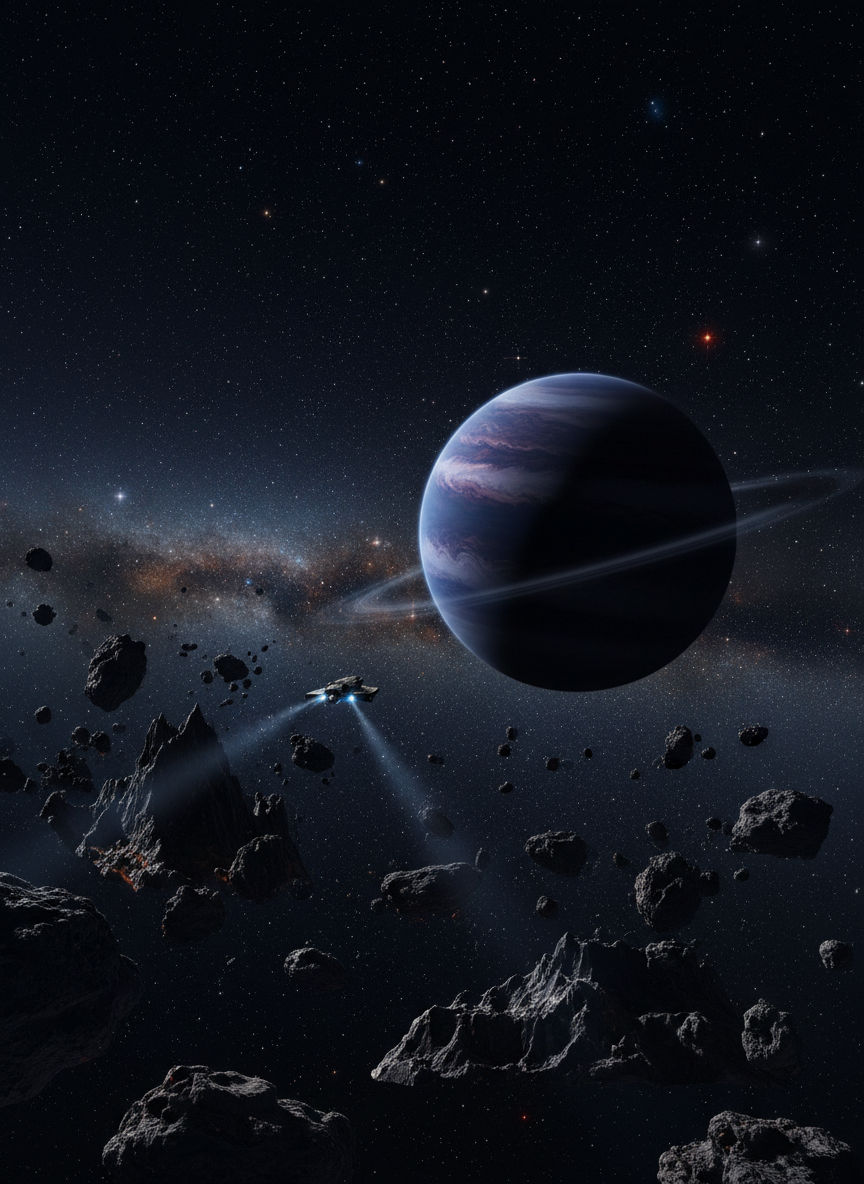
Have you ever imagined a world without a sunrise? Welcome to the realm of rogue planets. Unlike Earth, which is comfortably tethered to the gravitational warmth of our Sun, rogue planets are completely untethered. They wander alone through the pitch-black void of interstellar space.
For a long time, astronomers thought planets like this were rare anomalies. However, recent observations suggest an entirely different reality. Current estimates propose that there could be trillions of these free-floating worlds in the Milky Way alone. In fact, they might heavily outnumber the stars in our galaxy!
Because they don't have a host star to illuminate them, these planets are incredibly dark and freezing cold on the outside. They can range in size from small, rocky worlds like Earth to massive gas giants several times larger than Jupiter.
Far from being empty space, the seemingly dark gaps between the stars are secretly teeming with these wandering worlds. They are the silent, invisible majority of our galaxy.
Key Takeaway
Rogue planets are free-floating worlds that wander interstellar space rather than orbiting a star.
Test Your Knowledge
Why is a rogue planet fundamentally different from planets like Earth or Mars?
How does a planet end up wandering the galaxy alone? Astronomers believe there are two main origin stories for these cosmic nomads: ejection and isolation.
In the ejection scenario, a rogue planet is born just like Earth—inside a swirling disk of gas and dust around a young star. But early solar systems are chaotic. Through a game of cosmic billiards, the gravitational pull of larger neighbor planets can aggressively slingshot a smaller world completely out of its solar system.
Alternatively, the isolation scenario suggests that some rogue planets never had a star to begin with. They form independently when a small cloud of interstellar gas and dust collapses under its own gravity. They essentially form the same way stars do, but they lack the massive weight required to ignite nuclear fusion.
Recently, advanced space telescopes have spotted gas-giant rogue planets that likely formed in this isolated way. Whether they are castaways or born loners, these planets prove that you don't need a solar system to create a world.
Key Takeaway
Rogue planets are either violently ejected from young solar systems or form on their own from collapsing gas clouds.
Test Your Knowledge
What does the 'isolation scenario' suggest about how some rogue planets form?
If rogue planets don't emit their own light and aren't illuminated by a star, how do we even know they are out there? Astronomers use a brilliant trick of physics called gravitational microlensing.
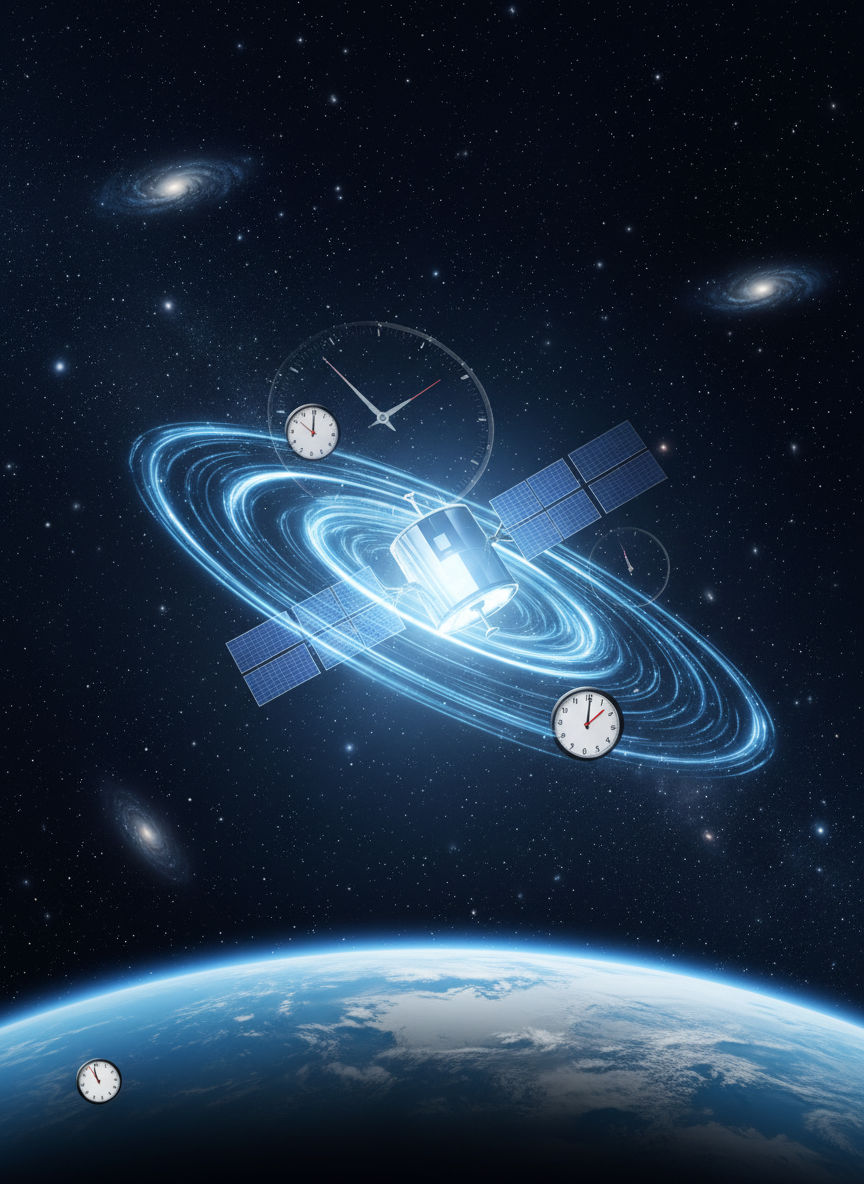
First predicted by Albert Einstein's Theory of General Relativity, microlensing occurs because massive objects warp the very fabric of space around them. When a dark rogue planet passes directly between Earth and a distant background star, the planet's gravity acts like a giant magnifying glass.
As the rogue planet drifts in front of the star, it bends and focuses the star's light toward our telescopes. For a brief moment—sometimes just a few hours or days—that background star suddenly appears much brighter.
By analyzing this temporary spike in brightness, scientists can deduce the presence, and even the mass, of the invisible rogue planet passing by. It is a cosmic game of hide-and-seek, relying entirely on the way gravity bends light!
Key Takeaway
We detect completely dark rogue planets by watching their gravity temporarily magnify the light of distant stars behind them.
Test Your Knowledge
How does gravitational microlensing help astronomers find rogue planets?
It is easy to assume that a planet without a sun would be a dead, frozen wasteland. But astrobiologists believe some rogue planets might actually be capable of supporting life!
Without a star's warmth, any water on the surface of a rogue planet would instantly freeze into a thick shell of ice. However, this icy crust acts as a fantastic insulator. Deep beneath the surface, the planet could harbor a massive, liquid ocean.
What keeps the water liquid? Geothermal heat. Just like Earth, a rocky rogue planet could have a hot interior fueled by the decay of radioactive elements in its core. This internal heat could warm the subsurface ocean, creating chemical gradients similar to the deep-sea hydrothermal vents on Earth—environments where microbial life thrives entirely in the dark.
While we won't find sunbathing aliens on a rogue planet, there is a very real possibility that alien microbes could be swimming in dark, warm oceans beneath miles of solid ice.
Key Takeaway
Internal geothermal heat could sustain liquid subsurface oceans on rogue planets, making microbial life theoretically possible.
Test Your Knowledge
What provides the energy to potentially keep a rogue planet's subsurface ocean liquid?
When a rogue planet is violently ejected from its home solar system, it doesn't necessarily leave empty-handed. Some rogue planets have strong enough gravity to drag their moons along for the ride.
These rogue moons offer another fascinating possibility for habitability. If a massive moon orbits a large gas giant rogue planet, the gravitational tug-of-war between the two bodies creates friction inside the moon. This process, known as tidal heating, can generate enough internal energy to keep the moon's oceans liquid, even in deep space.
Because rogue planets freely drift through the galaxy, some scientists theorize they could act as cosmic transport ships. If a rogue planet harboring microbial life passes close enough to another solar system, asteroid impacts could theoretically transfer that life to new worlds.
While still highly speculative, this concept—called panspermia—suggests that these wandering drifters might not just be lonely outcasts. They could be the very seeds of life moving across the Milky Way.
Key Takeaway
Rogue planets can carry moons, and tidal heating could keep those moons warm enough to support life as they cross the galaxy.
Test Your Knowledge
What is 'tidal heating' in the context of a rogue planet and its moon?
Track your progress, earn XP, and compete on leaderboards. Download NerdSip to start learning.