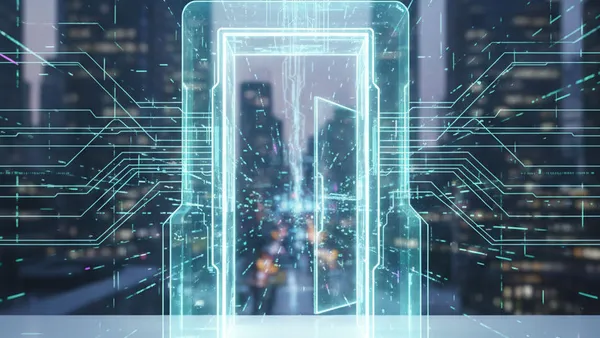
How do computers speak different languages? Meet the digital translators.
Prompted by A NerdSip Learner
Master the art of network communication like a true IT architect.
Imagine you’re at a global summit. You speak English, but your partner only speaks Japanese. Without a pro interpreter, the conversation hits a wall. In the digital realm, that vital role belongs to the Gateway!
Technically, a gateway is a network node—either hardware or software—that links two distinct networks. Think of it as the ultimate entry and exit point for your data packets.
The real magic? These networks often use different protocols, or digital 'languages'. The gateway catches incoming data, translates it into the destination's format, and passes it through seamlessly.
Without gateways, the internet would be a graveyard of isolated digital islands. They work 24/7 in the shadows, ensuring your phone can talk to a server on the other side of the planet!
Key Takeaway
A gateway connects different networks by acting as a sophisticated digital translator.
Test Your Knowledge
What is the primary role of a gateway in IT?
You probably have a router at home right now. People often use 'router' and 'gateway' as synonyms, but in the gritty world of networking, they have distinct identities.
A router is like a hyper-efficient postman. It knows the addresses in your network and finds the fastest route for your data. However, it prefers networks that already speak the same language.
A gateway is the genius translator at the border. Its superpower is bridging networks with totally different architectures and protocols.
Why the confusion? Simple: your home Wi-Fi router is a hybrid. It acts as your Default Gateway, translating your local requests for the massive internet and routing the answers back to you safely.
Key Takeaway
Routers direct data paths, while gateways translate formats—home devices usually do both.
Test Your Knowledge
Why do we frequently confuse routers and gateways in daily life?
Ever wonder how this digital 'translation' actually happens? When you click a link, your computer breaks that request into small data packets and sends them on their way.
The gateway doesn't just look at the destination; it analyzes the internal structure of the data. If the target network requires a different protocol, the gateway carefully 'unpacks' the information.
It then repacks the raw data into a format the destination understands. It’s like taking a handwritten letter out of an envelope and retyping it as an email because the recipient doesn't have a physical mailbox!
This process requires serious processing power. Gateways operate across various layers of the OSI model, handling everything from raw hardware signals to complex software commands at lightning speed.
Key Takeaway
The gateway unpacks data from one network and repacks it to fit the destination's format.
Test Your Knowledge
What does a gateway do with a data packet needing a new protocol?
Gateways aren't just dusty gray boxes in a basement. In our hyper-connected era, they’ve evolved into high-tech specialists powering our digital lifestyle and cloud infrastructure.
Take Cloud Gateways, for example. They ensure a company’s local servers can communicate securely and efficiently with modern cloud services like AWS or Azure.
Even more critical are API Gateways. These are software 'bouncers' for apps. When you book a trip on your phone, the API gateway queries flights, hotels, and cars simultaneously, bundling the answers perfectly for your screen.
Finally, the IoT Gateway (Internet of Things) connects your smart home. It gathers data from tiny sensors—like your thermostat—and translates their simple signals so they can be controlled via the global internet.
Key Takeaway
Gateways today are often smart software solutions for apps, clouds, and smart homes.
Test Your Knowledge
Which gateway manages app requests to various background services?
Since the gateway is the literal 'door' to your network, it’s the MVP of your digital security. It acts as your personal bodyguard in the vast expanse of cyberspace!
Every bit of data entering or leaving your network must pass through this narrow bottleneck. This makes it the perfect spot for a firewall to stand guard and scan for threats.
The firewall scrutinizes every packet: is the sender legit? Is there hidden malware? If anything looks suspicious, the gateway kills the connection instantly, long before the threat reaches your actual computer.
Gateways also use NAT (Network Address Translation). This clever trick hides your devices' internal IP addresses. To the outside world, only the gateway is visible—keeping your laptop and smart TV safely anonymous.
Key Takeaway
As the central choke point, gateways are the ideal spot for firewalls and NAT anonymization.
Test Your Knowledge
Why is a gateway the perfect place to install a firewall?
Track your progress, earn XP, and compete on leaderboards. Download NerdSip to start learning.