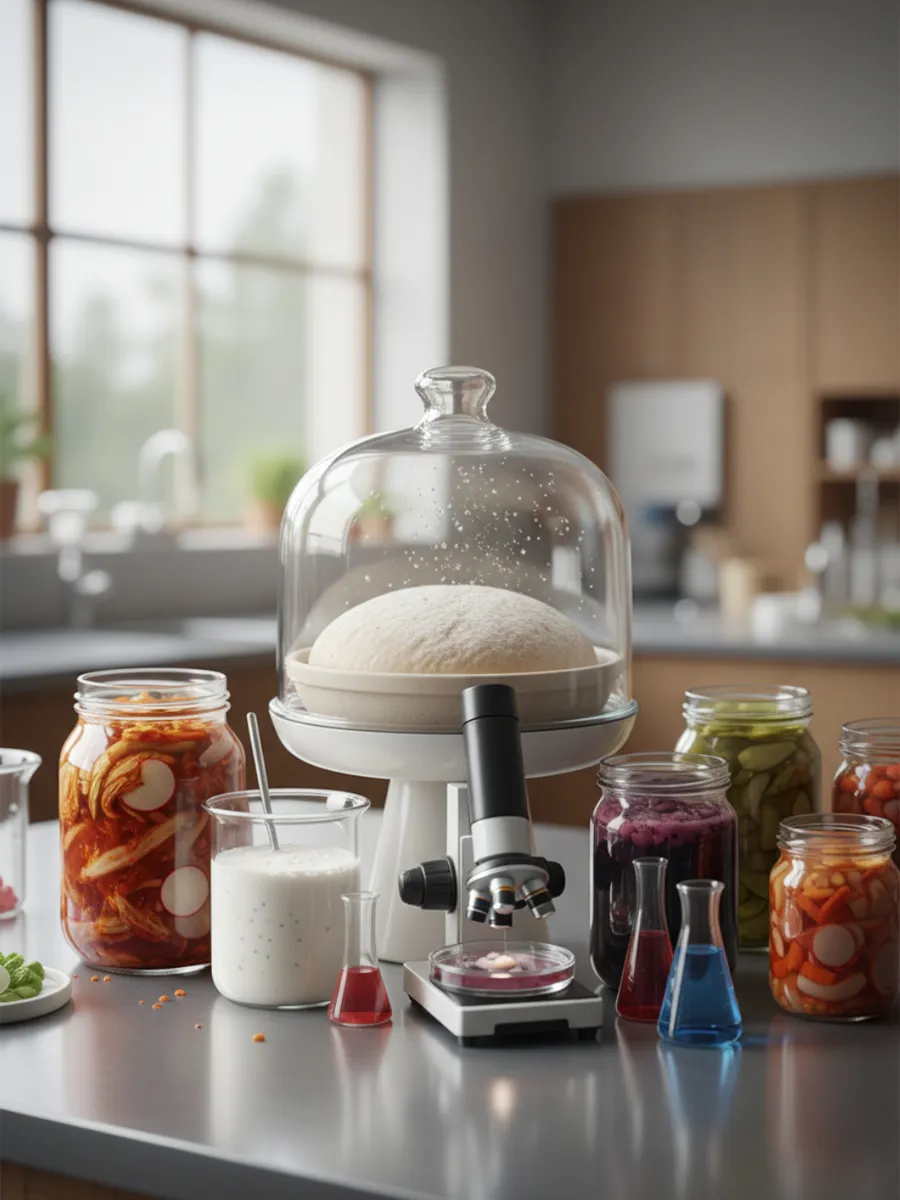
Can invisible microbes really be the secret to the world's best flavors?
Prompted by A NerdSip Learner
Successfully ferment your own sourdough and kimchi from scratch.
Imagine a tiny, invisible party happening inside your jar of food. That is essentially what fermentation is! It happens when microscopic living things—specifically bacteria and yeast—start munching on the sugars and starches found in ingredients like cabbage or flour.
Think of these microbes like tiny Pac-Man players. As they eat the sugar, they transform it into other substances like acids, gases, or alcohol. This isn't rotting; it's a controlled change! Humans have been using this trick for thousands of years, long before refrigerators existed.
Why do we do it? Two reasons: preservation and flavor. These microbes create an environment where dangerous germs can't survive, keeping the food safe to eat. Plus, they unlock tangy, complex flavors that you just can't get from raw ingredients. We aren't cooking with fire here; we are cooking with biology!
Key Takeaway
Fermentation is a natural process where good microbes eat sugar to transform food, preserving it and adding flavor.
Test Your Knowledge
What are the 'invisible chefs' responsible for fermentation?
Let's talk about bread! If you've ever wondered what makes bread fluffy instead of a hard brick, the answer is yeast. Yeast is a microscopic fungus that absolutely loves sugar. When you mix flour and water, the yeast wakes up and starts feeding on the natural sugars in the grain.
Here is the funny part: as the yeast eats, it releases carbon dioxide gas. Basically, the yeast burps! Because bread dough is elastic and sticky, these tiny gas bubbles get trapped inside. As more gas is released, the dough expands and rises, creating those airy holes you see in a slice of bread.
In Sourdough, we don't use store-bought yeast packets. We capture 'wild' yeast floating in the air! This wild yeast takes longer to work, but it creates a distinct, tangy flavor that makes sourdough so special.
Key Takeaway
Yeast eats sugar and releases carbon dioxide gas, which gets trapped in the dough and makes bread rise.
Test Your Knowledge
What gas does yeast release to make bread rise?
Now let’s look at spicy, crunchy Kimchi. Here, the hero isn't yeast, but a bacteria called Lactobacillus. Don't let the word 'bacteria' scare you; these are the good guys! The process starts by soaking cabbage in salt. This is crucial because 'bad' bacteria (the kind that makes food rot) hate salt and die off.
However, our hero Lactobacillus *loves* salty environments. Once the bad guys are gone, the good bacteria take over. They eat the veggie sugars and turn them into lactic acid.
This acid is what gives Kimchi and pickles their signature sour kick! More importantly, the acid acts like a force field. It makes the environment so sour that mold and harmful germs can't survive. You are essentially using good bacteria to build a protective shield around your vegetables!
Key Takeaway
Salt kills bad bacteria, allowing good bacteria to produce acid that sours the food and protects it from spoiling.
Test Your Knowledge
Why is salt crucial in making Kimchi?
Track your progress, earn XP, and compete on leaderboards. Download NerdSip to start learning.