Why are superpowers suddenly fighting over Greenland’s frozen rocks?
Prompted by A NerdSip Learner
Understand the global race for Arctic resources.
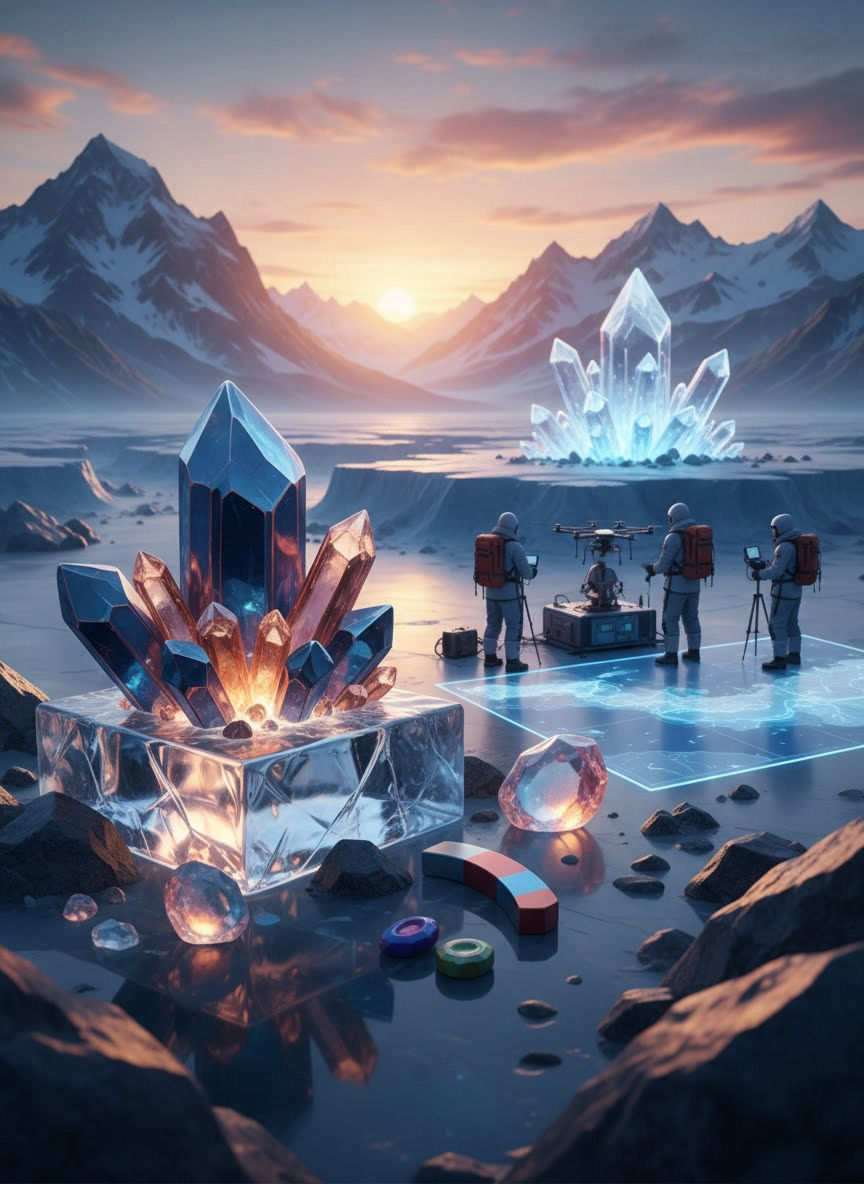
Imagine Greenland as a giant, frozen treasure chest that has been locked tight for millions of years. As climate change causes the ice sheet to retreat, it is uncovering something arguably more valuable than gold: Critical Raw Materials.
For decades, geologists knew Greenland was rich in minerals, but the harsh ice made accessing them nearly impossible. Now, the melting ice is exposing vast deposits of Rare Earth Elements (REEs) along the coast.
These aren't just pretty rocks. We are talking about massive potential mines like the Kvanefjeld project, which could hold one of the largest deposits of rare earths in the world. Suddenly, this quiet island is the center of attention for mining companies and governments alike, all wondering what lies beneath the frost.
Key Takeaway
Melting ice in Greenland is exposing massive, previously inaccessible deposits of valuable rare earth minerals.
Test Your Knowledge
What primary factor has made Greenland's mineral deposits more accessible recently?
Despite the name, Rare Earth Elements aren't actually that rare! They are just really annoying to find in concentrated clumps that are easy to mine. Think of them as the "vitamins" of modern technology—you only need a tiny amount, but without them, the gadget won't work.
Elements with sci-fi names like Neodymium and Dysprosium are crucial for making powerful permanent magnets. Why does that matter? Because these super-magnets are the heart of your smartphone speakers, the vibration motor in your game controller, and the hard drive in your laptop.
Greenland holds a special type of rock that contains a wide variety of these elements mixed together. Without a steady supply of these "tech vitamins," our modern digital life would essentially grind to a halt.
Key Takeaway
Rare earth elements act as essential 'vitamins' for high-tech devices like phones and laptops.
Test Your Knowledge
Why are Rare Earth Elements compared to 'vitamins' in this lesson?
Here is the great irony: to save the planet from climate change, we need to dig up the earth. The transition to green energy is metal-hungry.
Those powerful magnets we mentioned? They are absolutely essential for Electric Vehicle (EV) motors and the giant generators inside wind turbines. A single wind turbine can require tons of rare earth magnets to generate electricity efficiently.
Greenland’s potential supply is massive. Some estimates suggest it could supply a huge chunk of the global demand for the minerals needed to build millions of EVs. If we want to move away from fossil fuels, Greenland's rocks might just be the key to unlocking a cleaner, battery-powered future.
Key Takeaway
Greenland's minerals are critical for building green technologies like electric cars and wind turbines.
Test Your Knowledge
Which specific green technologies rely heavily on rare earth magnets?
Right now, the world has a supply chain problem. Currently, China controls roughly 80% to 90% of the processing of rare earth elements. This gives them immense power over the global tech market.
The United States and Europe are nervous. If supply chains get blocked (like during a trade war), their tech and defense industries could freeze. This is why Western leaders are looking at Greenland with dollar signs in their eyes.
Greenland is a territory of Denmark, a stable Western ally. Developing mines there would provide the West with a secure, independent supply chain. It’s not just about money; it’s about strategic security and not putting all our eggs in one basket.
Key Takeaway
Western nations want Greenland's resources to reduce dependence on China's dominance in the rare earth market.
Test Your Knowledge
Why are Western nations specifically interested in Greenland's minerals?
So, should we just start digging? It's not that simple. Greenlanders are facing a tough choice. Mining brings jobs and money, which could help Greenland become financially independent from Denmark.
However, mining is messy. The Kvanefjeld site, for example, also contains uranium (which is radioactive). Many locals worry that mining dust could contaminate their pristine drinking water and farming lands.
In 2021, the Greenlandic government actually banned uranium mining effectively halting one of the biggest projects. It’s a classic modern dilemma: we need these minerals to save the global climate, but getting them might ruin the local environment. Who gets to decide which is more important?
Key Takeaway
Mining offers economic freedom but poses serious environmental risks like radioactive contamination.
Test Your Knowledge
What was the main reason the Greenlandic government halted a major mining project in 2021?
Track your progress, earn XP, and compete on leaderboards. Download NerdSip to start learning.