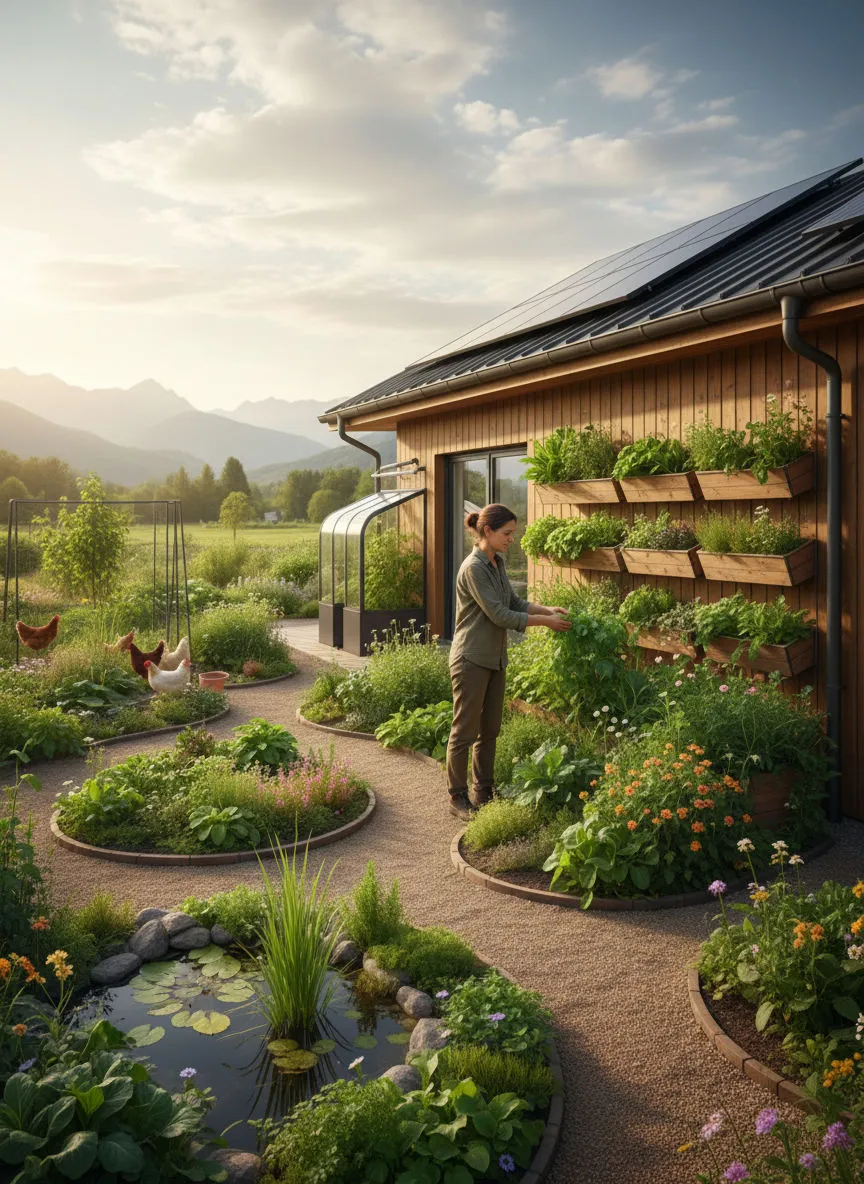
Did you know a perfect garden never needs digging?
Prompted by A NerdSip Learner
Design your first low-maintenance, self-sustaining ecosystem at home.
Imagine your garden as a self-sustaining system rather than a chore. That's Permaculture. The term originally blends the English words "permanent" and "agriculture."
In traditional gardening, we often fight nature: we pull weeds, spray chemicals, and water constantly. Permaculture flips this mindset completely. Our golden rule: Work with nature, not against it.
The goal is to create a closed-loop ecosystem that functions like a wild forest. Plants, insects, and birds work together like perfect gears in a machine. Waste becomes fertilizer, and the soil stays naturally fertile.
For you, this means less hard labor and no more artificial chemicals. After the initial setup, you can enjoy a healthy harvest right outside your door!
Key Takeaway
Permaculture mimics nature to create a low-maintenance garden where everything works in a cycle.
Test Your Knowledge
What is the primary principle of permaculture?
When starting a new garden, we usually want to grab a shovel immediately. But permaculture asks you to hit the brakes. The most vital rule for any beginner is: Observe.
Before planting a single seed, study your land across the seasons. Where does the morning sun hit first? Where do puddles form after heavy rain? Where does the icy wind whistle through the property?
Every garden has "microclimates"—tiny zones with unique conditions. A sun-loving tomato will wither in a damp, windy corner where a fern would thrive perfectly.
By playing detective, you avoid costly and frustrating mistakes. Nature tells you exactly what it needs; you just have to learn to look and listen closely.
Key Takeaway
Before changing anything, you must observe and understand your garden's natural conditions.
Test Your Knowledge
Why is observation the first step in permaculture?
Traditional farming often uses "monocultures"—fields of just one plant. The problem? They drain the soil and are extremely vulnerable to pests and diseases.
Permaculture uses companion planting instead. Think of it as a harmonious shared apartment where different vegetables, herbs, and flowers grow together happily.
Some plants are great neighbors that help each other. Tall, sun-loving plants provide shade for smaller ones. Fragrant herbs like lavender or marigolds confuse pests, protecting your carrots and tomatoes.
This diversity attracts vital pollinators like bees and butterflies. By mimicking nature’s variety, your garden stays robust and healthy without any extra effort.
Key Takeaway
Companion planting grows different species together so they can naturally support and protect each other.
Test Your Knowledge
What is the advantage of companion planting over monoculture?
Here is a major surprise for gardening beginners: You never have to dig up the earth! In permaculture, that heavy-duty spade is often completely unnecessary.
Deep in the soil lives a massive, invisible network of earthworms, fungi, and billions of microorganisms. This soil life aerates the ground and provides nutrients. Digging destroys this fragile underworld.
Instead, we use a simple method called mulching. You cover the bare earth with a protective layer of organic material—like grass clippings, fallen leaves, or straw.
This mulch acts like a protective blanket. It prevents water from evaporating, suppresses weeds naturally, and eventually turns into rich, nutrient-dense humus.
Key Takeaway
Instead of digging, use mulching to protect the soil from drying out and feed the vital soil life.
Test Your Knowledge
Why should you mulch instead of digging the soil?
Water is the most precious resource in any garden. In the peak of summer, hauling a hose around can feel like a chore. Permaculture offers a brilliant solution: Catch and store water when it's plentiful.
The key is never letting rainwater simply vanish down the drain. The easiest first step is placing rain barrels under your gutters to collect every drop from your roof.
Take it further by shaping your landscape to keep water in. Small, planted trenches or shallow basins allow rain to soak slowly into the ground instead of running off the surface.
Combined with a thick mulch layer, your garden soil acts like a giant sponge. This ensures your plants stay hydrated even during long dry spells!
Key Takeaway
Collecting rainwater and keeping it in the soil makes your garden resilient to droughts.
Test Your Knowledge
How does permaculture help use water efficiently?
Track your progress, earn XP, and compete on leaderboards. Download NerdSip to start learning.