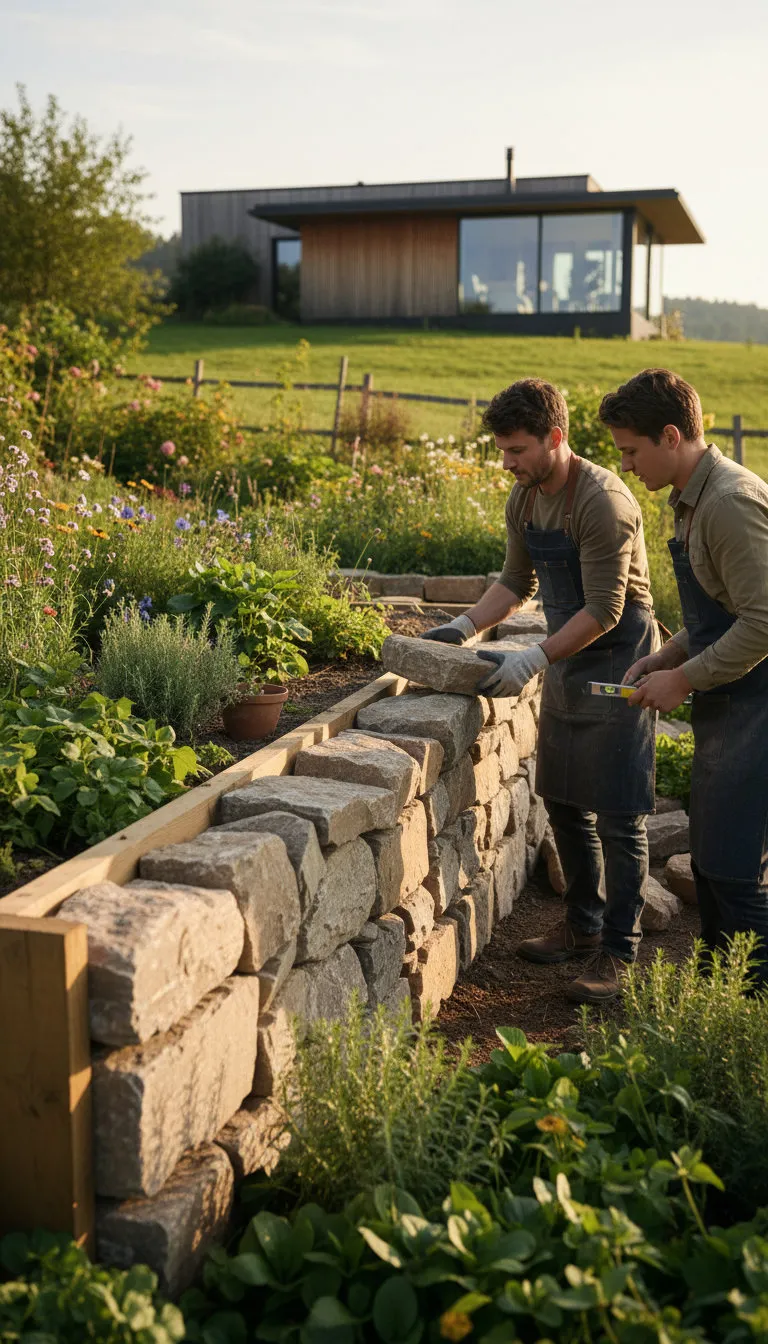
Could a simple stack of stones transform your garden into a timeless masterpiece?
Prompted by A NerdSip Learner
Build a professional-grade natural stone high bed in five lessons.
Welcome to your new favorite project! Building a nature stone wall feels incredibly rewarding, but before we touch a single stone, we need to talk about what lies beneath. A beautiful wall that collapses after one winter is no fun, so we start with a solid foundation.
Grab your shovel! You need to dig a trench where your wall will stand. For a typical waist-high garden bed, dig down about 6 to 8 inches deep. This might feel like extra work, but it keeps your wall from shifting when the ground freezes and thaws.
Once dug, don't put stones directly on the dirt. Fill that trench with crushed gravel and tamp it down hard until it's flat. This gravel layer acts as a drainage system and a shock absorber. Think of it as a comfortable, stable mattress for your heavy stones to rest on!
Key Takeaway
A shallow trench filled with compacted gravel ensures your wall won't sink or shift over time.
Test Your Knowledge
What should you put in the trench before laying the first stone?
Now that your foundation is ready, look at your pile of stones. It might look like a chaotic mess, but to a wall builder, it’s just a disorganized puzzle! Success is 90% preparation, so let's sort your stones before we start lifting.
Create three distinct piles. First, find your Base Stones. These are the biggest, ugliest, heaviest rocks you have. No one will see them, but they will hold everything up. Second, look for Capstones. These are flat, broad stones that will sit on top to make a nice seat or finish.
Everything else goes into the Wall Stone pile. These are the medium-sized rocks with at least one flat-ish face. When you sort them now, you won't be scrambling for the right piece later while holding a 40-pound rock in your hands. It makes the building process smooth and meditative!
Key Takeaway
Sort your rocks into base stones (heavy), wall stones (medium), and capstones (flat) before building.
Test Your Knowledge
Which stones should you set aside to use at the very bottom of the wall?
It is time to build! We are going to lay the Base Course (the bottom row). Take those big, heavy stones from your first pile and place them onto your gravel foundation.
The goal here is stability, not beauty. Wiggle every single stone you place. If it rocks back and forth, it’s not ready. Add or remove a little gravel underneath until that stone sits dead flat. If the bottom row wiggles, the top row will eventually fall down.
Try to place the stones so they touch each other as much as possible. It’s okay if there are gaps—we aren't building a spaceship! Just make sure they form a continuous line. This first row acts as the anchor for your high bed, holding back the soil you'll eventually add. Once this row is solid, the rest is just fun 3D Tetris.
Key Takeaway
Ensure every stone in the bottom row is completely stable and wobble-free before moving up.
Test Your Knowledge
What is the 'wiggle test' used for?
As you start building upward, there is one golden rule you must memorize: One over two, two over one. This means you should never stack a stone directly on top of another so that the vertical cracks (joints) line up perfectly.
Instead, bridge the gaps! Place one stone so it sits across the seam of the two stones below it. This interlocking pattern ties the wall together, making it act as one solid unit rather than independent stacks of rocks.
Also, consider the Batter. This is a fancy term for 'leaning back.' As you build up, slightly step the stones back toward the soil area. You want the wall to lean slightly *into* the hill or garden bed. This uses gravity to push the stones together against the weight of the dirt, rather than having them fall outward onto your toes!
Key Takeaway
Always bridge the gaps between stones (interlocking) and lean the wall slightly backward for strength.
Test Your Knowledge
Why should you avoid lining up vertical joints (cracks) perfectly?
You’re almost there! Your wall is rising, and it looks rugged and awesome. But before we finish, we need to manage the water. Don't shovel garden soil directly against the back of your stone wall. Soil holds water, and water gets heavy and expands when frozen.
Instead, use gravel backfill. Put a few inches of gravel directly behind the stones as you build up. This allows water to flow through the rocks rather than pushing them over. Once the gravel buffer is in, fill the rest of the high bed with your good compost and soil.
Finally, place your Capstones. These are the flat ones you saved earlier. They seal the top of the wall and hold the lower stones in place with their weight. Now, step back, wipe your brow, and imagine the tomatoes or flowers growing in your new masterpiece!
Key Takeaway
Place gravel behind the wall for drainage before filling the bed with soil to prevent collapse.
Test Your Knowledge
What goes directly behind the stone wall?
Track your progress, earn XP, and compete on leaderboards. Download NerdSip to start learning.