Did you know AI can now reconstruct images based solely on human brain activity?
Prompted by A NerdSip Learner
Explore the science behind neural decoding and how AI interprets brain patterns.
Have you ever wished you could show someone exactly what you were picturing in your head? For decades, the idea of mind-reading was pure science fiction. Today, a fascinating field called *neural decoding* is turning that fiction into reality.
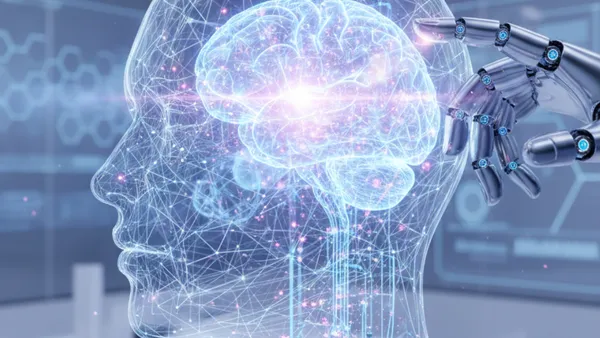
Neural decoding is the process of using algorithms to translate physical brain activity back into mental representations. Whenever you look at a picture, listen to a song, or imagine a scenario, your brain fires a unique pattern of electrical impulses and manages localized blood flow to process that information.
By capturing this physical data, scientists can feed it into advanced computers. The ultimate goal isn't just to see that your brain is active, but to understand *what* it is processing. It is a brilliant bridge between human biology and computer science!
Key Takeaway
Neural decoding uses advanced algorithms to translate physical brain activity into understandable mental representations.
Test Your Knowledge
What is the primary goal of neural decoding?
To decode the brain, we first have to measure it! One of the most powerful tools in a neuroscientist's toolkit is the fMRI (Functional Magnetic Resonance Imaging) scanner. Unlike an X-ray that shows bones, an fMRI shows activity in real-time.
But how does it work? It all comes down to oxygen. When a specific part of your brain is working hard, it requires more oxygen-rich blood. The fMRI detects these subtle changes in blood flow, known as the BOLD (Blood-Oxygen-Level-Dependent) signal.
The scanner divides the brain into tiny 3D cubes called *voxels*—think of them as the three-dimensional pixels of your brain. A single scan can contain hundreds of thousands of voxels! By mapping which voxels light up when you see a face or hear a word, scientists create a highly detailed map of your brain's processing patterns.
Key Takeaway
fMRI scans track blood flow to create 3D maps of brain activity, using tiny units called voxels.
Test Your Knowledge
What does a "voxel" represent in the context of an fMRI scan?
Having a highly detailed 3D map of brain activity is amazing, but without a translator, it's just a complex jumble of data. This is where Artificial Intelligence steps in!
To train an AI to read brain data, scientists use machine learning. They place a person inside an fMRI scanner and show them thousands of images or play hours of audio. The AI constantly monitors two things: the external stimulus (what the person sees or hears) and the internal response (the exact voxel patterns lighting up in their brain).
Over time, the AI builds a mathematical "dictionary." It learns the complex, hidden rules connecting specific brain patterns to specific concepts. For example, it learns that a particular pattern of voxels in your visual cortex consistently corresponds to the image of a dog. The more data it processes, the better it becomes at translating your neural code!
Key Takeaway
AI learns to interpret brain data by analyzing paired datasets of sensory stimuli and the resulting voxel patterns.
Test Your Knowledge
How does an AI initially build its "dictionary" to decode brain activity?
Ready for the truly mind-blowing part? Recently, researchers have combined fMRI data with powerful generative AI—specifically *diffusion models*, similar to the ones behind modern AI art generators—to actually recreate images from human thoughts.
Here is how it works: A person looks at a photograph while inside an fMRI scanner. The AI reads their voxel activity and translates it into a descriptive mathematical code. This code is then fed into the diffusion model, which is instructed to generate what the brain data suggests.
The results are astonishing! While not a pixel-perfect replica, the AI accurately captures the layout, colors, and core subject of the original image. If you look at a picture of a clock tower, the AI generates a picture of a clock tower based purely on your blood flow patterns. It is a stunning visual demonstration of AI-powered neural decoding in action!
Key Takeaway
Advanced generative AI, like diffusion models, can successfully recreate the visual layout and subjects of images a person is looking at.
Test Your Knowledge
Which type of AI model has recently been used to recreate images from fMRI brain scans?
We process more than just pictures; we process language and complex thoughts. Can AI decode the stories inside our heads? Yes! Researchers have successfully used Large Language Models (LLMs) to decode continuous language from brain scans.
Instead of translating exact word-for-word inner speech, the AI focuses on *semantics*, meaning the "gist" or the core idea of what you are processing. If a participant listens to a story about a person walking their dog in the park, the AI decoder might generate text saying, "A man was outside with his pet."
This is a massive breakthrough! It means the AI is tapping into a deeper, conceptual level of thought rather than just literal auditory processing. It proves that the abstract meaning of our thoughts can be mathematically captured and translated back into readable text.
Key Takeaway
AI language decoders focus on capturing the semantic meaning, or the "gist," of a person's thoughts rather than exact word-for-word translation.
Test Your Knowledge
When current AI decodes language from fMRI data, what is it actually translating?
With AI recreating images and decoding stories, it is easy to assume we are on the verge of instant telepathy. However, there are significant biological and technological bottlenecks that keep this strictly in the laboratory for now.
First, the BOLD signal measured by an fMRI is relatively slow. Blood flow takes a few seconds to change after a neuron fires, creating a natural delay in the data. Second, fMRI machines are massive, extremely expensive, and require you to lie perfectly still in a giant magnet!
Most importantly, brain models are hyper-individualized. My brain organizes information differently than your brain. An AI trained for dozens of hours on your voxel patterns would produce absolute garbage if it tried to decode my brain. Right now, universal mind-reading simply isn't scientifically possible because we all possess a uniquely wired neural landscape.
Key Takeaway
True mind-reading is currently limited by the slowness of blood flow and the unique structure of every individual's brain.
Test Your Knowledge
Why can't an AI model trained to decode one person's brain be instantly used on someone else?
As neural decoding technology races forward, we must stop and ask ourselves: Just because we *can* decode the brain, does that mean we *should*? This technology introduces unprecedented questions regarding mental privacy.
Right now, decoding requires active cooperation; if you do mental math or deliberately think of something else while in the fMRI, you can easily sabotage the AI's translation! But as sensors become smaller and more accurate, researchers and ethicists are pushing for the establishment of *neuro-rights*.
Neuro-rights aim to protect our brain data as the ultimate form of personal privacy. The goal is to ensure that our inner thoughts, memories, and subconscious remain strictly our own, free from corporate or government surveillance. By setting ethical boundaries today, we can enjoy the incredible medical and scientific benefits of neural decoding while fiercely protecting our cognitive liberty.
Key Takeaway
The rise of neural decoding technology necessitates the creation of neuro-rights to protect our ultimate personal privacy: our thoughts.
Test Your Knowledge
What is the primary purpose of "neuro-rights"?
Track your progress, earn XP, and compete on leaderboards. Download NerdSip to start learning.