How does a 3-pound blob of fat control your entire reality?
Prompted by A NerdSip Learner
Understand how your brain actually works.
Imagine your brain as a bustling, futuristic city operating at lightning speed. The primary citizens of this incredibly complex city are specialized cells called neurons. You have roughly 86 billion of them, making up a massive communication network that quietly handles everything from regulating your heartbeat to storing your fondest childhood memories.
Think of a single neuron like a microscopic, odd-looking tree. It has a canopy of branches waiting to catch incoming messages, a long trunk where the message travels down, and roots at the bottom that pass the information on to the next tree.
Whenever you learn a new fact, smell a fresh cup of morning coffee, or solve a tricky puzzle, these little trees are rapidly whispering to each other. They send tiny electrical zaps down their trunks to keep the flow of information constantly moving. It is exactly like having a high-speed fiber-optic internet connection inside your head, firing away twenty-four hours a day, even when you are fast asleep!
Key Takeaway
Neurons are the brain's fundamental messengers, acting like a giant, high-speed biological internet.
Test Your Knowledge
What is a single neuron most similar to in our analogy?
So, if neurons are like microscopic trees whispering to one another, how do their messages actually cross the space between them? Surprisingly, these communication lines do not actually touch! There is a tiny, microscopic gap between the end of one neuron and the beginning of another, which scientists call a synapse.
When a speedy electrical message reaches the very end of a neuron's root, it cannot simply jump across the open gap like a spark. Instead, it temporarily transforms into a chemical messenger. Think of it like a mail carrier arriving at the edge of a wide, rushing river. They cannot drive their truck across, so they carefully place their letters into a fleet of tiny boats to float to the other side.
These chemical "boats" cross the synapse and safely dock on the neighboring neuron. Once they dock, the message instantly turns back into an electrical zap and continues its lightning-fast journey. This magical, continuous leap across the synapse is the absolute foundation of every single thought, feeling, and action you experience!
Key Takeaway
Neurons communicate across microscopic gaps called synapses using chemical messengers instead of electricity.
Test Your Knowledge
What happens when an electrical message reaches the gap (synapse) between two neurons?
Remember those tiny chemical "boats" ferrying important messages across the gap between your brain cells? Scientists call these fascinating molecules neurotransmitters. They come in many different chemical "flavors," and each one serves a very specific purpose, instructing your brain and body to feel or act in a particular way.
Imagine them as different types of text messages sent from a boss. Some are urgent alerts to wake you up, some are calming notes telling you to relax, and others are enthusiastically cheering you on. For example, dopamine is famous as the brain's ultimate "reward" chemical. When you finally check off a difficult task at work or eat a delicious slice of pizza, your brain releases a wave of dopamine, making you feel motivated and victorious.
Another famous neurotransmitter is serotonin, which acts like a master mood stabilizer. It helps you feel calm, socially secure, and generally content. Understanding that your moods are often just different chemical recipes being mixed in your brain makes it easier to see why getting a good night's sleep is so transformative!
Key Takeaway
Neurotransmitters are chemical messengers that act like specific instructions, heavily influencing your daily mood, energy, and emotions.
Test Your Knowledge
Which of the following best describes the role of dopamine?
For a very long time, people mistakenly believed that once you reached adulthood, your brain was permanently hardwired and could not be changed. We now know this is a total myth! Your brain possesses an incredible, lifelong superpower known as neuroplasticity.
Neuroplasticity simply means that your brain is highly flexible and adaptable. It can physically rewire its own connections based entirely on your daily habits and experiences. Imagine taking a walk through a beautiful forest covered in deep, fresh snow. The first time you push through the drifts, it is exhausting and slow. But if you walk that exact same path every single day, it eventually becomes a clear, packed-down trail that is incredibly easy to travel.
Your brain operates exactly like that snowy forest. When you persistently practice a brand-new skill—like strumming the guitar or learning to speak Spanish—you are actively carving new, faster pathways between your neurons. The more you practice, the stronger and faster that connection becomes. You quite literally hold the power to physically mold and reshape your brain!
Key Takeaway
Neuroplasticity is your brain's amazing ability to rewire itself and build stronger connections through repetition and experience.
Test Your Knowledge
What is the best analogy for neuroplasticity?
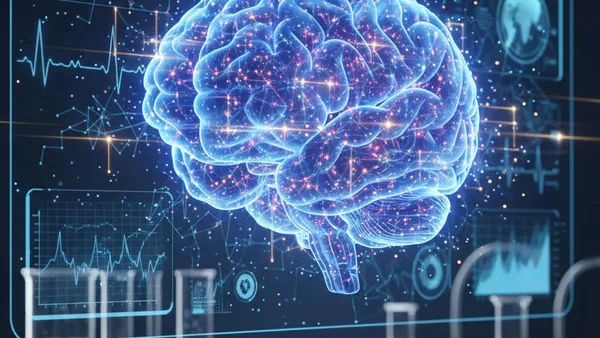
If you look at a photograph or model of a human brain, you will immediately notice the deeply wrinkled, walnut-like outer layer. This fascinating outer shell is called the cerebral cortex, and it serves as the ultimate command center of your conscious mind.
Think of the cortex as the visionary CEO of a massive, multi-national corporation. While the deeper, older parts of your brain are busy managing essential automated factory work—like keeping you breathing, blinking, and digesting your lunch—the CEO is handling the complex, big-picture decisions.
The cortex is the exact place where your unique personality lives. It is the machinery you use to solve complex math problems, daydream about your upcoming weekend, and appreciate a beautiful piece of art. Furthermore, those strange, deep wrinkles are actually a brilliant evolutionary life-hack. Folding the soft tissue in on itself allows the human body to pack a massive amount of extra computing power into the relatively small, limited space of your skull!
Key Takeaway
The cerebral cortex is the wrinkled outer layer of the brain responsible for high-level thinking, personality, and complex decisions.
Test Your Knowledge
Why is the outer layer of the brain (the cerebral cortex) so wrinkled?
Track your progress, earn XP, and compete on leaderboards. Download NerdSip to start learning.