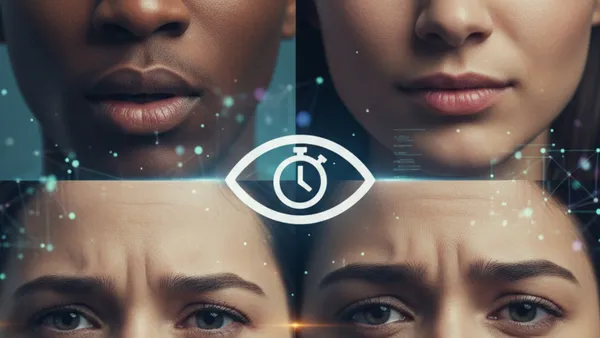
Did you know that a brief lip twitch can reveal hidden contempt even when someone is smiling?
Prompted by A NerdSip Learner
Spot universal facial cues that reveal true feelings in milliseconds.
Have you ever felt like someone was hiding how they really felt, but you couldn't pinpoint why? The answer likely flashed across their face in a fraction of a second.
Welcome to the fascinating world of micro-emotions—often called microexpressions. These are involuntary, lightning-fast facial movements that reveal a person's genuine emotional state. Typically lasting between 1/25th and 1/5th of a second, they happen so quickly that roughly 80% to 90% of untrained people miss them entirely.
Pioneering research in psychology has shown that these fleeting cues are universal. Whether you are in a bustling coffee shop in New York or a remote village across the globe, the biological wiring that produces these expressions remains the same.
By learning to spot these rapid-fire signals, you can dramatically boost your emotional intelligence, improve your negotiation skills, and build deeper empathy with the people around you. It all starts with knowing where to look!
Key Takeaway
Micro-emotions are brief, involuntary facial expressions lasting a fraction of a second that reveal true feelings and are universally expressed across cultures.
Test Your Knowledge
How long does a typical microexpression last?
We see smiles every day, but not all of them are genuine. A polite or forced smile might fool a casual observer, but a trained eye knows exactly which facial muscles to watch.
When humans experience true happiness, it triggers a reflex known as the "Duchenne smile." This involves two major facial actions: the corners of the mouth pull back and up, and crucially, the cheeks raise.
The ultimate secret to spotting true joy lies in the eyes. Look for "crow's feet"—those tiny wrinkles that form at the outer corners of the eyes. If the mouth is smiling but the upper half of the face remains stiff and smooth, you are likely looking at a social or polite smile, not genuine happiness.
Next time someone grins at you, quickly glance at the outside corners of their eyes. If the eyes aren't involved in the action, the smile might just be for show!
Key Takeaway
A genuine expression of happiness always engages the muscles around the eyes, creating visible "crow's feet."
Test Your Knowledge
Which facial feature is the most reliable indicator of a genuine smile?
Contempt is a powerful and destructive emotion, often signaling a feeling of superiority, disrespect, or disdain. Interestingly, it is the most unique of the seven universal emotions because it is the only one that is asymmetrical.
When someone flashes a microexpression of contempt, you will see a quick, unilateral movement. The corner of the lip on just one side of the face will pull back and slightly upward, resembling a brief, subtle smirk.
Because it only happens on one side, it can easily be mistaken for a playful quirk or a polite half-smile. However, in professional or personal relationships, repeated flashes of contempt can be a huge red flag indicating a lack of respect.
Spotting this asymmetrical lip twitch can give you an incredible advantage. It allows you to address underlying tensions before they escalate into open conflict.
Key Takeaway
Contempt is uniquely asymmetrical, characterized by a quick tightening and raising of only one corner of the lip.
Test Your Knowledge
What makes contempt unique among the universal microexpressions?
Fear and surprise are closely related, and their microexpressions can look strikingly similar at first glance. Both involve wide-open eyes and raised eyebrows, but there are crucial differences if you pay close attention.
When someone is genuinely surprised, their eyebrows curve upward like high arches, and their jaw drops open naturally without any tension. It is a completely relaxed, neutral reaction to the unexpected.
Fear, on the other hand, carries a lot of tension. The eyebrows raise, but they also draw together, creating a flat, horizontal line across the forehead rather than a curve. Additionally, the mouth does not just drop open; the lips stretch horizontally backwards toward the ears.
If you see tension in the brow and stretched lips, the person isn't just shocked—they are experiencing a quick spike of anxiety or fear. Recognizing this difference can help you provide reassurance when it is most needed!
Key Takeaway
Surprise features relaxed, arched eyebrows and a dropped jaw, while fear involves tensed, flattened eyebrows and horizontally stretched lips.
Test Your Knowledge
How do the eyebrows behave during a microexpression of fear compared to surprise?
Disgust is our brain's evolutionary response to something toxic or offensive. While it originally helped our ancestors avoid spoiled food, today it is just as often triggered by an idea, a proposal, or a person's behavior.
The universal sign of disgust is centralized right in the middle of the face. The most prominent feature is the wrinkling of the nose, much like the face you would make if you suddenly smelled something awful.
Accompanying the crinkled nose, the upper lip is often pulled upward sharply, and the eyes may narrow slightly. Even when someone tries to remain polite during an offensive conversation, a micro-wrinkle of the nose might slip out.
Spotting this brief flash of disgust is incredibly valuable in negotiations or social interactions. It tells you immediately that the other person strongly dislikes the concept or offer on the table, allowing you to pivot your approach!
Key Takeaway
Disgust is primarily shown through the involuntary wrinkling of the nose and the raising of the upper lip.
Test Your Knowledge
Which facial movement is the primary indicator of disgust?
Anger is a high-energy emotion that prepares the body for confrontation. Even when a person is doing their absolute best to suppress their rage and maintain a calm exterior, the muscles in their face often betray them.
A microexpression of anger is heavily concentrated in the eyes and jaw. The eyebrows will lower aggressively and pull together, creating deep vertical lines—sometimes called the "11s"—right above the bridge of the nose.
Simultaneously, the eyes will narrow into a hard, intense stare, and the lower eyelids will tense up. Down below, the lips are typically pressed tightly together in a thin line, or the jaw will clench visibly.
If you notice these subtle tightenings, it is a clear warning that the person is feeling hostile or frustrated. Recognizing concealed anger early allows you to de-escalate the situation before the emotion boils over.
Key Takeaway
Suppressed anger flashes as lowered, drawn-together eyebrows, tense lower eyelids, and tightly pressed lips.
Test Your Knowledge
Where on the face does the tension of suppressed anger typically manifest?
Sadness is one of the most difficult microexpressions to fake, and consequently, it is one of the hardest to hide. When a person is masking their sorrow, their face might seem completely neutral, but a tiny muscular shift will reveal their pain.
The ultimate tell for sadness lies in the inner corners of the eyebrows. During a genuine moment of sorrow, the inner brows will pull upward and slightly together, creating an inverted "V" shape or a subtle drooping effect over the eyes.
Additionally, the corners of the mouth may pull downward slightly, or the lower lip may push up in a very brief pout. Because sadness lacks the explosive energy of anger or surprise, it can be incredibly subtle.
By noticing these delicate, fleeting shifts, you can identify when a friend or colleague is secretly hurting. This allows you to step in with empathy, support, and a deeper understanding of their true emotional state.
Key Takeaway
A flash of concealed sadness is most reliably revealed by the inner corners of the eyebrows pulling upward and together.
Test Your Knowledge
What is the most reliable facial indicator of genuine sadness?
Track your progress, earn XP, and compete on leaderboards. Download NerdSip to start learning.