Ready to explore the invisible and supersonic physics of auroral anomalies?
Prompted by NerdSip Explorer #1890
Master proton emissions, STEVE physics, and X-ray auroras.
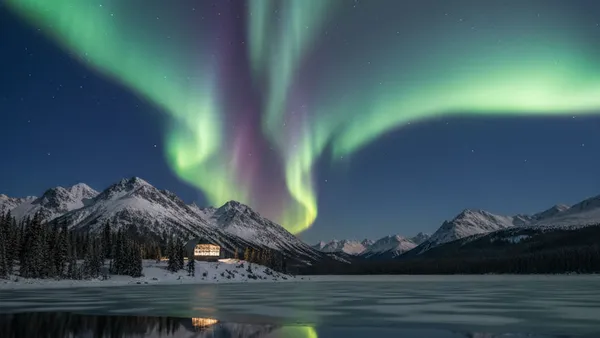
While discrete auroral arcs are primarily driven by electron precipitation, the magnetosphere also rains down energetic protons. This distinct phenomenon, known as the proton aurora, rarely displays the sharp, dancing structures of its electron-driven counterparts. Instead, it forms broad, diffuse, and visually faint glowing bands.
When a high-energy proton plunges into the thermosphere, it undergoes a charge-exchange reaction. By stripping an electron from a neutral atmospheric molecule, the proton transforms into an excited, fast-moving hydrogen atom. As this neutral atom relaxes, it emits photons in the hydrogen Balmer series, primarily the H-alpha line at 656.3 nm.
The defining signature of a proton aurora isn't just its spectral line, but its kinematic distortion. Because these newly formed hydrogen atoms are plummeting toward Earth at immense velocities, ground-based spectrometers detect a pronounced blueshift in their emissions. This Doppler broadening is the quintessential fingerprint of proton precipitation, completely distinguishing it from the stationary atomic emissions of standard auroras.
Key Takeaway
Proton auroras emit Doppler-shifted hydrogen Balmer lines as high-velocity protons capture electrons and plunge toward Earth.
Test Your Knowledge
Why do the emissions of proton auroras exhibit a distinct blueshift when observed from the ground?
For decades, skywatchers documented a narrow, mauve-colored ribbon stretching across subauroral latitudes. Once misclassified as a proton arc, this phenomenon is now recognized as STEVE (Strong Thermal Emission Velocity Enhancement).
Crucially, the mauve arc of STEVE is not an aurora in the traditional sense. It is not caused by particle precipitation spiraling down magnetic field lines. Instead, it is the visual manifestation of a Subauroral Ion Drift (SAID)—a supersonic, latitudinally narrow river of hot plasma flowing westward through the ionosphere at velocities exceeding 6 kilometers per second.
This extreme kinetic environment generates intense frictional heating, elevating local electron temperatures to thousands of degrees Kelvin. Unlike the discrete emission lines of oxygen or nitrogen you've studied, STEVE’s mauve glow is characterized by a continuous thermal spectrum. It is an incandescent optical emission driven by extreme atmospheric friction, entirely decoupling its physical mechanism from classic electron-impact auroras.
Key Takeaway
STEVE is a thermally driven, continuous-spectrum emission caused by supersonic plasma flows, not traditional particle precipitation.
Test Your Knowledge
What distinguishes the spectral signature of STEVE’s mauve arc from traditional auroral colors?
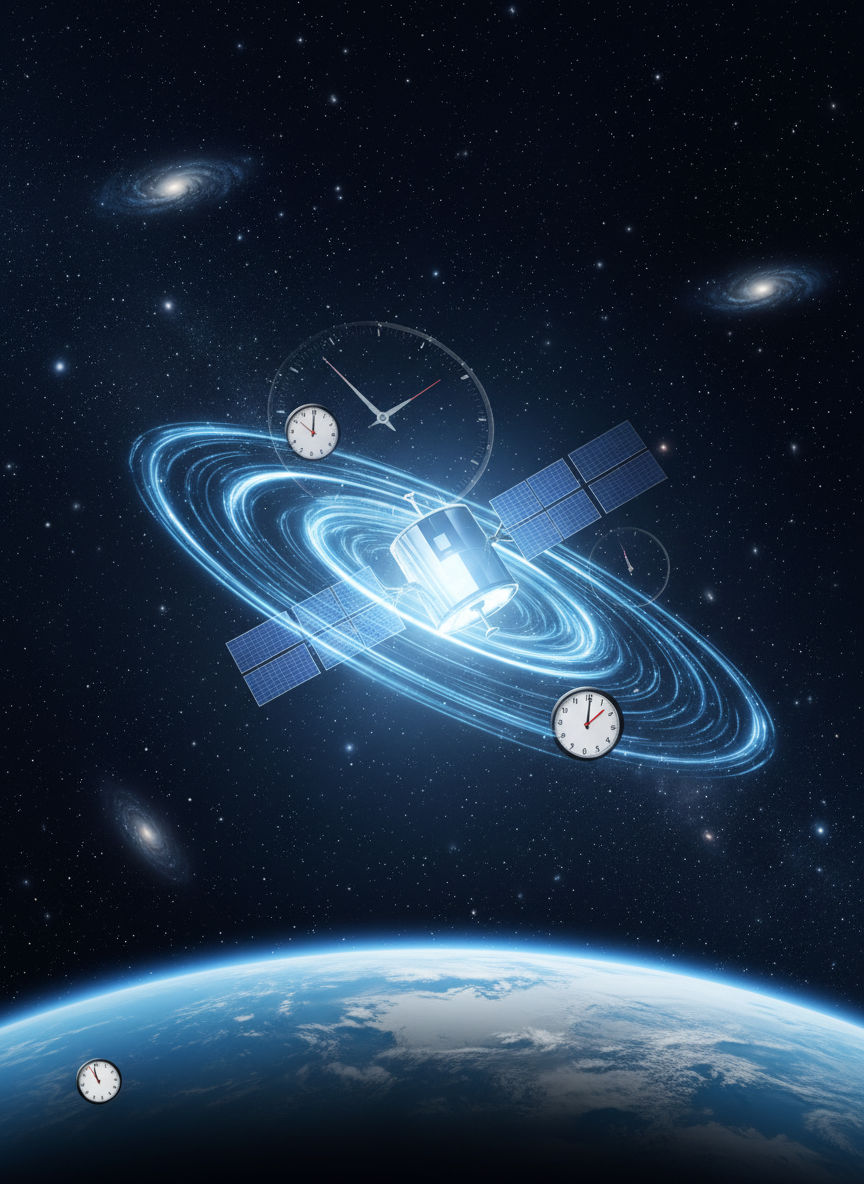
The auroral spectrum extends far beyond human perception, revealing some of the most violent physics in geospace. During intense substorms, a fraction of precipitating electrons possess energies ranging from tens to hundreds of kilo-electron volts (keV). These relativistic particles punch straight through the thermosphere, reaching deeply into the mesosphere.
As these high-energy electrons collide with dense atmospheric targets, they undergo rapid, violent deceleration. This sudden loss of kinetic energy is radiated away as bremsstrahlung (braking radiation), generating a brilliant but completely invisible X-ray aurora. Satellite observatories map these X-ray footprints to study extreme particle acceleration mechanisms in the magnetotail.
Furthermore, this deep-penetrating radiation isn't just an optical curiosity; it fundamentally alters atmospheric chemistry. The intense ionization produces reactive odd-nitrogen (NOx) and odd-hydrogen (HOx) compounds. These radicals act as powerful catalysts, driving localized but significant ozone depletion in the mesosphere during major geomagnetic events.
Key Takeaway
Relativistic electron precipitation generates invisible X-ray auroras via bremsstrahlung and drives chemistry that depletes mesospheric ozone.
Test Your Knowledge
What physical process generates the X-rays observed during high-energy auroral events?
Track your progress, earn XP, and compete on leaderboards. Download NerdSip to start learning.