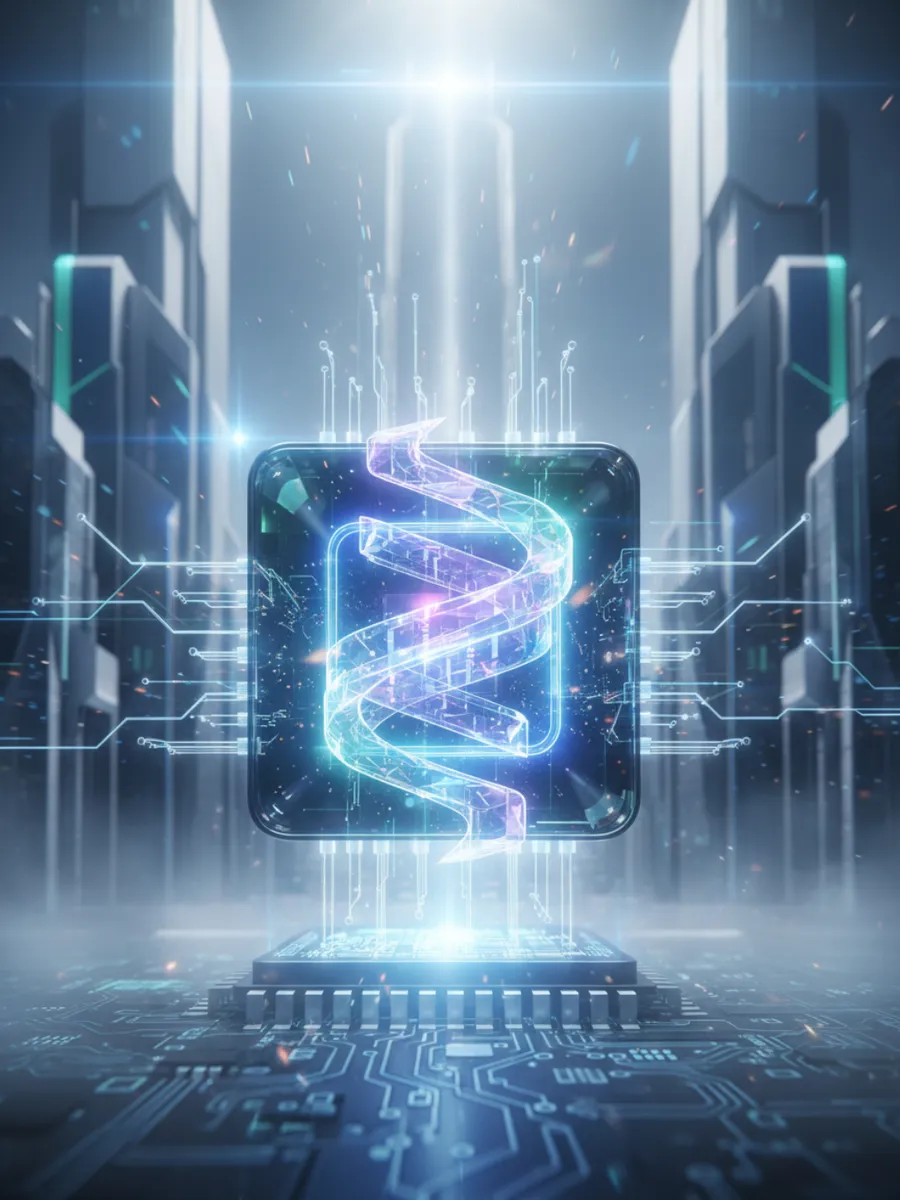
Will silicon survive when quantum bits can calculate the impossible?
Prompted by A NerdSip Learner
Master how qubits solve problems beyond traditional computing limits.
Imagine a light switch on your wall. It can only be in one of two positions: ON or OFF. This is exactly how the computer or phone you are using right now works! It uses tiny switches called bits that represent either a 0 or a 1. It is simple, reliable, but it has limits.
Now, imagine spinning a coin on a table. While it is spinning, is it heads or tails? It’s actually a blur of both at the same time! This is the secret behind Quantum Computing. Instead of bits, they use qubits.
Because a qubit can be a 0 and a 1 simultaneously, a quantum computer can hold way more information than a normal supercomputer. While your laptop reads one page of a book at a time, a quantum computer can glance at the entire library at once!
Key Takeaway
Classical computers use bits (0 or 1), while quantum computers use qubits which can be both simultaneously.
Test Your Knowledge
Which object best represents how a Qubit works?
How do these machines solve problems? Let's use an analogy. Imagine you are stuck in a giant, complex maze. To find the exit, you (acting like a normal computer) have to try one path, hit a wall, go back, and try another. You do this step-by-step until you escape.
This is where Quantum Computers show off. Thanks to a property called Superposition (that spinning coin state we talked about), a quantum computer doesn't have to choose just one path. It can walk down every single path at the exact same time!
It doesn't need to backtrack because it explores all options instantly. This makes them incredibly powerful for specific jobs, like inventing new medicines or solving massive math problems that would take a normal computer thousands of years to finish.
Key Takeaway
Superposition allows quantum computers to try every possible solution to a problem all at once.
Test Your Knowledge
How would a quantum computer solve a maze?
Things get even weirder with the final concept: Entanglement. Imagine you have a pair of magic dice. You keep one, and your friend takes the other one all the way to Mars.
If you roll a 6 on Earth, your friend’s die on Mars will instantly show a 6 too. No text message, no delay, just an instant connection across space. Even Albert Einstein was confused by this; he called it "spooky action at a distance."
In a quantum computer, we link qubits together like these magic dice. When they are entangled, changing one immediately affects its partner. This connection creates a massive network of power, allowing the parts of the computer to work together in perfect harmony to crunch data faster than anything we've ever seen.
Key Takeaway
Entanglement connects qubits so that a change in one instantly mirrors in the other, regardless of distance.
Test Your Knowledge
What happens if you change one entangled qubit?
Track your progress, earn XP, and compete on leaderboards. Download NerdSip to start learning.