Could nuclear-powered cargo ships solve the maritime pollution crisis?
Prompted by A NerdSip Learner
Understand the tech, pros, and realistic timeline of nuclear shipping.
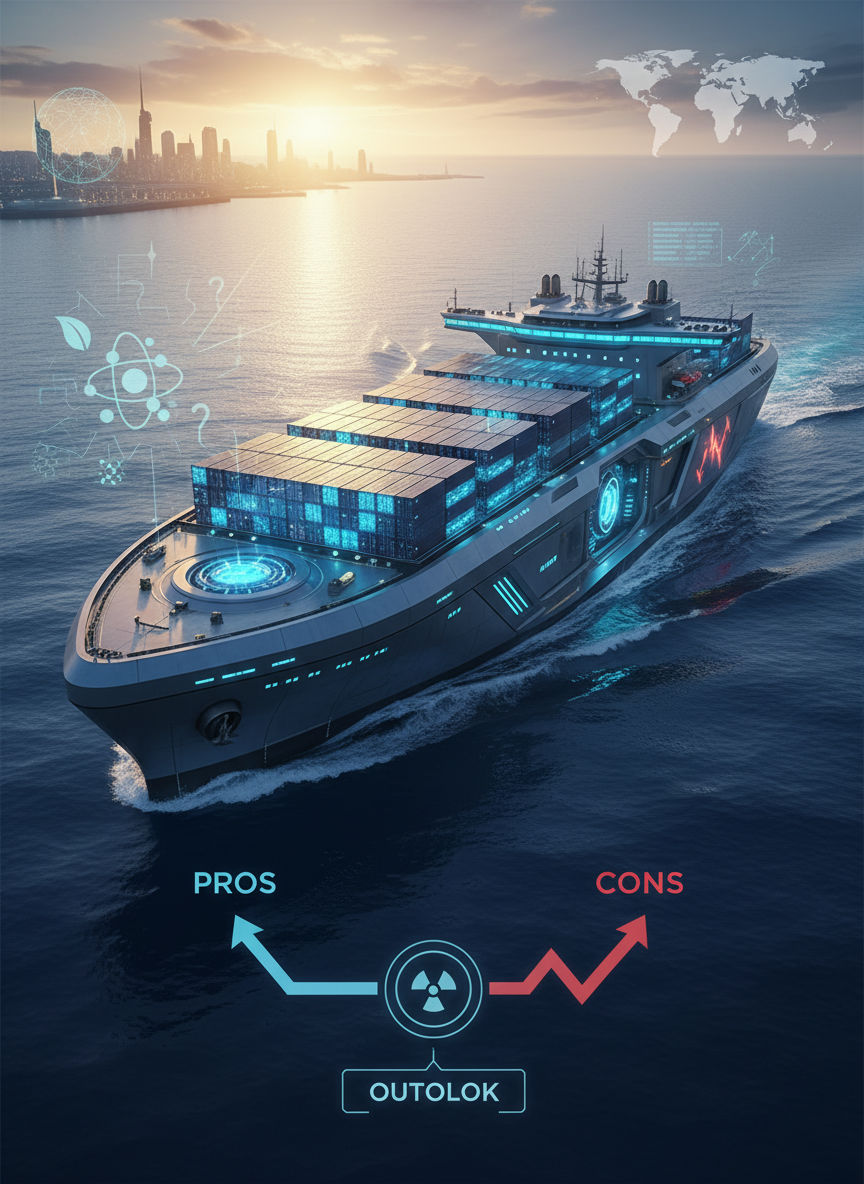
Imagine a massive cargo ship carrying tens of thousands of shipping containers across the ocean, but without a single drop of dirty fossil fuel. This is the ambitious promise of the nuclear-powered container ship.
Instead of burning massive amounts of heavy fuel oil, these hypothetical mega-ships would rely on onboard nuclear reactors. They bring the immense power of atomic energy directly to the commercial supply chain, powering colossal propellers with steam.
While military submarines and aircraft carriers have used nuclear propulsion safely for decades, the commercial shipping industry is just now taking a serious look. Today, over 80% of global trade is carried by sea. The intense pressure to clean up this massive industry is forcing naval architects to look far beyond conventional fuels to radical new solutions.
Key Takeaway
Nuclear container ships aim to replace heavily polluting fossil fuels with clean atomic energy for global trade.
Test Your Knowledge
Why is the commercial shipping industry suddenly interested in nuclear power?
You might picture a massive, sprawling nuclear power plant on land, complete with giant cooling towers and hundreds of workers. But modern marine vessels use something much more compact, increasingly known as Small Modular Reactors, or SMRs.
At a basic level, these reactors use nuclear fission—splitting atoms—to generate intense heat. This heat boils water into highly pressurized steam. The steam then spins giant turbines, which drive the ship's massive propellers and generate all onboard electricity.
Modern engineering concepts focus on advanced designs like Molten Salt Reactors or pressurized water reactors. These are engineered to be self-contained, highly secure, and small enough to fit securely inside the hull of a commercial cargo ship. Because they are modular, they can be built in a factory and slotted into a ship, dramatically reducing construction time.
Key Takeaway
Nuclear ships use compact Small Modular Reactors (SMRs) to safely split atoms, create steam, and propel the vessel.
Test Your Knowledge
What does SMR stand for in the context of modern nuclear shipping?
One of the biggest commercial advantages of going nuclear is space optimization. Traditional container ships have to dedicate massive sections of their hulls to store millions of gallons of heavy bunker fuel. This dead weight takes up valuable room and doesn't generate any revenue.
A nuclear reactor is incredibly energy-dense and relatively compact. By eliminating those gigantic liquid fuel tanks, naval engineers can free up vast amounts of space for what actually makes money: carrying more shipping containers.
Furthermore, because the cost of fuel isn't burned by the gallon during the trip, these ships can afford to travel at much higher speeds. Faster ships mean more round trips per year. In the fast-paced world of global logistics, shaving days off a trans-Pacific voyage drastically increases profitability.
Key Takeaway
Nuclear reactors eliminate the need for massive fuel tanks, freeing up space for cargo and allowing for faster travel.
Test Your Knowledge
How does a nuclear reactor directly increase a ship's cargo capacity?
The commercial shipping industry is the backbone of global trade, but it comes with a heavy environmental cost. Traditional cargo ships burn thick, unrefined heavy fuel oil, pumping massive amounts of CO2, sulfur, and nitrogen oxides into our atmosphere.
Nuclear power, on the other hand, produces zero carbon emissions during operation. A fleet of nuclear container ships could effectively decarbonize some of the most heavily trafficked maritime trade routes on the planet almost overnight.
As international maritime regulations become increasingly strict regarding greenhouse gas emissions, shipping companies are scrambling for alternatives. Nuclear propulsion offers a compelling "silver bullet" solution, allowing the industry to meet aggressive climate goals without sacrificing engine power or vessel range.
Key Takeaway
Nuclear-powered ships produce zero carbon emissions at sea, offering a major solution to maritime pollution.
Test Your Knowledge
What is the primary environmental benefit of a nuclear-powered container ship?
When you drive a standard car, you eventually have to stop for gas. Similarly, when a traditional container ship crosses the ocean, it must carefully plan its route around refueling stops, a process known in the maritime industry as bunkering.
A nuclear-powered ship completely changes the math of maritime logistics. Because nuclear fuel is incredibly energy-dense, a single reactor can run continuously for anywhere from 10 to 30 years without ever needing to be refueled.
This essentially means a massive container ship could operate for its entire commercial lifespan on a single, original batch of fuel. It eliminates the expensive downtime of refueling, protects companies from volatile global oil prices, and allows vessels to take the most direct, efficient routes possible.
Key Takeaway
A nuclear container ship could potentially sail for its entire operational lifespan without ever needing to refuel.
Test Your Knowledge
Approximately how long can a modern marine nuclear reactor operate before needing to be refueled?
If nuclear shipping is so amazing, why aren't we doing it already? The first major roadblock is the staggering upfront cost. Building a safe, reliable nuclear reactor is one of the most expensive and complex engineering feats on Earth.
Traditional marine diesel engines are relatively cheap to mass-produce. In contrast, integrating a Small Modular Reactor into a commercial hull requires advanced radiation-shielding materials, rigorous safety testing, and entirely new shipyard infrastructure. This drives the Capex (capital expenditure) into the billions of dollars.
Shipping companies operate on incredibly tight profit margins in a highly competitive market. Committing vast sums of money to build an unproven class of commercial vessel is a massive financial risk that few private companies are currently willing to take without heavy government subsidies.
Key Takeaway
The initial cost of building a nuclear-powered container ship is astronomically high compared to traditional diesel vessels.
Test Your Knowledge
Why are shipping companies hesitant to build nuclear ships despite the long-term fuel savings?
Imagine trying to park a functioning nuclear reactor in the middle of a densely populated city. That is exactly what a nuclear container ship does when it pulls into a major global port like Los Angeles, Rotterdam, or Shanghai.
Currently, many countries, regions, and local municipalities have strict bans on nuclear-powered vessels entering their territorial waters. These bans are largely driven by public fear of radiation leaks or potential maritime accidents.
To make commercial nuclear shipping a reality, the world would need a completely overhauled, unified framework of international maritime law. Without guaranteed, unrestricted access to the world's major trade hubs, a multi-billion dollar cargo ship is effectively useless to a logistics company.
Key Takeaway
Widespread bans on nuclear vessels and complex international regulations pose a massive barrier to their commercial use.
Test Your Knowledge
What happens if a nuclear container ship tries to dock at a port that bans nuclear vessels?
You can't just hand the keys of a nuclear reactor to a standard maritime crew. Operating a nuclear-powered vessel safely requires a team of highly educated, specialized nuclear engineers monitoring the systems around the clock.
Training, certifying, and retaining this elite crew is incredibly expensive. In the military, nuclear operators undergo years of rigorous schooling. Replicating this high level of expertise in the profit-driven commercial sector presents a massive logistical hurdle.
Furthermore, there is the massive issue of liability. If a standard cargo ship sinks, it's a tragic loss of cargo and steel. If a nuclear ship suffers a catastrophic failure, it is a potential geopolitical and environmental crisis. Securing private insurance for such an immense risk is currently an unsolved puzzle in the commercial market.
Key Takeaway
Staffing ships with highly trained nuclear engineers and securing insurance for potential disasters are massive commercial hurdles.
Test Your Knowledge
Why is crewing a nuclear container ship more difficult than a traditional one?
Commercial nuclear shipping isn't a completely new concept. Back in the 1950s and 60s, the United States built the *NS Savannah*, a combined passenger and cargo ship, designed specifically to demonstrate the peaceful use of atomic energy.
While the *Savannah* proved the technology worked beautifully and safely, it was a total commercial failure. It was far too expensive to operate, carried too little cargo to be profitable, and faced constant labor disputes with its highly specialized crew.
Today, the only successful non-military nuclear fleet belongs to Russia, which operates several nuclear-powered icebreakers. These specialized ships thrive because they operate in the remote, freezing Arctic, where refueling traditional diesel ships is incredibly difficult, proving nuclear's immense value in niche scenarios.
Key Takeaway
Early commercial attempts like the NS Savannah failed economically, though nuclear power thrives today in Russian Arctic icebreakers.
Test Your Knowledge
What type of non-military nuclear vessels does Russia currently operate successfully?
So, what is the realistic outlook for nuclear container ships? While the regulatory and financial hurdles are massive, the underlying technology is slowly inching closer to commercial reality.
Major shipbuilding nations, particularly in China and South Korea, have recently announced plans to design and test prototypes of SMR-powered commercial vessels over the next decade. Their primary focus is on proving safety, security, and long-term cost-effectiveness to skeptical regulators.
Industry experts predict that we likely won't see widespread commercial adoption of nuclear cargo ships until the 2040s or 2050s. The immediate maritime future will likely rely on alternative chemical fuels like green methanol or ammonia. However, as the global push for absolute zero-emissions intensifies, nuclear power may eventually rule the seas.
Key Takeaway
While prototypes are being designed now, widespread commercial use of nuclear container ships is likely decades away.
Test Your Knowledge
According to current industry projections, when is widespread adoption of nuclear container ships most likely to occur?
Track your progress, earn XP, and compete on leaderboards. Download NerdSip to start learning.