Is AI actually magic, or just math hiding in plain sight?
Prompted by A NerdSip Learner
Master the mathematical logic behind everyday AI models.
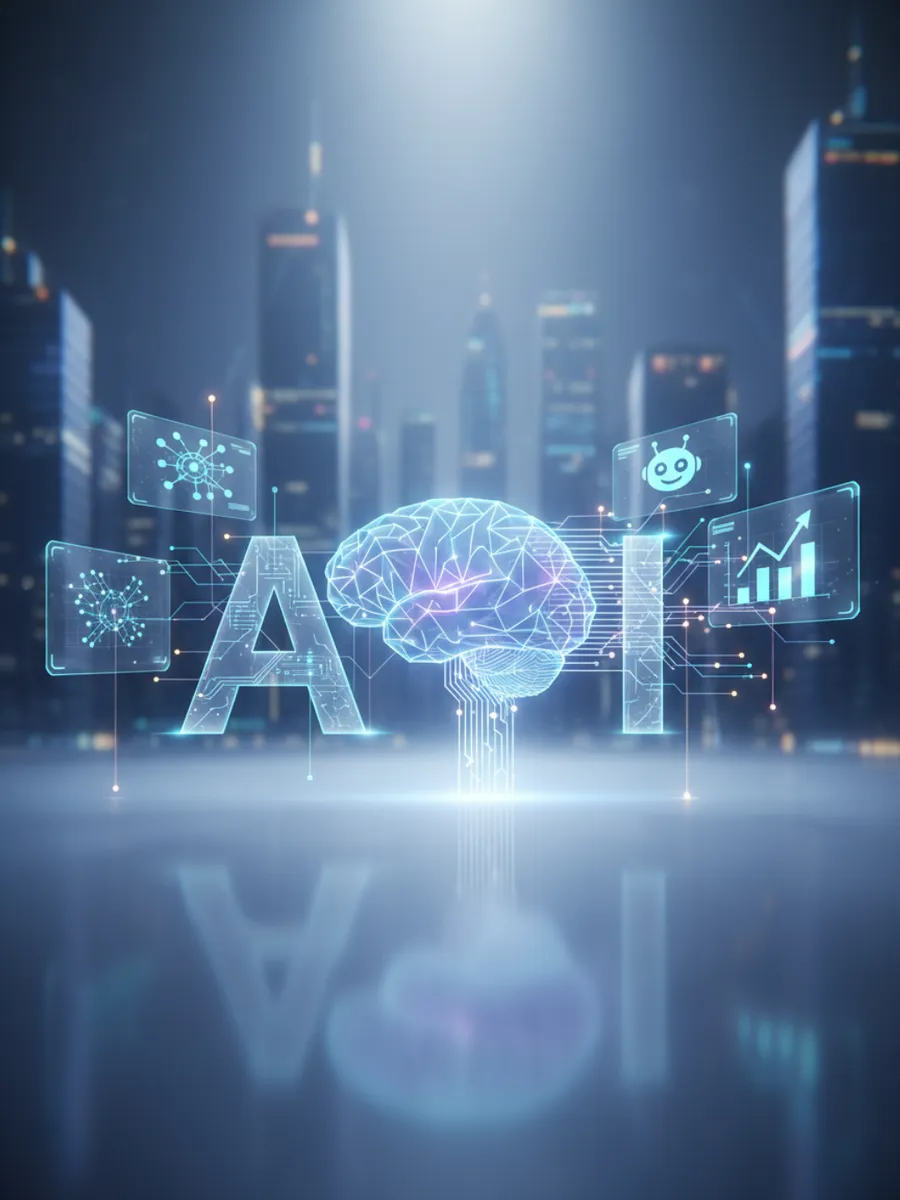
Welcome to the world of Artificial Intelligence! If you've ever thought AI was pure magic, you're in for a surprise. At its core, AI is just a computer program that can do things that usually require a human brain—like recognizing your face to unlock your phone or understanding your voice commands.
Think of a standard computer program like a basic calculator: if you type 2 + 2, it always gives you 4. It follows a strict set of rules. AI is different because it doesn't just follow rules; it makes predictions. Imagine a computer that doesn't just do math but can look at a photo and guess, "Hey, that looks like a cat!" It’s not perfect, but it’s trying to mimic how we think!
Key Takeaway
AI is computer software designed to mimic human tasks like seeing, hearing, and decision-making.
Test Your Knowledge
What is the main difference between a standard calculator and AI?
So, how does a machine actually get smart? It uses a method called Machine Learning. Instead of programming the computer with a million specific rules (like "if it has whiskers, it's a cat"), we teach it by showing it examples. It’s very similar to how a toddler learns.
If you show a child a picture of a dog and say "dog" enough times, they eventually understand what a dog looks like. Machine Learning works the same way! We feed the computer thousands of photos labeled "dog," and the computer starts to notice patterns on its own—like floppy ears or tails. We don't tell it what to look for; it figures it out by looking at the data.
Key Takeaway
Machine Learning is the process of teaching computers to recognize patterns by showing them examples.
Test Your Knowledge
How do we teach a Machine Learning model?
If AI is the engine, data is the fuel. You might hear people talk about "Big Data," and this is why it matters. An AI is only as good as the information it studies. If you want an AI to predict the weather, you have to feed it history books full of past weather reports.
Imagine trying to learn to cook, but the only cookbook you have is about fixing cars. You wouldn't make a very good dinner, right? The same happens with AI. If we give it bad or biased data, it will make bad decisions. This is why researchers are obsessed with collecting massive amounts of high-quality information to train these smart systems.
Key Takeaway
AI needs massive amounts of relevant data to learn effectively; without good data, the AI cannot function.
Test Your Knowledge
What happens if you train an AI with bad or irrelevant data?
Let's peek under the hood at something called a "Neural Network." This sounds super sci-fi, but it’s basically a structure inspired by the human brain. Your brain has billions of neurons connected together. When you see a friend, a specific pattern of neurons lights up to say, "Oh, that's Sarah!"
Computer scientists created a digital version of this. They create layers of digital "neurons" that pass information to each other. One layer might recognize edges, the next recognizes shapes, and the final layer recognizes a face. It’s like a complex game of "Telephone," where information is passed along and refined until the computer arrives at an answer.
Key Takeaway
Neural Networks are complex structures inspired by the human brain that help AI process information in layers.
Test Your Knowledge
What is a Neural Network inspired by?
You’ve probably heard of things like ChatGPT or Midjourney. These are a special type of AI called "Generative AI." Most older AI was about analyzing things (classifying an email as spam or not spam). Generative AI is different because it creates *new* things.
Think of it like the difference between a food critic and a chef. The critic (classic AI) tastes a meal and tells you what it is. The chef (Generative AI) takes ingredients and creates a brand-new dish that never existed before. By studying millions of poems, code, or paintings, Generative AI can predict what comes next to create something entirely new!
Key Takeaway
Generative AI doesn't just analyze data; it uses what it has learned to create new content like text or images.
Test Your Knowledge
What makes Generative AI different from traditional AI?
Track your progress, earn XP, and compete on leaderboards. Download NerdSip to start learning.