It's 2AM. You're exhausted. You took melatonin two hours ago. You turned off screens. You kept the room dark and cool. You did everything "right."
And you're still wide awake, staring at the ceiling, mind racing about tomorrow's meeting, that awkward conversation, the bills, the emails, the existential dread of being alive in 2026.
Sound familiar?
You're not alone. 40% of Gen Z reports sleep-related anxiety at least three times per week. The global sleep tech market is exploding from $26.6 billion in 2023 to a projected $58.2 billion by 2030. Mark Cuban and other billionaires are spending thousands trying to "hack" sleep with AI mattresses and circadian-tuned lighting.
And yet, nobody's actually sleeping better.
Here's why: You're treating the symptom, not the cause.
The Real Reason You Can't Sleep (It's Not What They're Selling You)
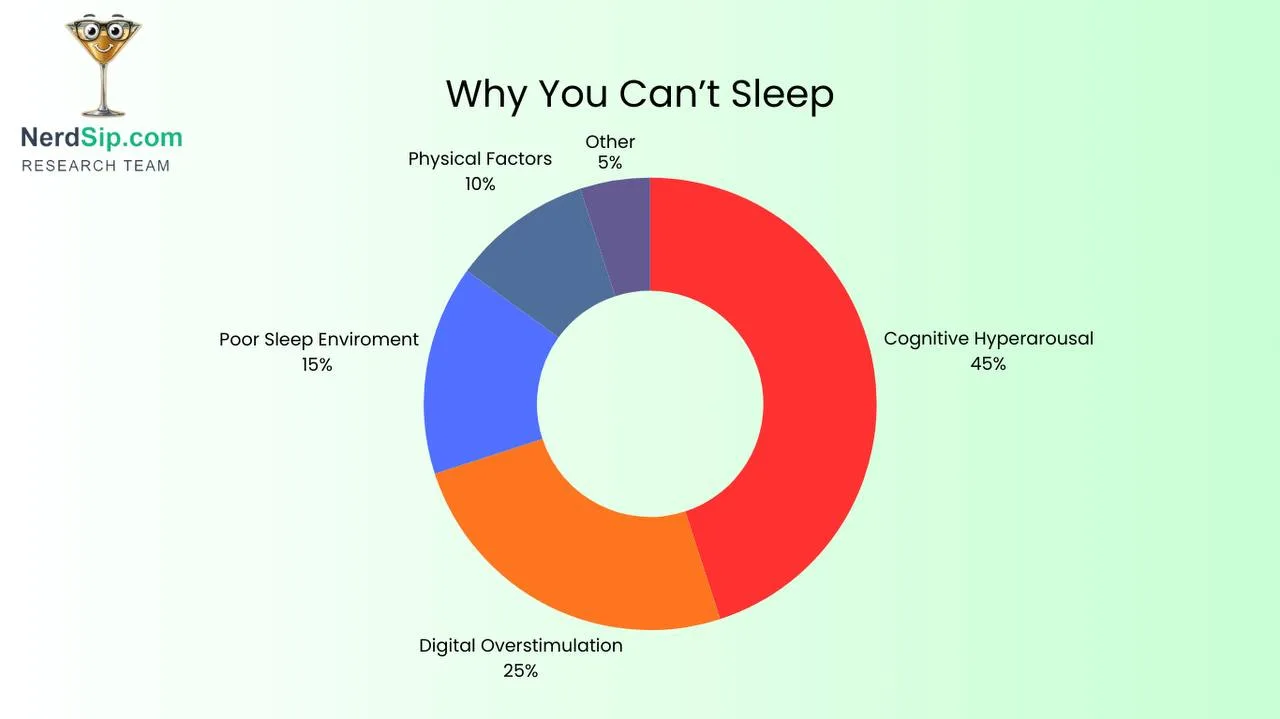
Let's talk about what's actually keeping you awake.
It's not your mattress (though the industry desperately wants you to believe that).
It's not lack of melatonin (though supplement companies are cashing in on that myth).
It's not even blue light (though tech bros love selling you $300 glasses).
It's your brain. Specifically, your overstimulated, under-rested, chronically anxious brain that hasn't been given a single moment of peace in years.
Here's what actually happens when you try to sleep:
You lie down. Your body is ready. But your brain? Your brain has been running at 10,000 RPM all day, switching between 47 browser tabs, answering Slack messages, doom-scrolling Twitter, listening to podcasts at 2x speed, and generally existing in a state of perpetual cognitive overload.
And now you're asking it to just... stop?
Good luck with that.
Why "Sleep Hygiene" Advice Doesn't Work Anymore
You've heard it all:
- "No screens 1 hour before bed!" (But you're still scrolling)
- "Keep your room cool and dark!" (Still awake)
- "Try meditation!" (Your mind won't shut up)
- "Exercise during the day!" (You're too tired to exercise because you can't sleep)
- "Stick to a schedule!" (You fall asleep fine, you just wake up at 3AM in a panic)
The problem? Traditional sleep hygiene was designed for people with normal cognitive function, not brains drowning in digital overstimulation.
Research from Harvard Medical School looked into "sleepmaxxing"—the viral trend of optimizing every variable for perfect sleep. Their finding? Most strategies are either evidence-based but obvious (reduce caffeine, exercise more), or completely unproven hype (mouth-taping, weighted blankets).
But here's the kicker: even when people implement evidence-based strategies, many still struggle to sleep because the root issue isn't behavioral—it's neurological.
Your brain is stuck in a state called "cognitive hyperarousal." And no amount of blackout curtains will fix that.
The Cognitive Hyperarousal Trap
Cognitive hyperarousal is exactly what it sounds like: your brain is wired, alert, and unable to downshift into sleep mode.
The symptoms:
- Mind racing with thoughts you can't control
- Replaying conversations or scenarios obsessively
- Worrying about things you can't change
- Feeling physically exhausted but mentally wired
- Falling asleep OK but waking up at 2-4AM unable to fall back asleep
This isn't insomnia in the traditional sense. It's a modern phenomenon driven by chronic mental overstimulation.
And here's why it's getting worse:
1. Constant Context Switching
You switch between tasks every 47 seconds on average. Each switch costs cognitive energy. By the time you go to bed, your brain is exhausted but still in "alert mode" because it never got a chance to properly rest during the day.
2. Information Overload
You process the equivalent of 174 newspapers worth of information every single day. Your brain is desperately trying to sort, categorize, and make sense of it all. When you lie down, it's still processing.
3. Decision Fatigue
You make 35,000 decisions daily. By bedtime, your prefrontal cortex is fried, but your amygdala (the anxiety center) is still firing, keeping you alert to perceived threats.
4. Digital Dopamine Addiction
Your brain has been trained to expect constant stimulation. Lying in silence feels uncomfortable, even painful. Your brain craves input. The absence of stimulation triggers anxiety.
Why Melatonin Isn't the Answer
Melatonin supplements are a $800+ million market. Everyone's taking them. And they're largely useless for most people.
Here's why:
Melatonin isn't a sleeping pill. It's a hormone that regulates your circadian rhythm—your body's internal clock. Taking melatonin tells your body "it's nighttime," but it doesn't actually make you sleep.
If the problem is cognitive hyperarousal (racing thoughts, anxiety, overstimulation), melatonin does nothing to address that.
Even Mark Cuban, who has unlimited resources for sleep optimization, admits he's trying to quit melatonin because tracking his sleep data revealed it wasn't actually helping.
The real issue? Your brain needs to be taught how to wind down.
The Missing Piece: Cognitive Cooldown
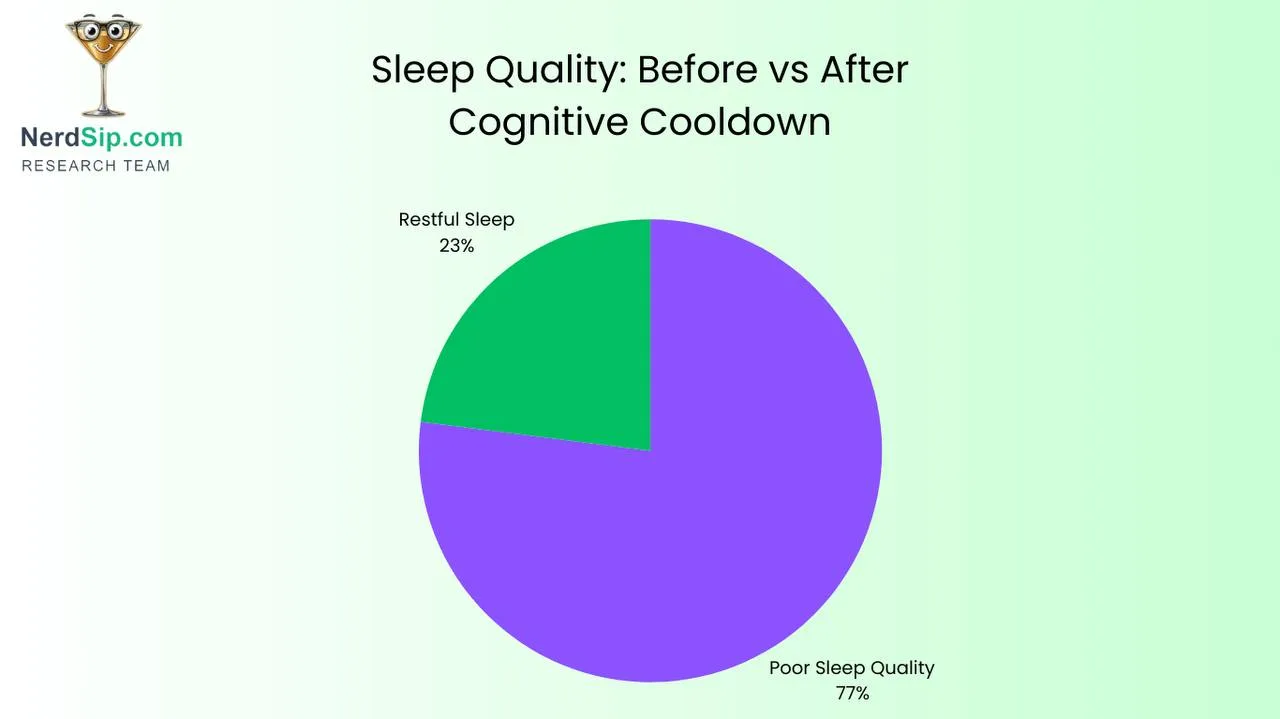
Athletes don't go from sprinting to sitting. They cool down. They stretch. They let their heart rate gradually decrease.
Your brain needs the same thing.
But here's what most people do instead:
- Work until 10PM → Phone in bed → Close eyes → Expect sleep
That's like running a marathon, then jumping into a freezer and wondering why your muscles seize up.
Your brain needs a cognitive cooldown ritual.
Not meditation (though that helps some people). Not supplements (though those might help too).
What your brain actually needs is structured mental decompression.
The 5-Minute Sleep Fix Nobody's Talking About
Here's the protocol that actually works:
60 Minutes Before Bed: Cognitive Offloading
Your brain is still processing the day. Help it finish.
- Do a "brain dump" — write down every thought, worry, task, idea swirling in your head
- Schedule tomorrow's top 3 priorities (so your brain stops trying to remember them)
- Review what you learned today (this signals completion to your brain)
This isn't journaling for therapy. This is literally offloading cognitive load so your brain can relax.
30 Minutes Before Bed: Input Shift
Your brain has been in "alert mode" all day—rapid stimulation, quick decisions, constant novelty.
Now you need to shift to "wind-down mode"—slow, predictable, calming input.
- Read something (not scrolling—actual reading)
- Learn one new thing for 5-10 minutes (counterintuitive, but this works)
- Listen to something slow and deliberate (audiobook, podcast at 1x speed, not TikTok)
Why learning helps sleep: When you engage with focused, meaningful content for a short period, your brain shifts from "reactive mode" to "processing mode." This activates the parasympathetic nervous system (rest-and-digest), which primes you for sleep.
Research backs this: microlearning sessions of 5-10 minutes can reduce cognitive hyperarousal by giving your brain a structured task to complete before bed.
15 Minutes Before Bed: Sensory Reset
Now you shift from cognitive to physical:
- Dim all lights (or use amber/red lighting)
- Cool your room to 65-68°F
- White noise, brown noise, or complete silence (whatever works for you)
- Breathing exercises (4-7-8 breathing: inhale 4 seconds, hold 7, exhale 8)
By the time you lie down, your brain has been systematically transitioned from "alert" to "rest."
Why This Works When Everything Else Doesn't
The difference between this protocol and generic "sleep hygiene" advice is it addresses the root cause: cognitive hyperarousal.
You're not just removing stimulation (blue light, screens, noise). You're actively guiding your brain through a structured wind-down that matches how your nervous system actually functions.
Think of it like this:
Bad approach: Remove all stimulation → Lie in darkness → Hope your brain magically calms down
Smart approach: Offload mental clutter → Shift to calming input → Reset sensory environment → Sleep
The first approach leaves your brain spinning in the dark. The second gives it a clear pathway to rest.
The Unexpected Power of Pre-Sleep Learning
Here's the counterintuitive part: learning something new before bed actually improves sleep quality.
Wait, what? Isn't learning stimulating?
Not the way you think.
When you engage with focused, meaningful content for 5-10 minutes:
- You give your brain a completion signal. Your brain craves closure. Finishing a short learning session satisfies that craving.
- You shift from reactive to reflective thinking. All day you've been reacting to notifications, emails, demands. Learning is active, intentional, and calming.
- You activate slow-wave sleep processes. Studies show that learning right before bed enhances memory consolidation during sleep, which actually deepens sleep quality.
The key? It has to be focused, structured, and short. Not a 3-hour course. Not a podcast you half-listen to while scrolling. A deliberate 5-10 minute session on a single topic.
This is why people who learn something new every day report better sleep than those who don't—even controlling for exercise, diet, and other variables.
The Sleep Anxiety Epidemic
Let's talk about the elephant in the bedroom: sleep anxiety.
Nearly 40% of Gen Z adults experience sleep-related anxiety at least three times per week. This isn't just "I hope I sleep well tonight." This is:
- Panic about not falling asleep
- Watching the clock, calculating hours left
- Catastrophizing about tomorrow if you don't sleep
- Anxiety about the anxiety (meta-anxiety)
The American Academy of Sleep Medicine identifies sleep anxiety as one of the fastest-growing wellness challenges, fueled by digital dependency, economic uncertainty, and 24/7 connectivity.
Here's the vicious cycle:
You can't sleep → You get anxious about not sleeping → The anxiety keeps you awake → You sleep worse → Anxiety intensifies
Breaking this cycle requires more than sleep hygiene. It requires rebuilding trust with your own brain.
How to Break the Sleep Anxiety Cycle
Step 1: Stop Tracking Obsessively
Wearables like Oura Ring and WHOOP are amazing for data. But they can also create "orthosomnia"—an unhealthy obsession with perfect sleep that ironically ruins your sleep.
Harvard researchers found that people who check their sleep scores first thing in the morning often experience increased anxiety, which compounds sleep problems.
Use data as guidance, not a report card.
For an honest signal, try a quick reaction time test in the morning instead; sleep debt slows your reflexes before you ever feel tired.
Step 2: Reframe "Bad" Sleep
One bad night of sleep won't kill you. Humans are remarkably resilient to occasional sleep deprivation.
The anxiety about bad sleep often causes more harm than the bad sleep itself.
Step 3: Build a Pre-Sleep Win
Your brain needs to associate bedtime with positive outcomes, not anxiety.
Create a 5-minute pre-sleep ritual that always feels good:
- Learn something interesting (dopamine hit from curiosity)
- Stretch or gentle movement (physical release)
- Gratitude or positive reflection (shifts brain from threat mode to safety mode)
When your brain learns that "bedtime routine = positive experience," it stops resisting sleep.
Why the Ultra-Wealthy Are Obsessed with Sleep (And What You Can Learn)
Sleep has become the ultimate status symbol among the ultra-wealthy.
Mark Cuban tracks his sleep metrics obsessively. Tech billionaires spend $5,000+ on AI-powered smart mattresses. Private jets now feature circadian-tuned lighting. Hotels like Sensei Porcupine Creek and Carillon Miami offer $1,000/night sleep optimization suites with biometric tracking and personalized coaching.
What are they chasing?
Peak cognitive performance.
In a knowledge economy, your brain is your most valuable asset. If you can't think clearly, solve problems, or make decisions, you can't compete.
Billionaires understand this. That's why they invest more in sleep optimization than almost anything else.
But here's the truth: you don't need $5,000 mattresses or private sleep coaches.
You need to fix the root cause: cognitive hyperarousal driven by chronic overstimulation.
And that fix costs nothing. It just requires intentionality.
Your 7-Day Sleep Reset
Here's your action plan:
Day 1-2: Audit Your Cognitive Load
- Track how many times you switch tasks in a day
- Note when your mind races most (bedtime, mid-afternoon, etc.)
- Identify your biggest sources of mental clutter
Day 3-4: Implement Cognitive Offloading
- Brain dump every night 60 minutes before bed
- Schedule tomorrow's top 3 priorities
- Close mental loops (finish tasks, make decisions, stop leaving things "for later")
Day 5-6: Add Pre-Sleep Learning
- Learn one new thing for 5-10 minutes before bed
- Pick topics you're genuinely curious about (not work-related)
- Focus on one thing—no multitasking
Day 7: Full Protocol
- 60 min before bed: Brain dump + task prioritization
- 30 min before bed: Focused learning or slow reading
- 15 min before bed: Dim lights, cool room, breathing exercises
- Bed: No devices, no clock-watching, trust the process
After 7 days, most people report:
- Falling asleep 30-40% faster
- Fewer middle-of-the-night wake-ups
- Waking up feeling more rested
- Reduced sleep anxiety
Not because they bought better supplements or mattresses. Because they fixed the root cause.
The Truth About Sleep in 2026
Sleep isn't a problem you can buy your way out of.
The sleep industry wants you to believe that the right mattress, supplement, wearable, or gadget will fix everything.
It won't.
The real solution is teaching your brain how to wind down in a world designed to keep it wired 24/7.
That means:
- Offloading cognitive clutter before bed
- Shifting from reactive to reflective thinking
- Giving your brain structured ways to decompress
- Building trust that sleep will come when you create the right conditions
Sleep isn't something you force. It's something you allow.
And the fastest way to allow it? Fix what's keeping your brain awake in the first place.
This is what NerdSip helps you do.
We built a microlearning platform specifically designed to help your brain wind down. Five-minute lessons on topics you're curious about. Focused, structured, calming. Perfect for the 30-minute pre-sleep window.
Because the opposite of cognitive hyperarousal isn't "doing nothing." It's giving your brain something intentional and meaningful to focus on before you ask it to rest.
NerdSip is live in the App Store and on Google Play. Fix your sleep by fixing what's actually keeping you awake.
Your brain doesn't need more melatonin. It needs a cognitive cooldown. We built that.
Every NerdSip course clears a four-layer fact-checking pipeline before it reaches the app: grounded in live sources, scored nightly, gated on failure, and reviewable by a person at one tap. Articles on this blog are drafted with AI assistance, then researched, verified, and edited by our team.
Editorial responsibility: ai51 UG (haftungsbeschränkt). Responsible editor named in the imprint.
📚 Keep Learning
Explore the NerdSip learning hubs
The blog is our editorial layer. When you want to move from reading into doing, these hubs organize the rest of NerdSip by format, including the app itself and the press that has written about it.
Keep going: five-minute courses on this
Pick one and finish it before your coffee cools. Every lesson ends with a quick question, so it sticks instead of scrolling past.
Courses on this topic
4.7 stars from 380 reviews · 10,000+ learners