You're 27. Your college friend just bought a house. Another one got promoted to senior manager. Your cousin launched a startup. Someone you went to high school with is getting married in Tuscany.
And you? You're still trying to figure out what the hell you're doing with your life.
Welcome to 2026, where everyone—and I mean everyone—feels like they're falling behind.
Not just you. Your most successful friend feels it too. The person with the Instagram-perfect life? They're lying awake at 3am wondering why they haven't "made it" yet. Your boss, your siblings, your coworkers—all secretly convinced they're lagging behind some invisible finish line.
Here's the thing nobody tells you: The race you think you're losing doesn't actually exist.
But the anxiety is real. The comparison is brutal. And the feeling of being trapped in place while everyone else sprints forward? That will destroy you if you let it.
So let's talk about why this is happening, why it's getting worse, and—most importantly—the stupidly simple fix that actually works.
The Invisible Timeline (And Why You're Measuring Wrong)
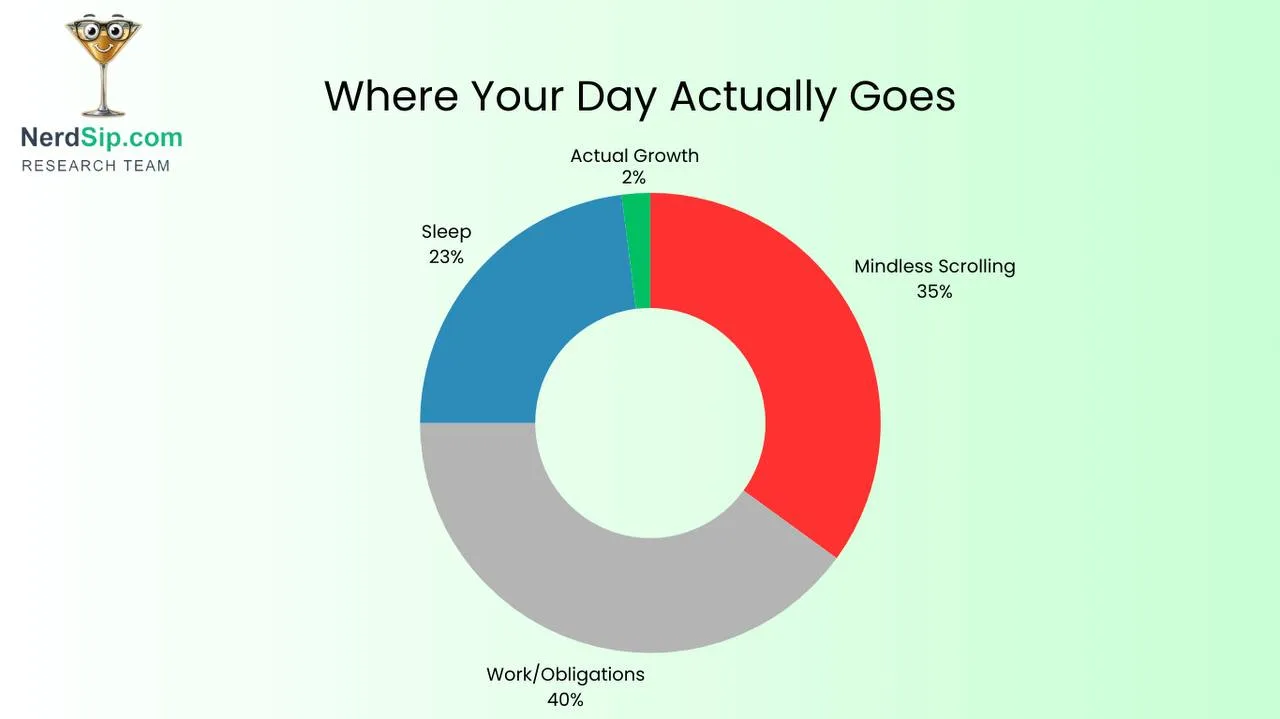
There's this unspoken life script everyone follows:
- Graduate college by 22
- Land a "real job" by 24
- Get promoted by 26
- Buy a house by 28
- Get married by 30
- Have kids by 32
- Become successful by 35
- Figure everything out by 40
Except... who the hell wrote this timeline?
Your parents? They bought houses on minimum wage. Different world.
Society? Society also says you need to work yourself to death for a company that'll replace you in a week.
Social media? Instagram is a highlight reel, not a documentary.
The timeline is arbitrary. Made up. A collective hallucination we all agreed to follow without questioning why.
And yet, when you don't hit these milestones at the "right" time, it feels like failure.
You're not behind. You're just measuring your life against a standard that was designed for a world that no longer exists.
The job market is broken. The economy is brutal. Housing is unaffordable. The rules changed, but the expectations didn't.
So stop measuring yourself against a timeline that was outdated before you were born.
The Comparison Trap (Or: Why Instagram Is Destroying Your Brain)
Let's talk about Sarah.
Sarah is 29. She has a decent job, good friends, a solid relationship. On paper, she's doing fine.
But every time she opens Instagram, she sees:
- Her friend Emma got promoted (again)
- Her college roommate bought a lake house
- Some random acquaintance she barely remembers is "living her dream" in Bali
- A former coworker just launched their third successful business
Sarah closes Instagram feeling like she's wasted her entire life.
Here's what Sarah doesn't see:
- Emma works 70-hour weeks and hasn't taken a vacation in three years
- The lake house was a gift from wealthy parents (and comes with a crushing mortgage)
- Bali girl is broke, lonely, and one bad month away from moving back home
- The "successful" entrepreneur is drowning in debt and hasn't paid themselves in six months
Social media is a curated lie. Everyone posts their highlight reel. Nobody posts the breakdowns, the debt, the anxiety, the nights they cry themselves to sleep wondering if they're doing anything right.
When you compare your behind-the-scenes to everyone else's highlight reel, you'll always lose.
But here's the real problem: it's not just that social media distorts reality. It's that social media has compressed the timeline of success into something impossible.
You see someone "make it" overnight. A viral TikTok. A startup that explodes. A creator who goes from zero to millions in six months.
What you don't see is the ten years of grinding before that "overnight" success. The failed attempts. The projects that went nowhere.
Everyone looks like they're sprinting ahead because you're only seeing the finish line, not the actual race.
The Psychology of Falling Behind (And Why It's Not Your Fault)
There's a reason this feeling is universal in 2026.
It's not because you're failing. It's because modern life is designed to make you feel like you're failing.
1. The Goal Post Keeps Moving
You finally land that promotion. Great! Now everyone around you is talking about their next promotion. You buy a car. Cool! Your friend just bought a nicer one. You achieve something you've been working toward for years. Awesome! Someone just achieved it younger, faster, with less effort.
The goal post never stops moving because comparison is infinite. There's always someone richer, smarter, more successful, more accomplished. Always.
2. The Internal Timeline
It's not just comparing yourself to others. It's comparing yourself to who you thought you'd be by now.
Remember 18-year-old you? They had plans. Big plans. They imagined 25-year-old you as successful, confident, accomplished, with everything figured out.
And now you're 25 (or 30, or 35) and you're... not that person.
The version of yourself you're disappointed in failing to become was based on a teenager's understanding of how life works. Of course reality doesn't match that fantasy.
3. The Burnout Culture
You're exhausted. Everyone is exhausted.
You work full-time (or more). You're supposed to have hobbies. Exercise. Socialize. Learn new skills. Build a side hustle. Network. Date. Keep up with the news. Maintain relationships. Cook healthy meals. Stay informed. Be productive. Be present.
No wonder you feel behind. You're trying to keep up with expectations designed for five different people, not one.
The Real Reason You Feel Stuck (It's Not What You Think)
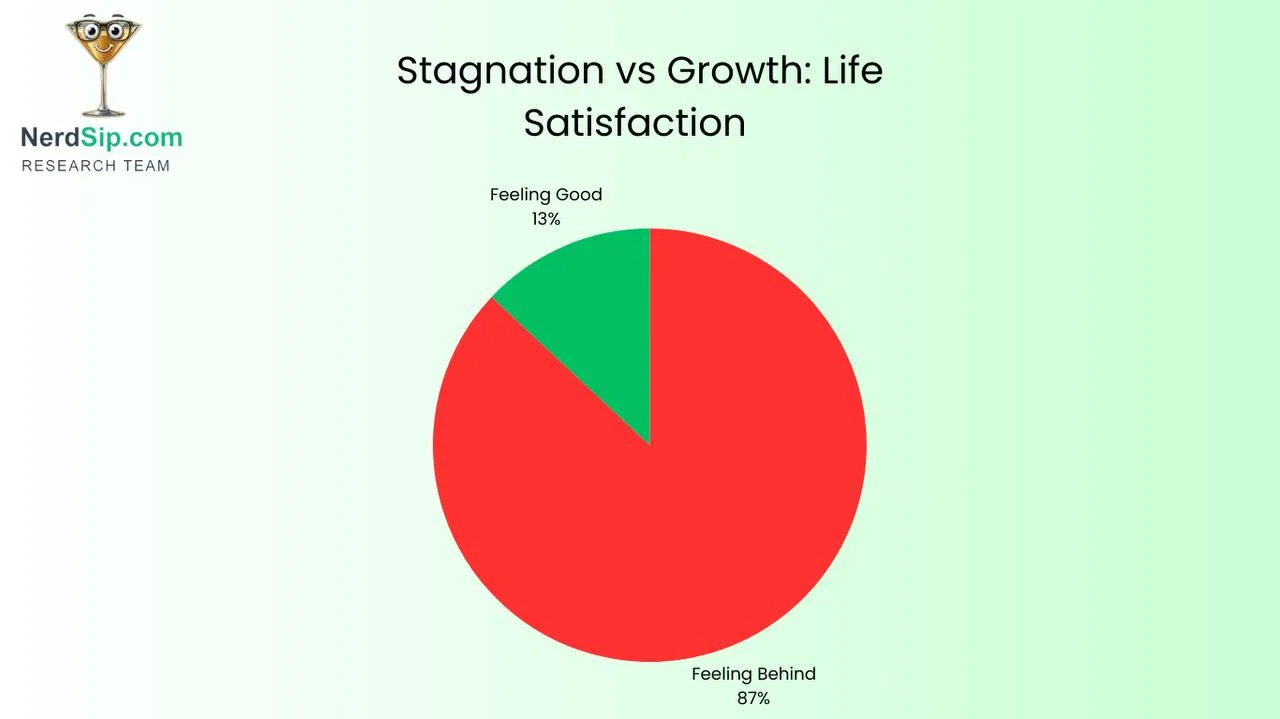
Here's the uncomfortable truth:
You don't feel behind because you haven't achieved enough. You feel behind because you've stopped growing.
Think about it.
When was the last time you learned something new? Not for work. Not out of obligation. Just because you were curious?
When was the last time you had a conversation where you brought something interesting to the table? A new perspective. A surprising fact. A fresh idea.
When was the last time you felt genuinely excited about what you know and who you're becoming?
People don't feel behind because they lack accomplishments. They feel behind because they're stuck in the same patterns, consuming the same content, having the same conversations, learning nothing new.
You're not falling behind. You're stagnating.
And stagnation feels a hell of a lot like failure.
If that stagnation has you convinced you're wasting your twenties, the fix is the exact kind of small, daily momentum we get into below.
The 5-Minute Momentum Shift
Here's the thing about feeling behind:
You can't fix it with money. Or a promotion. Or a new relationship. Or moving to a new city.
Those things might help temporarily. But six months later, you'll feel behind again because the problem isn't external—it's internal.
The antidote to feeling behind isn't achievement. It's growth.
And here's the beautiful, counterintuitive truth: growth doesn't require massive life changes. It doesn't require quitting your job, moving to Bali, or overhauling your entire existence.
Growth requires five minutes a day.
Five minutes of learning something new. Something that makes you more interesting, more capable, more intellectually alive.
Not another Instagram scroll.
Not another Netflix binge.
Not another doomscroll through news you'll forget in an hour.
Five minutes of actual growth.
Why Microlearning Fixes What Major Life Changes Can't
Traditional advice for feeling behind is garbage:
"Just work harder!" (You're already burned out.)
"Set bigger goals!" (Goals without growth are just anxiety.)
"Stop comparing yourself!" (Good luck with that.)
None of this works because it doesn't address the real problem: you're mentally starving.
Your brain is designed to learn, grow, adapt. When you stop feeding it new information, new ideas, new perspectives, it withers.
That's why scrolling feels empty. That's why you can binge a whole series and feel worse afterward. That's why weekends fly by and you can't remember what you did.
You're consuming, but you're not learning. And without learning, you're not growing. And without growing, you feel behind.
Microlearning flips this entirely.
Five minutes on Stoic philosophy. You suddenly have a new framework for handling stress.
Five minutes on sleep science. You finally understand why you're always tired.
Five minutes on conversation psychology. You're better at connecting with people.
Five minutes on behavioral economics. You understand why you make the decisions you make.
It's not about becoming an expert. It's about filling your mental library with enough diverse knowledge that you always have something to draw from.
And here's the compound effect:
- Day 1: One new topic. You feel slightly more capable.
- Week 1: Seven new topics. You notice you're having better conversations.
- Month 1: 30 new topics. People start asking you how you know so much.
- Year 1: 365 new topics. You're unrecognizable from who you were.
Microlearning doesn't just make you smarter. It makes you interesting. And when you're interesting, you don't feel behind—you feel alive.
The Momentum Trap (And How to Break It)
Here's why most people stay stuck:
They think they need a massive change to fix how they feel. They need to:
- Quit their job
- Go back to school
- Move across the country
- Find a new relationship
- Start a business
- Completely reinvent themselves
So they don't do anything. Because all of that is overwhelming. Expensive. Risky. Terrifying.
And they stay stuck, feeling behind, waiting for the "right time" to make a big move.
The right time never comes. Big moves rarely fix the underlying problem.
What does work? Tiny, consistent momentum.
Five minutes today. Five minutes tomorrow. Five minutes every day.
That's not overwhelming. That's not expensive. That's not risky.
But six months from now? You'll be a completely different person.
Because momentum compounds. Growth compounds. Knowledge compounds.
You don't need a massive life change. You need micro-momentum.
What Happens When You Actually Commit to Growth
Let's fast-forward.
It's six months from now. You've spent five minutes every day learning something new.
What's different?
1. You're More Confident
You're not faking it anymore. You genuinely know things. When conversations shift to random topics, you can contribute. When people ask your opinion, you have one—backed by knowledge, not just vibes.
2. You're More Interesting
People want to talk to you. You're the person who always has a surprising fact, a fresh perspective, a new idea. Networking events aren't torture anymore. Dates are easier. Friendships deepen.
3. You're Less Anxious
You're not comparing yourself to others as much because you're focused on your own growth. Your metric for success isn't "Am I ahead?" It's "Am I learning?"
4. You Feel In Control
For the first time in years, you feel like you're steering your life instead of watching it happen to you. You're not just reacting. You're actively building the person you want to become.
5. You Stop Feeling Behind
Because you're not measuring yourself against some arbitrary timeline anymore. You're measuring yourself against yesterday's version of you. And that version didn't know what you know now.
The Two Paths From Here
You've got two options.
Option 1: Keep doing what you're doing.
Keep scrolling. Keep comparing. Keep feeling like you're falling behind while everyone else figures it out. Keep waiting for the "right moment" to make a change. Keep telling yourself you'll "get to it later."
Six months from now, you'll feel exactly the same. Or worse.
Option 2: Actually do it. Commit to five minutes a day.
Five minutes of real learning. Real growth. Real progress.
Not courses you'll never finish. Not books you'll never read. Not elaborate plans you'll never execute.
Just five focused minutes. Every day. Building the knowledge, skills, and perspectives that make you someone people want to talk to, hire, date, and learn from.
Six months from now, you'll be unrecognizable.
The Truth About Falling Behind
Here's what I need you to understand:
Everyone feels behind. Everyone.
The CEO of the company you want to work for feels behind. The influencer with a million followers feels behind. The friend who seems to have it all figured out? They're lying awake at night convinced they're failing.
Feeling behind is the default state of modern life. It's not a bug—it's a feature of a world designed to make you feel inadequate so you keep consuming, comparing, and chasing.
You can't opt out of that system by achieving more. The goal posts will just move.
You opt out by choosing a different metric for success.
Not accomplishments. Not milestones. Not external validation.
Growth. Learning. Becoming a more capable, interesting, intellectually alive version of yourself.
And that doesn't require quitting your job, moving to another country, or making six figures.
It requires five minutes a day.
This is what NerdSip does.
We turn your dead time—waiting in line, commuting, scrolling before bed—into growth time.
Five-minute lessons on anything you're curious about. Built for retention, not just consumption. Designed to make you smarter, more interesting, and more capable with every session.
No more wasting hours on content that leaves you empty.
No more feeling behind while everyone else seems to have it figured out.
No more stagnation disguised as relaxation.
Just growth. Every day. Five minutes at a time.
NerdSip is live in the App Store and on Google Play. Stop feeling behind and start becoming the person you actually want to be.
Because you're not behind.
You're just not growing.
Yet.
Links you may find useful:
Every NerdSip course clears a four-layer fact-checking pipeline before it reaches the app: grounded in live sources, scored nightly, gated on failure, and reviewable by a person at one tap. Articles on this blog are drafted with AI assistance, then researched, verified, and edited by our team.
Editorial responsibility: ai51 UG (haftungsbeschränkt). Responsible editor named in the imprint.
📚 Keep Learning
Explore the NerdSip learning hubs
The blog is our editorial layer. When you want to move from reading into doing, these hubs organize the rest of NerdSip by format, including the app itself and the press that has written about it.
Ready to Level Up?
Turn your screen time into knowledge. Download NerdSip and start learning in just 5 minutes a day.
4.7 stars from 380 reviews · 10,000+ learners