You unlock your phone "just to check" something. Three hours later, you're still scrolling. Your eyes are tired. Your brain feels foggy. And you can't remember a single thing you saw.
Sound familiar?
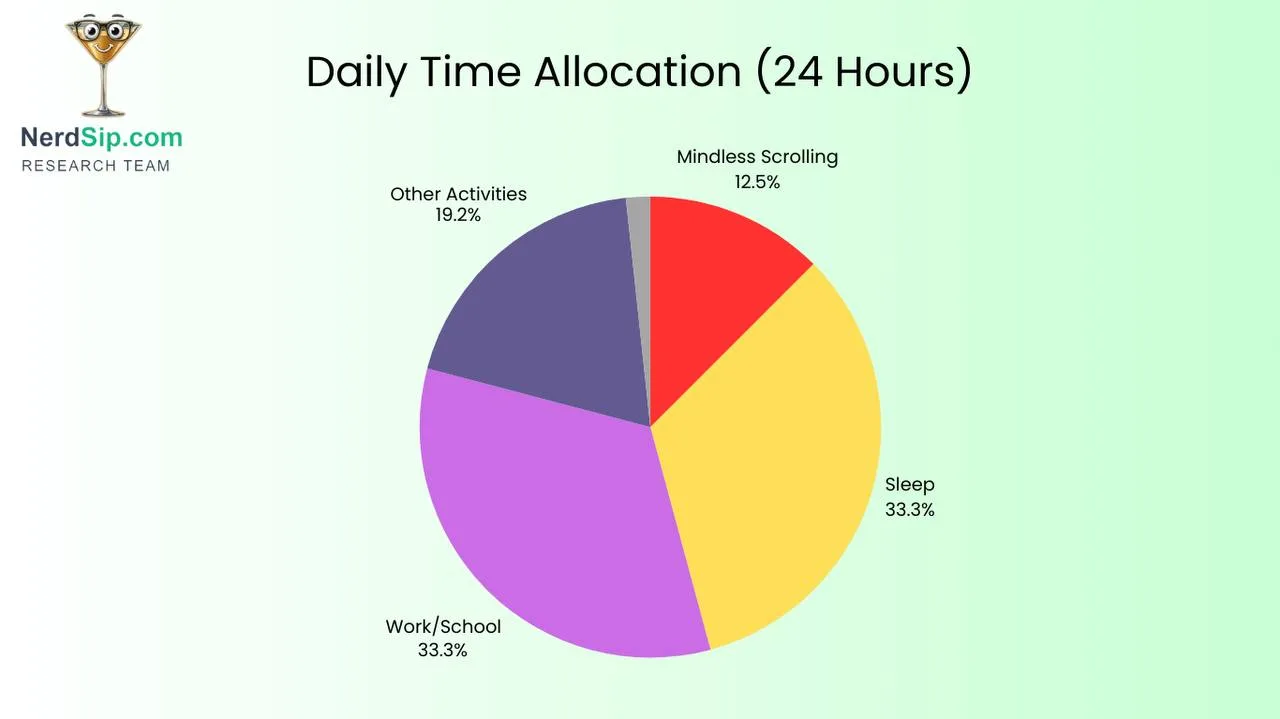
Research shows that 80% of people admit to mindless scrolling, spending an average of three hours daily glued to their screens—that's 46 days per year, or 8 years of an average lifetime. But here's the truth nobody talks about: it's not your fault.
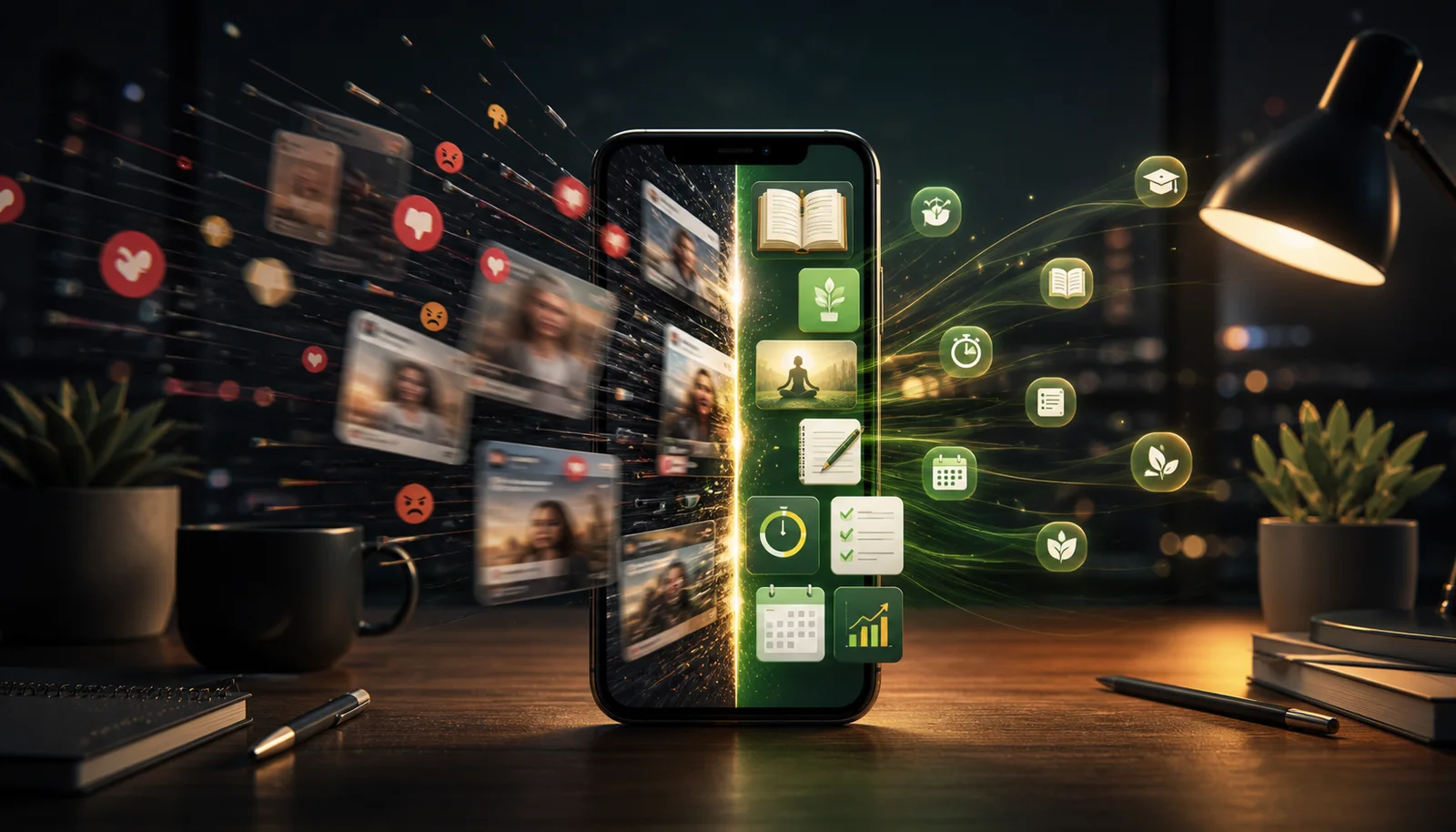
Your phone was engineered to be addictive. Every notification, every infinite scroll, every "like" button—they're all carefully designed by teams of experts to hijack your brain's reward system and keep you trapped.
But what if you could reprogram that same addiction mechanism to make you smarter instead of emptier?
The Science Behind Your Scroll Addiction
Why You Can't Stop Scrolling
When you overstimulate your dopamine system, your brain starts to downregulate its own dopamine production to bring levels back to baseline. This dopamine deficit can result in feelings like depression, anxiety, low motivation, and low energy.
Here's what happens inside your brain when you scroll:
The Dopamine Loop: Social media operates on a "variable reward system"—by rewarding you at random and unpredictable times with engaging content, it uses unpredictability to pull you in. Each like, comment, or interesting post triggers a dopamine surge, creating an addictive feedback loop.
Neural Pathway Rewiring: Research using brain scans found that individuals who spent more time on social apps had significantly lower dopamine synthesis capacity in brain regions involved in reinforcement learning and habit formation.
The Endless Scroll Trap: By removing definitive endpoints to scrolling, platforms create frictionless environments that allow you to slip deeper into passive consumption. An estimated 40% of adults routinely multitask with digital devices, which has been correlated with decreased cognitive control, greater distractibility, higher stress levels, and lower productivity.
Think about it: if you get rewarded every single time you do something, it becomes predictable and your brain loses interest. But random, unexpected rewards? That's when dopamine floods your system. It's the same principle casinos use with slot machines.
The Hidden Cost of Passive Scrolling
The damage goes far beyond wasted time:
- Mental Health Impact: Studies show that exceeding 2 hours of screen time on weekdays doubled the odds of clinically-elevated anxiety and quadrupled the odds of experiencing emotional and behavioral difficulties
- Productivity Drain: Passive scrolling can cost employers up to AED 20,600 per employee each year in lost productivity
- Cognitive Decline: Frequent digital multitasking has been linked to decreased cognitive control, making it harder to filter out irrelevant information and contributing to mental fatigue
- Learning Impairment: Passive content consumption leads to significantly lower retention rates compared to active engagement
One study found that social media self-control failures account for 35% of the time people spend on these platforms. You keep scrolling not to feel good, but just to feel normal.
The Learning Retention Gap: Why Most Content Doesn't Stick
Here's a sobering truth: People generally remember only 10% of what they read after 3 days, and learners forget about 50% of new information within an hour.
Traditional learning methods have abysmal retention rates:
- Face-to-face training: 8-10% retention
- Online learning without engagement strategies: 25% retention
- Passive lecture attendance: Only 10% retention
But when learning becomes active and structured differently, something remarkable happens:
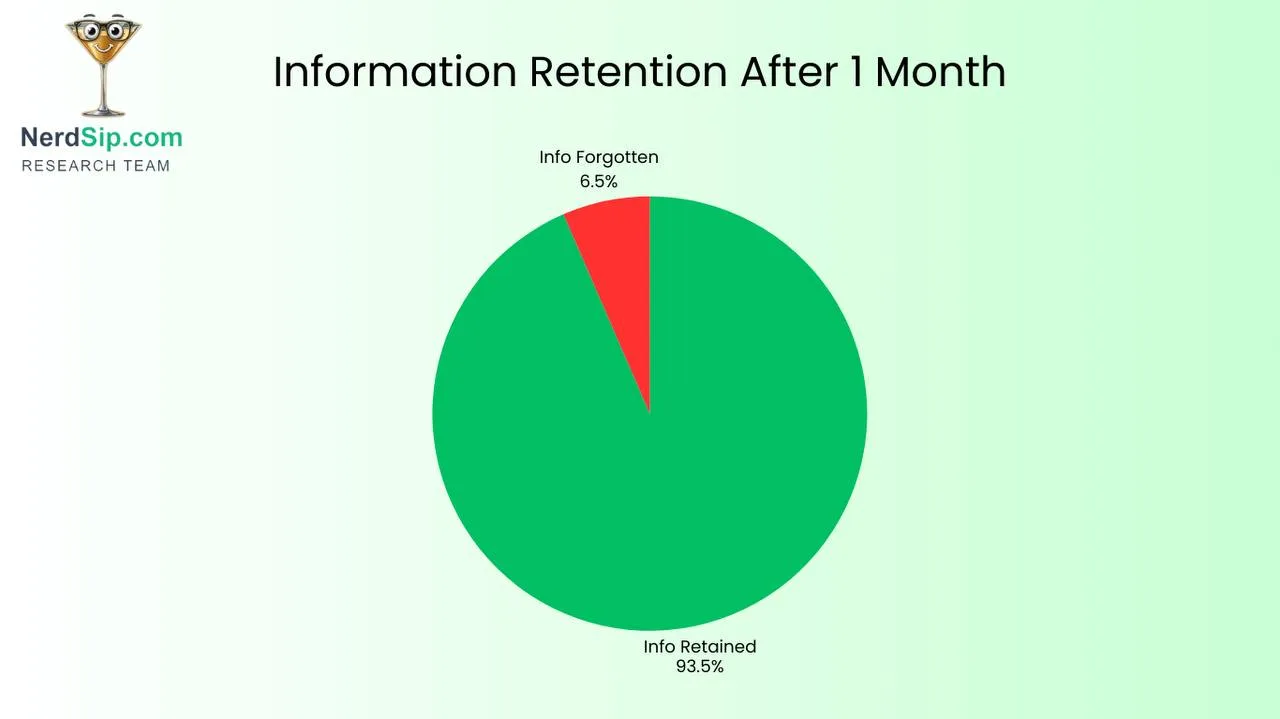
Active learners retained 93.5% of previously learned information compared to only 79% for passive learners after one month. That's a 14.5% improvement—the difference between mastering a skill and forgetting it entirely.
How Microlearning Hijacks the Dopamine Loop for Good
Now here's where it gets interesting. What if you could use the same neurological mechanisms that make scrolling addictive—but redirect them toward actual learning?
Enter microlearning: bite-sized, focused lessons designed to fit into those moments when you'd normally reach for Instagram.
The Science of Microlearning
Research by psychologist Hermann Ebbinghaus on memory and forgetting showed that information sticks better when learning happens in small, repeated doses rather than all at once.
Why microlearning works where traditional education fails:
1. Respects Your Reality: A 2024 Deloitte study found that employees have only about 1% of their workweek for learning—roughly 24 minutes per week. Microlearning fits into those realistic windows instead of demanding hours you don't have.
2. Prevents Cognitive Overload: Short-term memory can only manage around four elements at a time. Microlearning delivers information in digestible chunks that your brain can actually process and retain.
3. Leverages Spaced Repetition: Repetition through spaced intervals helps move information into long-term memory, with retention increases of up to 65%.
4. Provides Instant Feedback: Learners who receive immediate feedback after assessments retain 48% more information.
5. Enables Active Learning: Students retain approximately 60% of knowledge when they participate actively, compared to 10% with passive listening.
Real Results from Microlearning
The data is overwhelming:
- Studies found that 71% of learning professionals see microlearning's potential to increase knowledge retention, and nearly 68% believe it can drive engagement
- Online learners retain 25-60% more information than in-person students
- Organizations with structured onboarding using active learning see 62% greater new hire productivity
- IBM found that participants of eLearning programs could learn 5 times more material without spending more time training
The Replacement Strategy: From Infinite Scroll to Infinite Knowledge
Breaking scroll addiction isn't about willpower. It's about replacement.
Here's the truth: your brain craves stimulation. Fighting that urge is exhausting and usually fails. Instead, you need to satisfy that craving with something that actually serves you.
Why Replacement Works (When Restriction Fails)
Think about it: when you try to "just stop scrolling," what happens? You feel anxious. Bored. Restless. Your hand reaches for your phone automatically. You're fighting against millions of years of evolution and modern neurological engineering.
But when you replace scrolling with microlearning, something different happens:
You satisfy the dopamine craving: Completing a lesson, mastering a concept, earning progress markers—these all trigger dopamine release. The same reward system, but now it's building you up instead of draining you.
You maintain the habit loop: Habits form when a trigger leads to a behavior that produces a reward, strengthening neural pathways in your brain. By keeping the trigger (boredom, waiting, downtime) and the behavior (opening your phone) but changing what happens next (learning instead of scrolling), you reprogram the loop without fighting it.
You reclaim your self-respect: Instead of the guilt and emptiness that follows scrolling, you finish each session feeling sharper, more capable, and proud of how you spent your time.
The 5-Minute Rule
Research shows that bursts of physical activity as short as 15 minutes can improve memory and streamline skills acquisition. The same principle applies to learning.
You don't need hours. You need consistency. Five focused minutes of learning beats thirty minutes of distracted scrolling every single time.
The Microlearning Advantage: Learn Anything, Anytime
Traditional education forces you to commit to:
- Rigid schedules
- Hour-long lectures
- Predetermined topics
- Fixed learning paths
Microlearning flips the script entirely.
Learn What Actually Matters to You
Curious about quantum physics? Want to understand cryptocurrency? Need to master public speaking? With modern microlearning platforms, you can explore any topic the moment curiosity strikes.
Microlearning sessions typically last between 2 to 10 minutes, making them ideal for busy professionals who need to absorb information quickly.
No more bookmarking articles you'll never read. No more saving courses you'll never start. When you have a question, you get an answer—structured, concise, and memorable.
The Compound Effect
Here's where it gets really powerful: Increasing repetition can improve long-term memory by 35%.
Imagine this:
- Year 1: You replace 30 minutes of daily scrolling with microlearning. That's 182 hours of focused learning.
- Year 2: Those 182 hours become 364 hours as the habit compounds.
- Year 5: You've accumulated 910 hours of high-retention learning—equivalent to a part-time degree.
All from those "dead moments" you used to waste scrolling.
The proportion of learners who retain information after incorporating notes and summaries increases by 70%. Many microlearning platforms provide these automatically, maximizing retention without extra effort.
Breaking Free: Your 7-Day Transformation
Days 1-2: Awareness Phase
Start by tracking your screen time. Most people are shocked when they see the numbers. That Instagram check you thought was "just five minutes"? It was forty.
Don't try to change anything yet. Just observe. Notice when you reach for your phone. Notice how you feel before (bored? anxious? avoidant?) and after (empty? guilty? drained?).
Days 3-4: Replacement Phase
Now comes the swap. Every time you catch yourself about to scroll:
- Acknowledge the urge
- Open a microlearning app instead
- Complete just one lesson
It will feel weird at first. Your brain will resist. That's normal. Research shows that the digital world enables bingeing because there are no limitations that force us to pause. Microlearning creates those natural pause points.
Days 5-7: Reinforcement Phase
When 88% of organizations cite retention as a top concern and learning emerges as the number one retention strategy, this creates a direct line between training programs and talent advancement. The same principle applies to personal growth.
By day five, you'll notice:
- You remember what you learned (unlike scrolling, where nothing sticks)
- You feel energized instead of drained
- Your confidence grows with each completed lesson
- You start seeking learning moments instead of dreading boredom
The Future Is Active, Not Passive
Microlearning has evolved from short content into a personalized performance system where people learn best through quick, relevant, micro steps that fit naturally into daily work and life.
The future of learning isn't about longer lectures or more discipline. It's about working with your brain's design, not against it.
By 2026, learning will no longer be about static content but a dynamic, intelligent, self-directed journey. The platforms that win will be the ones that make learning as addictive as social media—but in a way that builds you up.
Your Brain Deserves Better
You've spent years training your brain to crave empty content. Companies have invested billions to make sure their apps win the war for your attention.
But here's what they don't want you to know: the same mechanisms that keep you scrolling can be redirected toward meaningful growth. The dopamine system that makes you refresh Instagram can make you excited to learn something new.
Studies show that bursts of focused learning as short as 15 minutes can improve memory and streamline skills acquisition. You don't need massive life changes. You need strategic replacement.
The question isn't whether you'll use your phone during downtime. You will. Your brain is wired to seek stimulation.
The real question is: what will you do with those moments?
Will you scroll past content you'll forget in seconds? Or will you build knowledge that compounds into expertise?
Your brain is capable of extraordinary things. Stop feeding it empty calories. Start giving it the nutrition it craves.
About NerdSip: NerdSip is a microlearning app that turns your idle time into your biggest advantage. Pick any topic. Receive a tailor-made course in seconds. Master core ideas in 5-minute interactive lessons. Download NerdSip on iOS or Android and turn your phone from a distraction machine into a growth engine.
Read more: The Conversation Framework: How to Talk to Anyone or You're Not Lazy, You're Misaligned.
Every NerdSip course clears a four-layer fact-checking pipeline before it reaches the app: grounded in live sources, scored nightly, gated on failure, and reviewable by a person at one tap. Articles on this blog are drafted with AI assistance, then researched, verified, and edited by our team.
Editorial responsibility: Philip S., ai51 UG (haftungsbeschränkt) — contact via imprint.
📚 Keep Learning
- 9 Best Productive Apps Instead of Social Media in 2026
- 10 Best Apps to Replace Social Media in 2026 (That Actually Work)
- 10 Best Apps for Productive Screen Time in 2026 (Make Your Phone Worth It)
- You Have Brain Rot (And It's Worse Than You Think): How to Fix It
- Escaping the Algorithmic Lobotomy: How to Cure Digital Junk Food Brain
- You're Not Lazy, You're Misaligned: The Real Reason You Can't Get Started
Explore the NerdSip learning hubs
The blog is our editorial layer. When you want to move from reading into doing, these hubs organize the rest of NerdSip by format, including the app itself and the press that has written about it.
Ready to Level Up?
Turn your screen time into knowledge. Download NerdSip and start learning in just 5 minutes a day.