You keep calling yourself lazy. You've pretty much treated it as a fact. You're just naturally unmotivated. It's the way you are. The thing is: you're deceiving yourself. And this deception is costing you everything.
You're not lazy. You're out of sync. There's a huge difference. And figuring out that difference is actually the way to get unstuck.
Laziness is the choice of not doing something when you can do it. It's a flaw in one's character. It's permanent. Misalignment is a brain telling you that what you are supposed to do is not in line with who you are or what matters to you. It's a signal. It's information. You can fix it.
1/3 of employees say that they are unmotivated and unhappy at work. But they are not lazy. They are misaligned. Their values don't align with their job. Their goals don't align with their daily actions. Their identity doesn't align with their life. And your brain keeps slamming on the brakes because, deep down, something knows it's not right.
The Misalignment Diagnosis
Differentiating between laziness and misalignment can be done through the following signs. A lazy person does nothing. Lack of discipline characterizes the person's entire life. Such a person avoids all effort.
However, a misaligned person is a selective one. Such a person can focus on something he/she loves for hours. He/she can grind on a side project until 2 a.m. But a job? A main goal? The thing you're "supposed" to be doing? He/she just can't get started.
The selective nature is the giveaway. One cannot focus on the project that is going to make money while spending three hours researching something that no one has asked you to research. One can watch a five-hour YouTube rabbit hole about someone else's success, but he/she cannot open his/her own document to work on his/her thing. This is not laziness, this is misalignment. Your brain is communicating with you.
What Misalignment Actually Is
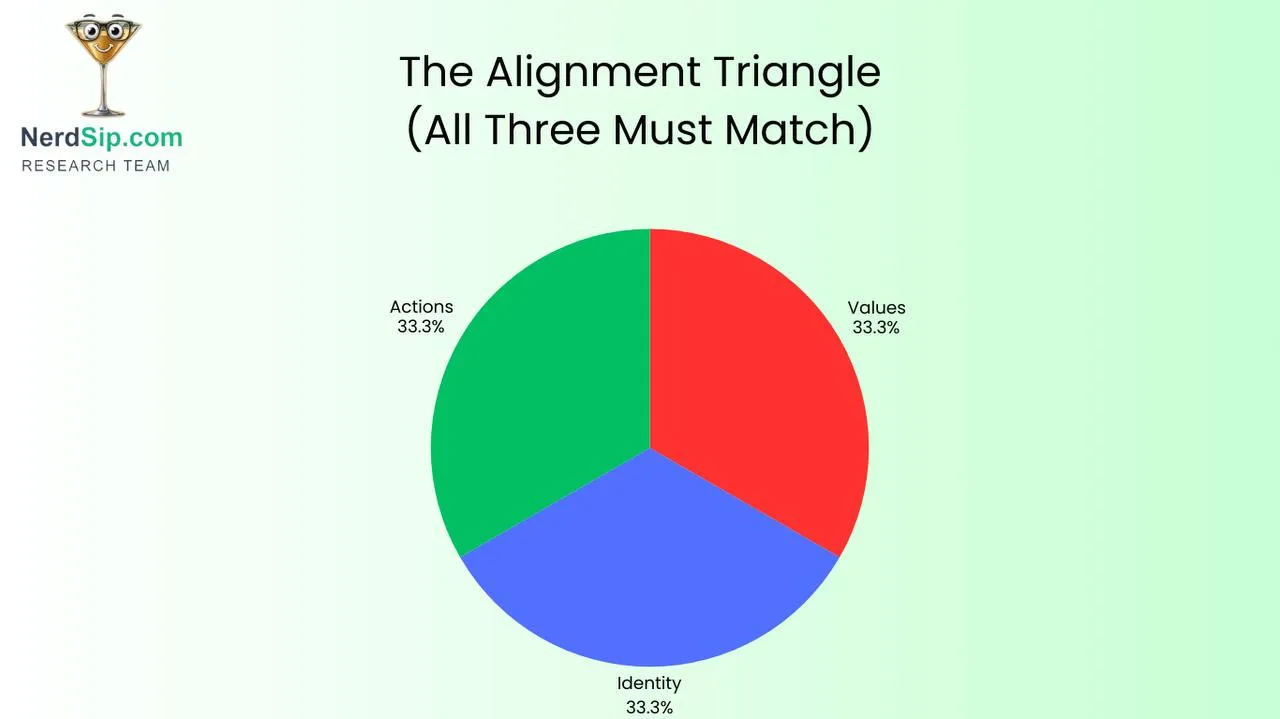
Misalignment is when the gap occurs between your values, your identity, and your actions.
- Your values are what matter to you. Freedom. Creativity. Impact. Security. Connection.
- Your identity is who you see yourself as. An artist. A leader. An innovator. A provider.
- Your actions are what you are actually doing all day.
When the three are in harmony, nothing can stop you. You simply rise and do it because that is who you are and it matters to you. When they are out of sync, you feel stuck and trapped. You are doing something that doesn't matter to you, doesn't fit the way you see yourself, and contradicts your values.
The Research Shows It Clearly
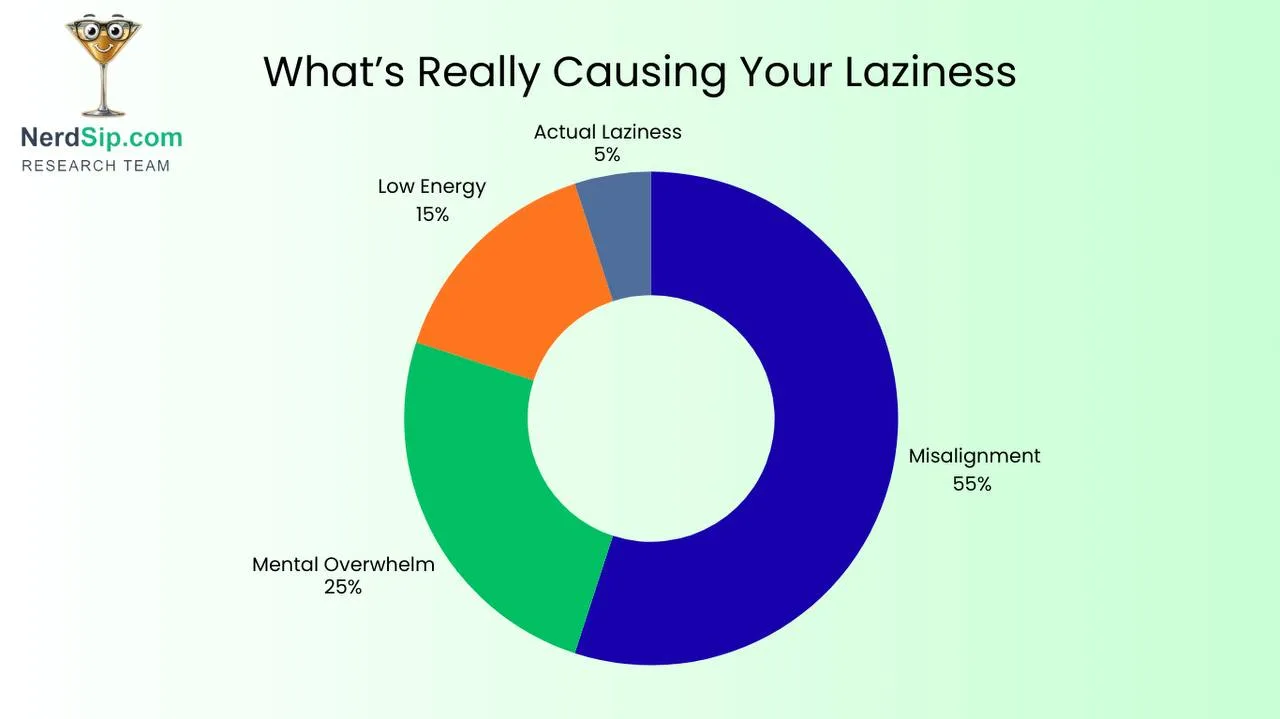
Psychologists have been aware of this for a long time. The main causes of what people term "laziness" are usually one of three:
- Mental overwhelm or lack of clarity: You do not know where to start, so your brain chooses inaction by default.
- Burnout or low energy: You are running on empty. Your nervous system is protecting you by slowing you down.
- Misalignment: Your values don't match your actions. Your identity doesn't match your role.
The Fix: The solution for all three is the same: it is not willpower. It is not discipline. It is not pushing harder. It is clarity. Energy management. And alignment.
The Micro-Learning Alignment Path
What is even more interesting is that you can uncover and correct misalignment daily through clarity work and micro-lessons. Instead of trying to overhaul your entire life at once, you focus on one aspect of alignment each week.
- Week 1: Clarify your values. What truly matters to you?
- Week 2: Clarify your identity. Who do you really want to be?
- Week 3: Clarify your direction. What do you really want?
- Week 4: Realign your daily actions.
By the time day 30 comes around, you are no longer "lazy". Instead, you have become aligned. Platforms like NerdSip are really helpful at this point. They offer daily 5-minute lessons on values, identity, and direction. You are not learning willpower. You are learning alignment. And that is much more powerful.
The Real Payoff
When you stop calling yourself lazy and start looking for misalignment, everything changes. You stop judging yourself for not being able to push through something that's wrong for you. You stop forcing yourself toward goals that don't matter.
Instead, you get honest about what's actually misaligned, and you fix it. It can be changing your goal, changing your job, or finding the deeper reason your goal actually matters. But whatever it is, you stop pretending. And that's where real change begins.
This matters most early on, when small course corrections compound for decades. If the drift has you worried you're wasting your twenties, here is a calm, practical plan to turn it around without overhauling your whole life overnight.
Every NerdSip course clears a four-layer fact-checking pipeline before it reaches the app: grounded in live sources, scored nightly, gated on failure, and reviewable by a person at one tap. Articles on this blog are drafted with AI assistance, then researched, verified, and edited by our team.
Editorial responsibility: ai51 UG (haftungsbeschränkt). Responsible editor named in the imprint.
📚 Keep Learning
Explore the NerdSip learning hubs
The blog is our editorial layer. When you want to move from reading into doing, these hubs organize the rest of NerdSip by format, including the app itself and the press that has written about it.
Ready to Level Up?
Turn your screen time into knowledge. Download NerdSip and start learning in just 5 minutes a day.
4.7 stars from 380 reviews · 10,000+ learners