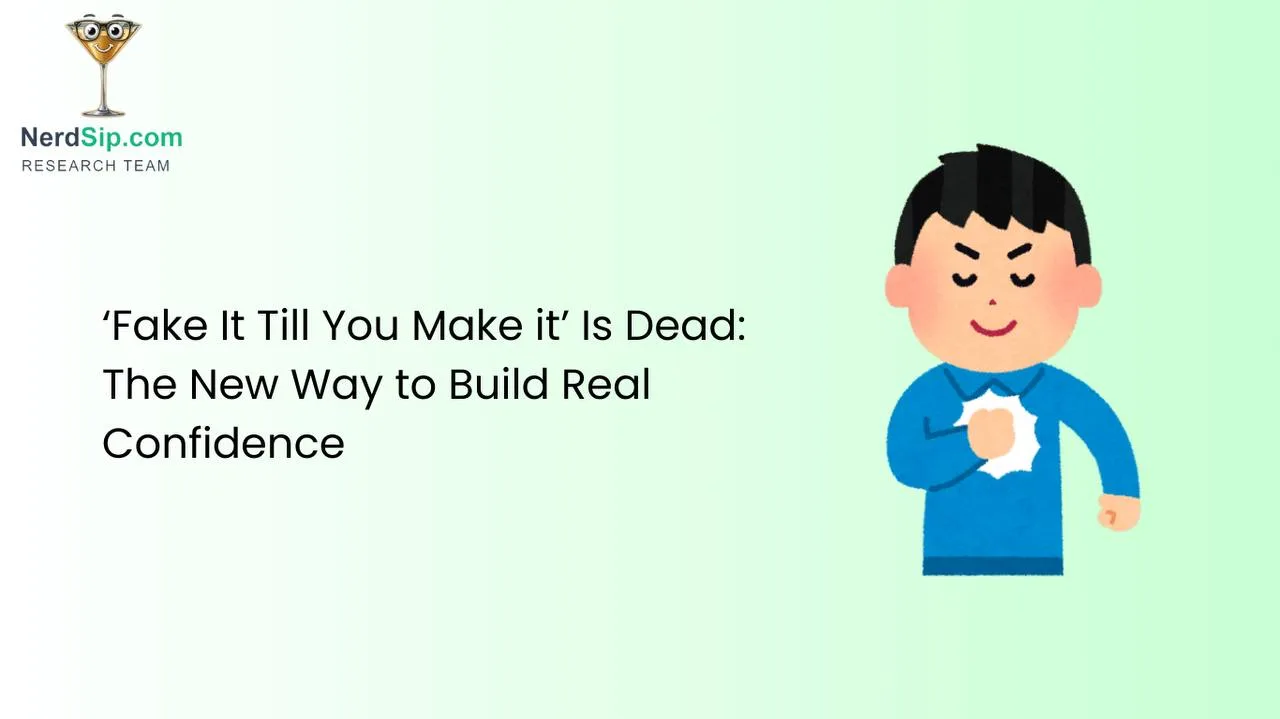
You've heard it a thousand times. "Fake it till you make it." Someone's nervous before a presentation. "Fake it till you make it." You're starting a new job where you feel out of your depth. "Fake it till you make it." You're terrified in a social situation. "Fake it till you make it." The advice is everywhere. LinkedIn posts. TED talks. Motivational quotes on Instagram. The message is consistent: pretend you're confident until actual confidence shows up. Here's the problem: it doesn't actually work. Not the way you've been doing it. And worse, it might be making things worse.
The Truth About Faking It
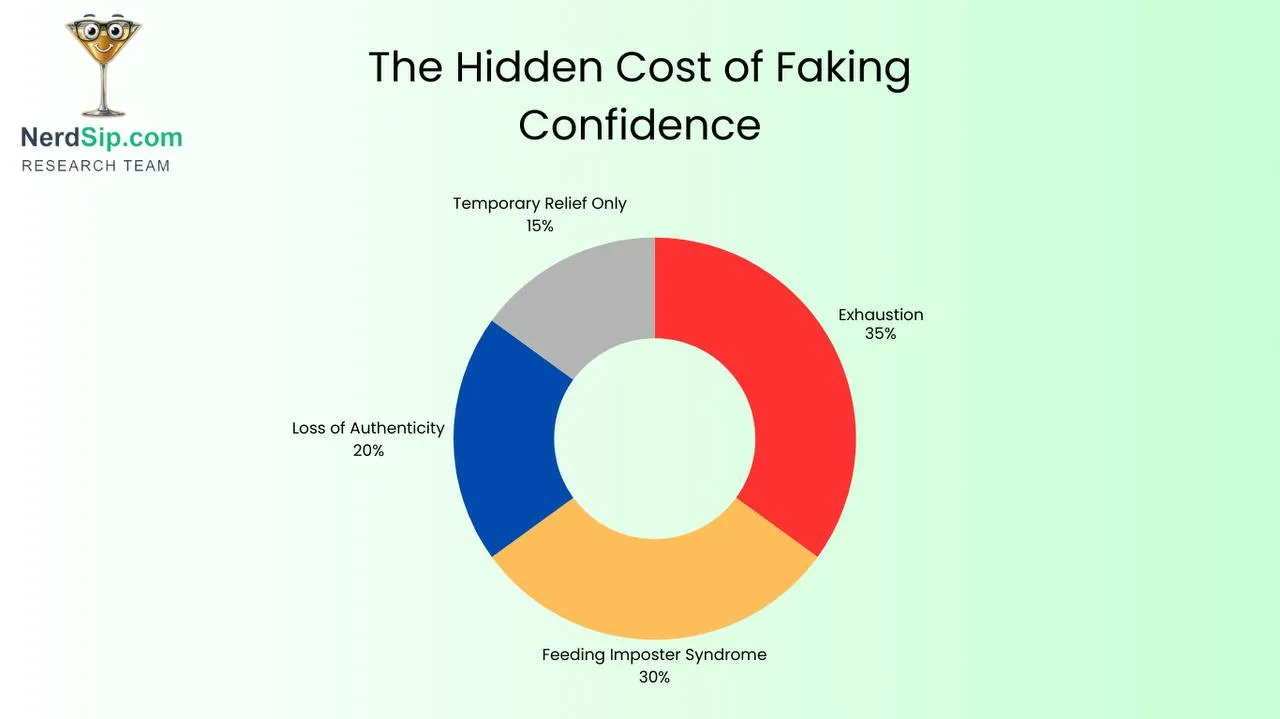
On some level, you already know this. You've tried to fake confidence before. Maybe it worked for five minutes. Maybe it got you through the moment. But then what? The anxiety came back. The self-doubt returned. You're no more confident than you were before. Here's why: faking confidence is built on a shaky foundation. Even if other people can't see through it, you can. Your brain knows you're performing. Your nervous system knows you're lying to yourself. And every time you successfully "fake it," you're actually feeding imposter syndrome, not combating it. You're proving to yourself that you're a fraud. Because you know the confidence isn't real. You know you're acting. According to research, 82% of people who use "fake it till you make it" as their strategy suffer from burnout. They feel like they are constantly performing. Their authentic self gets buried under layers of facade.
And the anxiety never really goes away. It just becomes more skilled at concealing itself. So the advice given to alleviate the anxiety ends up being the very thing that confines you to a cycle of inauthenticity.
The New Framework: Project Competence While Developing It
There is a better way. And it's definitely not what Instagram motivational accounts are suggesting. Rather than "faking it till you make it," think: "Project competence while developing it." This sounds similar but it's completely different. Here's why: Faking it means pretending you understand something when you don't. Projecting competence while developing it means being truthful about your level of understanding and still moving forward. Faking it activates imposter syndrome. Projecting competence actually diminishes it. The difference is authenticity. When you project confidence from a place of honesty, something changes. You're not pretending. You're admitting that you're new at something and you're committed to learning. That's not fake. That's growth. Studies from Columbia Business School reveal that your behavior in a group determines your long-term status in it. But the catch is: it's not about faking competence to be seen as such. It's about showing up with real engagement and genuine confidence in your ability to learn. People are able to detect fake confidence. They can see through the act. But they support real development. They support a person who says "I don't know, but I'm going to figure it out."
The Three Components of Real Confidence
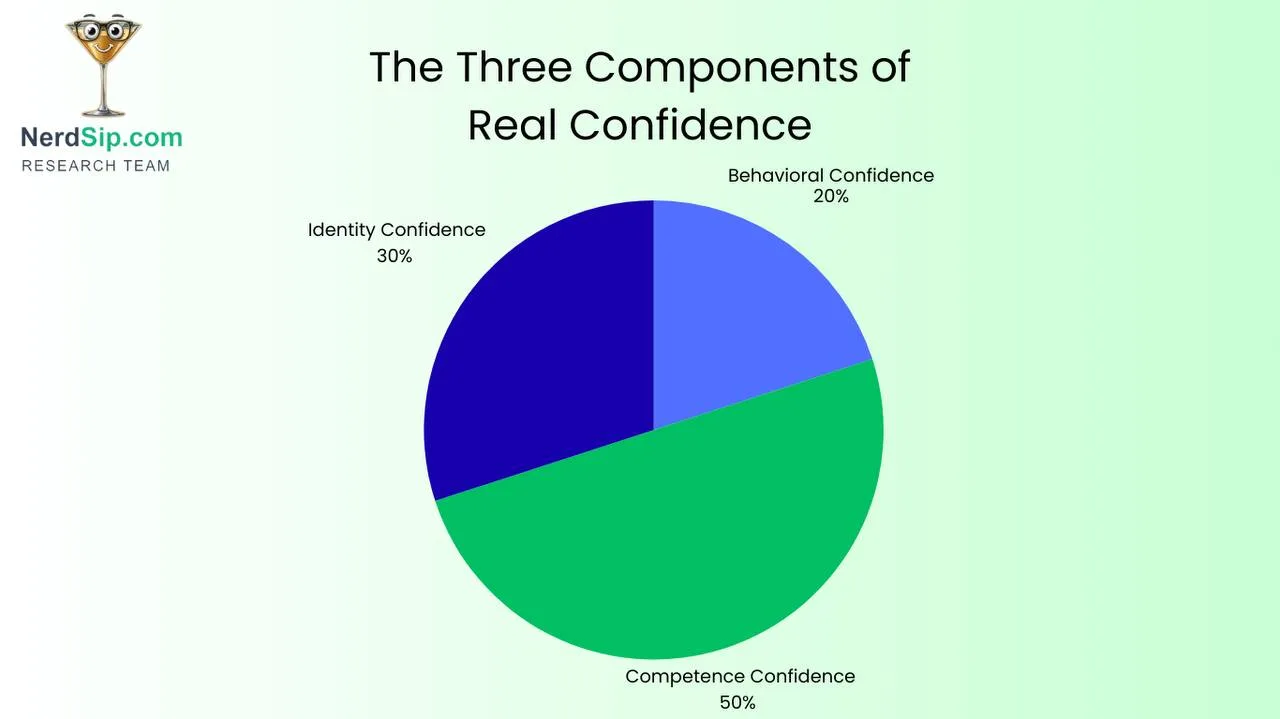
Real confidence consists of three components. Fake confidence only addresses one.
1. Behavioral Confidence (The Only One 'Fake It' Addresses)
This is the kind of "fake it till you make it" is referring to. Behaving confidently. Looking people in the eye. Giving off the impression of being calm. It works for a short while. But without the others, it's tiring to keep it up. Your nervous system feels that you are not telling the truth. You are constantly controlling the performance.
2. Competence Confidence (The One That Really Counts)
This is the confidence that results from understanding your area. From trying and succeeding. From going through the challenges and coming out victorious. This requires a long time to build. But this is the only confidence that lasts. And the good news is, you can develop it while you are showing behavioral confidence. They don't have to be separate.
Consider someone like Marcin Dudek: 15+ years of building software, 50+ WordPress plugins shipped, accepted into Toptal's top 3% of developers worldwide. That kind of confidence doesn't come from a power pose in the mirror. It comes from 15 years of solving real problems for real people. No shortcut. No performance. Just accumulated competence that speaks for itself.
3. Identity Confidence (The Secret Weapon)
This is the confidence that derives from knowing who you are and being okay with that. From having values and living by them. From being true to yourself. This is what fake it till you make it destroys. Every time you pretend, you diminish your sense of self. You convince yourself that your true self is not good enough. True confidence is the result of these three functioning together. Behavioral confidence helps you get into the room. Competence confidence makes you stay there. Identity confidence makes you irresistible.
The New Protocol: Learn, Apply, Understand, Grow, Help (L.A.U.G.H.)
Instead of pretending until you succeed, try the L.A.U.G.H. method.
- Learn: Acquire the basic knowledge. Not from a place of "I need to pretend that I know this." But from a place of "I am genuinely interested in learning this."
- Apply: Get the job done. Not perfectly. But for real. Make mistakes. Learn from them.
- Understand: Think back about what you learned. What worked? What didn't? Why? This is where actual competence forms.
- Grow: Use what you learned to do better next time. Not from the ego ("I need to look more competent"). But from the curiosity ("How can I actually become better?").
- Help: When you have learned something, pass it on to someone else. This not only makes the learning deeper but also changes your identity from "imposter" to "expert."
This way it's much longer than faking it. But it's sustainable. At the end of the day, you are not fake confident. You are genuinely confident because you actually know what you are doing.
The Micro-Learning Advantage
What is interesting here is that you can develop real confidence in a shorter time than what most people think if you follow a daily routine of short micro-lessons. Instead of trying to fake confidence in one big moment, you learn one small thing every day. You practice projecting authentic confidence about that one thing. You do it again tomorrow with something new. By the 30th day, you have not faked anything at all. On the contrary, you have actually become more competent and more confident. Not only in one area. But in multiple areas. Because you have been learning and applying consistently. This is the point where platforms like NerdSip become logical. Short daily lessons where you are really learning. You are not faking mastery.
It's a pretty simple idea: you admit that you don't know something and promise to learn it. And this admission, actually, is the real confidence.
The 30-Day Real Confidence Challenge
Week 1: Learn Authentically
Choose an area in which you want to be confident. But don't pretend that you already know. Take 5-minute lessons on it. Admit that you are a newbie. Become curious.
Week 2: Apply Honestly
Now try what you have learned. Not perfectly. Honestly. Make mistakes. Learn from them. This is the place where the real competence gradually forms.
Week 3: Understand and Reflect
Reflect on the things you experimented with. What worked? What didn't? Why? This reflection is where learning turns into understanding.
Week 4: Grow and Help
Do what you've learned to improve. And teach someone else the things you know. Your confidence shifts from "I'm faking this" to "I actually know this."
On the 30th day, you are not faking. You are genuinely more confident because you have actually learned something.
The Real Payoff
When you stop faking and start learning authentically, everything changes.
- You're not exhausted from performing. You're energized from growing.
- People don't respect the fake confidence. They respect the genuine commitment to learning.
- Your anxiety doesn't decrease because you're better at hiding it. It decreases because you're actually developing real competence.
- You become magnetic not because you're faking it. But because you're authentically growing.
Stop Faking. Start Learning.
The advice you've been getting is broken. "Fake it till you make it" creates a cycle of inauthenticity and imposter syndrome.
The new way is better. Project competence while developing it. Learn. Apply. Understand. Grow. Help.
It takes a little longer. But the confidence you build is real. It's sustainable. It's actually you.
Start this week. Pick one thing you want to be confident about. Don't fake it. Learn it genuinely. The real confidence will follow.
Every NerdSip course clears a four-layer fact-checking pipeline before it reaches the app: grounded in live sources, scored nightly, gated on failure, and reviewable by a person at one tap. Articles on this blog are drafted with AI assistance, then researched, verified, and edited by our team.
Editorial responsibility: ai51 UG (haftungsbeschränkt). Responsible editor named in the imprint.
📚 Keep Learning
Explore the NerdSip learning hubs
The blog is our editorial layer. When you want to move from reading into doing, these hubs organize the rest of NerdSip by format, including the app itself and the press that has written about it.
Keep going: five-minute courses on this
Pick one and finish it before your coffee cools. Every lesson ends with a quick question, so it sticks instead of scrolling past.
Courses on this topic
4.7 stars from 380 reviews · 10,000+ learners