Why do you yawn when someone else yawns? Not because you're tired. Because seeing someone yawn activates your mirror neurons—brain cells that fire both when you perform an action and when you watch someone else perform it. Your brain is literally mirroring their behavior. This is the same neural system that lets you learn by watching, feel empathy, and understand what someone else is experiencing.
And here's the weird part: psychopaths don't catch yawns. Studies show that people scoring high on psychopathy tests are immune to contagious yawning. The mirror neuron system that connects most people to others' emotional and physical states just... doesn't fire the same way for them.
If you just thought "wait, why do I do literally any of the things I do?"—you're in the right place.
Turns out almost everything you think is just "how humans are" has a specific neurological or evolutionary explanation. And most of them are fascinating.
Why Do We Get Songs Stuck in Our Head?
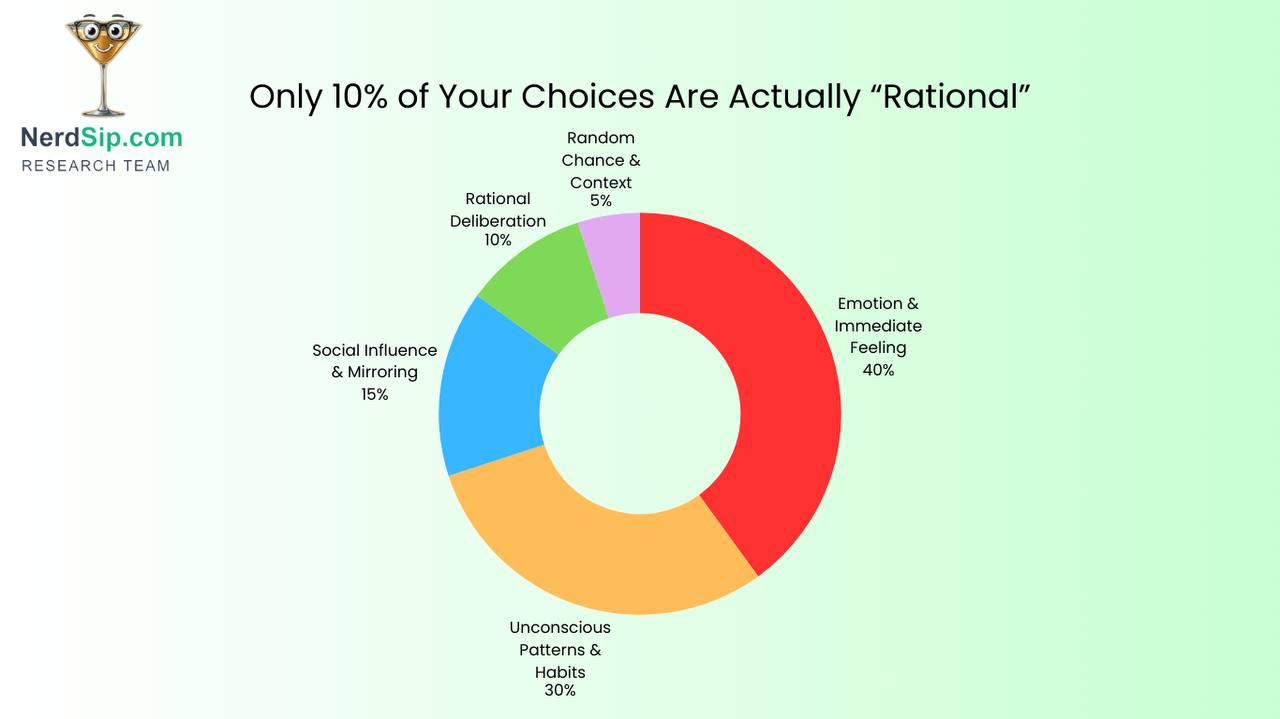
It's called an earworm—that song fragment that loops endlessly in your brain for hours or days, driving you slowly insane.
Your brain is a prediction machine. It's constantly trying to anticipate what comes next based on patterns. Music creates strong patterns—verse, chorus, verse, chorus—and your brain loves completing those patterns. When a song gets interrupted or you only hear part of it, your brain keeps trying to complete the pattern. It plays the fragment over and over, attempting to resolve the incomplete loop.
This is the Zeigarnik effect: your brain treats unfinished tasks as higher priority than finished ones. That's why you remember incomplete melodies better than complete ones, why cliffhangers are so effective, and why you can't stop thinking about projects left half-done.
The songs most likely to get stuck? They have these characteristics:
- Simple, repetitive melodies
- Unusual intervals or rhythms that stand out
- Recent and frequent exposure
- Personal emotional significance
You can't completely prevent earworms, but you can resolve them: listen to the whole song all the way through. Your brain completes the pattern and lets it go. Or distract yourself with a different complex mental task—solving math problems, reading something demanding, having an engaging conversation. That interrupts the loop.
Why Do We Procrastinate When We Know It Makes Things Worse?
Procrastination isn't laziness. It's emotion regulation.
When you face a task that triggers negative emotions—anxiety about failing, boredom, overwhelm, resentment at being forced to do it—your limbic system (the ancient emotional brain) hits the panic button. It floods you with "avoid this now" signals. Your prefrontal cortex (the newer rational brain) tries to argue back with logic: "but the deadline is Friday, we'll feel worse later."
The limbic system wins because it's faster, stronger, and automatic. It doesn't care about Friday. It cares about escaping discomfort right now.
Dr. Tim Pychyl's research at Carleton University shows that procrastinators aren't avoiding work—they're avoiding the negative feelings the work triggers. The temporary relief you get from procrastinating (scrolling social media, cleaning your desk, suddenly very interested in reorganizing files) gives you a dopamine hit. Your brain learns: avoiding = feels better. So it reinforces the behavior.
The brutal irony: procrastination makes the negative emotions worse. The anxiety builds. The guilt accumulates. But in the moment, avoiding provides immediate relief, and your brain is wired to prioritize immediate rewards over future consequences.
What actually works: making the first step stupidly easy ("open the document" not "write the report"), removing friction from starting (close all unrelated tabs, phone in another room), and tying immediate consequences to the task (accountability calls, money bets using Stickk, working with someone present).
Why Do We Forget Names Immediately After Meeting Someone?
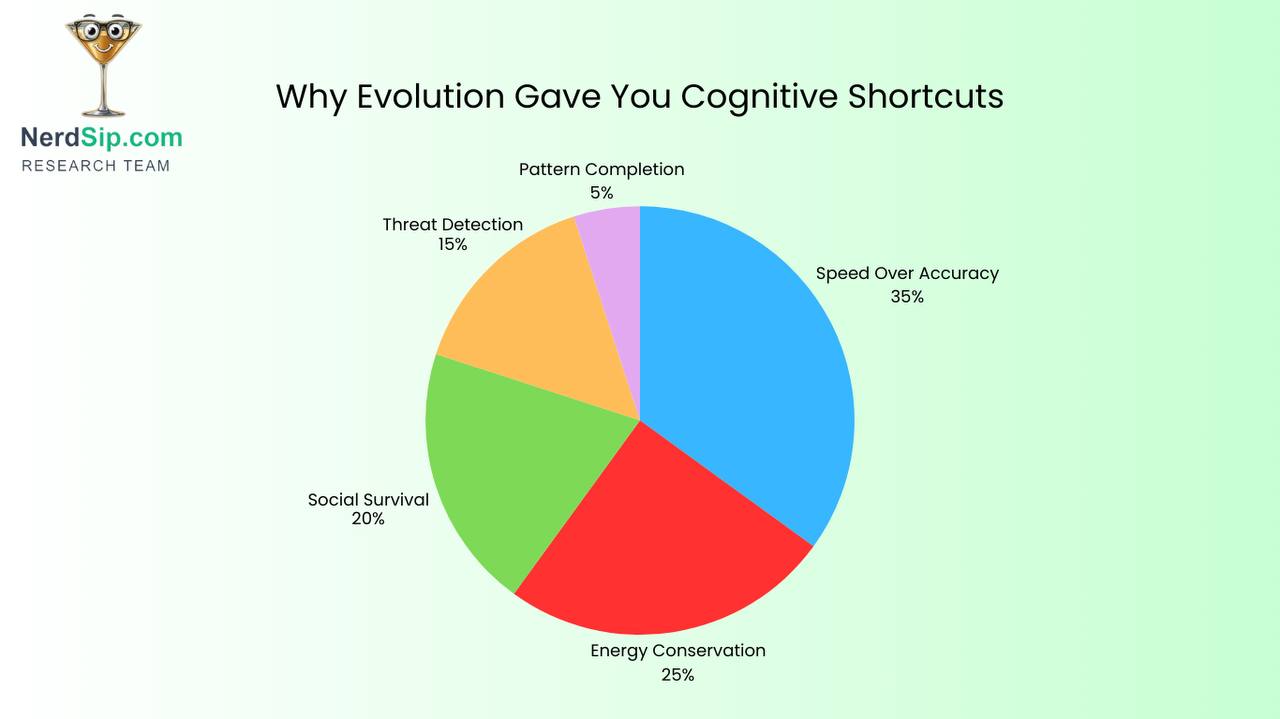
You're introduced to someone. You shake hands. Thirty seconds later you cannot remember their name to save your life.
This isn't a memory problem. It's an attention problem.
When you meet someone new, your brain is processing multiple streams of information: their appearance, their handshake, their body language, what they're saying, what you should say back, whether you're making a good impression. The name gets announced once, in the middle of all that, and your attention is split across too many channels.
Your brain can only encode information into long-term memory if you're paying attention when it's presented. If you're not paying attention—if you're simultaneously processing their outfit, worrying about what to say next, and shaking their hand—the name never gets properly encoded. It goes in one ear and out the other, literally bypassed by your brain's filtering system.
What actually works: stop everything else, look at them, and consciously repeat the name immediately. "Nice to meet you, Sarah." Then use it again within the first minute of conversation. Each repetition forces your brain to encode it more deeply. Better yet: associate their name with something visual or memorable. Sarah with the red glasses. David who works in finance. Your brain remembers images and stories far better than isolated words.
The reason you remember embarrassing moments forever but forget names? Emotion. Embarrassment floods your system with cortisol and adrenaline, which enhances memory consolidation. Neutral name exchanges don't trigger the same chemical cascade, so they don't get the same memory boost.
Why Do We Buy Things We Don't Need?
Loss aversion and the endowment effect are running the show.
Behavioral economist Daniel Kahneman found that people feel losses about twice as intensely as equivalent gains. Losing £100 hurts more than gaining £100 feels good. This asymmetry warps decision-making in predictable ways.
When stores frame sales as "Save £50!" instead of "Pay £150," they're exploiting loss aversion. Your brain registers the unspent £50 as a loss avoided rather than £150 as money spent. Same transaction, completely different emotional weight.
The endowment effect makes this worse: you value things more once you own them. Car dealerships let you test drive for exactly this reason—once you've driven it, you start thinking of it as "yours," and giving it back feels like a loss. Online retailers offer easy returns for the same reason—once the product is in your house, returning it feels like losing something you own, not like rejecting something you're considering.
Then there's the decoy effect: stores put an absurdly expensive option on the menu to make the mid-range option look reasonable by comparison. Nobody buys the £2,000 TV—it exists to make the £1,200 TV look like a bargain. Wine lists do this constantly. The £300 bottle makes the £60 bottle look affordable.
You're not making rational cost-benefit calculations. You're reacting to frames, anchors, and emotional triggers designed by people who understand your brain better than you do.
Why Do We Believe Weird Things Even When Evidence Says Otherwise?
Confirmation bias and the backfire effect explain most of this.
Your brain is not a truth-seeking machine. It's a belief-defending machine that occasionally updates beliefs when evidence becomes impossible to ignore. When you encounter information, your brain doesn't ask "is this true?" It asks "can I believe this?" If the information supports what you already think, the bar for acceptance is low. If it contradicts what you think, the bar is impossibly high.
This is confirmation bias: you search for, interpret, and remember information in ways that confirm pre-existing beliefs. When you believe vaccines cause autism (they don't), you notice every story about a child who developed symptoms after vaccination and dismiss the millions who didn't. When you believe your political party is right, you interpret ambiguous news as confirming that position and scrutinize opposing evidence for flaws.
The backfire effect makes it worse: when people are confronted with evidence that contradicts deeply held beliefs, they often double down and believe more strongly than before. The challenge triggers a threat response. Your brain treats attacks on your beliefs like attacks on you personally—the same regions activate. So you don't update beliefs; you defend your identity.
Smart people aren't immune. They're often better at it—more sophisticated at constructing arguments for why their existing beliefs are correct and why contradictory evidence is flawed.
What actually helps: intellectual humility (recognizing the limits of your knowledge), actively seeking disconfirming evidence, and steel-manning opponents' arguments (representing their position in its strongest form before critiquing it). But these require conscious effort. The default is belief-defending.
Why Do We Scroll Social Media When We're Trying to Relax?
Variable rewards and the dopamine cycle.
Slot machines are designed around variable reward schedules—you don't know when the next win is coming, which makes every pull potentially rewarding. Your brain releases dopamine not when you win, but in anticipation of possibly winning. That anticipation keeps you pulling.
Social media works the same way. Each scroll might reveal something interesting, funny, outrageous, or validating. You don't know which post will deliver, so your brain treats every scroll as potentially rewarding. Dopamine fires in anticipation. You keep scrolling.
The variable reward schedule is more addictive than consistent rewards. If every third scroll showed something good, you'd learn the pattern and scroll only when a reward was due. But variable timing makes every scroll potentially worthwhile, so you scroll constantly.
Infinite scroll removes natural stopping points. Books have chapters. TV shows have episodes. Magazines have pages. These create decision points where you consciously choose to continue. Infinite scroll removes that. There's always more. Your brain never reaches a completion signal, so it never disengages.
The irony: you're trying to relax, but scrolling doesn't actually reduce stress. Studies show social media use correlates with increased anxiety and decreased wellbeing. But the dopamine anticipation loop feels good in the moment, even if it makes you feel worse overall.
What works: use apps that limit screen time, turn off infinite scroll when possible, and replace the variable reward (scrolling) with a fixed reward (reading a specific article, watching one chosen video). Remove the variable element and your brain can disengage.
Why Do We Remember Embarrassing Moments From Years Ago?
The spotlight effect and negativity bias team up to make your brain store embarrassing moments in crystal-clear detail.
Negativity bias means your brain processes and remembers negative information more thoroughly than positive. This kept your ancestors alive—missing one threat = death, missing one opportunity = less food but you survive. Evolution wired you to prioritize avoiding bad over pursuing good.
The spotlight effect is your tendency to overestimate how much others notice and remember your actions. When you trip in public, your brain treats it as a major social catastrophe because you're the center of your universe. You replay it endlessly. But everyone else was the center of their universe—they barely registered your stumble and forgot it within minutes.
The combination: you experience something mildly embarrassing, your brain treats it as socially significant (spotlight effect), stores it with enhanced detail and emotional weight (negativity bias), and then replays it periodically to remind you of potential social threats. You remember it vividly. Nobody else even noticed.
Why Do We Enjoy Spicy Food When It's Literally Pain?
Benign masochism—the pleasure of pain in safe contexts.
Capsaicin (the compound in chili peppers) triggers TRPV1 receptors, the same receptors that activate when you're burned. Your mouth isn't confused—it's correctly detecting a threat. The "heat" you feel is real pain.
But your brain knows the context. You're not actually being harmed. So it releases endorphins to manage the pain, which creates a mild euphoria. The pain is real, but it's safe, which makes it pleasurable.
This is the same mechanism behind why people enjoy horror movies, roller coasters, and jumping into cold water. The threat is real enough to trigger an adrenaline response, but safe enough that the response feels good rather than terrifying.
Where Curious People Go From Here
These aren't random quirks. Each one connects to deeper questions about how your brain actually works.
Contagious yawning leads to mirror neurons and empathy—how do we understand other people? How does social connection work at a neural level?
Procrastination leads to the limbic system vs prefrontal cortex battle—how do emotion and reason compete? Why does the irrational part win so often?
Apps like NerdSip generate courses on psychology, neuroscience, behavioral economics, and cognitive science in 5-10 minute lessons. Want to understand why you do the things you do? Type it in. Learn how your brain actually works instead of just experiencing it.
Because once you understand the machinery, you start seeing the strings attached to everything you do.
And that's when life gets really interesting.
Every NerdSip course clears a four-layer fact-checking pipeline before it reaches the app: grounded in live sources, scored nightly, gated on failure, and reviewable by a person at one tap. Articles on this blog are drafted with AI assistance, then researched, verified, and edited by our team.
Editorial responsibility: ai51 UG (haftungsbeschränkt). Responsible editor named in the imprint.
📚 Keep Learning
Explore the NerdSip learning hubs
The blog is our editorial layer. When you want to move from reading into doing, these hubs organize the rest of NerdSip by format, including the app itself and the press that has written about it.
Ready to Level Up?
Turn your screen time into knowledge. Download NerdSip and start learning in just 5 minutes a day.
4.7 stars from 380 reviews · 10,000+ learners