Honey never spoils. Archaeologists have found 3,000-year-old jars of honey in Egyptian tombs that are still perfectly edible.
Your stomach acid is strong enough to dissolve razor blades—your stomach just grows a new lining every 3-4 days so it doesn't digest itself.
And every atom in your body is billions of years old. The hydrogen atoms were formed in the Big Bang. Heavier atoms were created in dying stars. You're literally made of stardust.
Holy shit, right?
If those facts made your brain go "wait, WHAT?" then you're in the right place.
This isn't a list of random trivia. These are real, scientifically proven facts that completely change how you see the world around you. The kind of facts that make you immediately want to text someone or fall down a Wikipedia rabbit hole at 2 AM.
You're curious. You love that "mind blown" feeling when you learn something that challenges everything you thought you knew.
Here are 47 facts that will do exactly that.
Biology & The Human Body (Your Body Is Weirder Than You Think)
1. You're Mostly Empty Space
Atoms are 99.9999999% empty space. If you removed all the empty space from every atom in every person on Earth, the entire human race would fit into a sugar cube.
We're basically ghosts that think we're solid.
2. Your Brain Named Itself
Think about that for a second. The human brain is the only organ that named itself. And it decided to call itself "brain."
3. Stomach Acid Can Dissolve Metal
Your stomach's hydrochloric acid has a pH of 1-2. That's strong enough to dissolve razor blades, nails, and even some metals.
The only reason your stomach doesn't digest itself? It completely replaces its lining every 3-4 days.
4. You Have a Second Brain
Your gut contains 500 million neurons—more than your spinal cord. This "second brain" (the enteric nervous system) can function completely independently of your actual brain.
That "gut feeling"? It's literally your gut neurons making decisions.
5. Babies Have 60 More Bones Than Adults
Newborns have about 300 bones. Adults have 206. The difference? Many bones fuse together as we grow.
6. Your Body Glows
Humans are bioluminescent. We literally glow in the dark, but the light we emit is 1,000 times weaker than what our eyes can detect.
Japanese scientists proved this using ultra-sensitive cameras. You're basically a very dim lightbulb.
7. You Can't Hum While Holding Your Nose
Try it right now. Go ahead, I'll wait.
Can't do it, right? That's because humming routes air through your nose. Block the nose = no humming. Your brain just got tricked by biology.
8. Your Eyes Have a Blind Spot You Never Notice
There's a spot in each eye where the optic nerve connects to your retina. No photoreceptors exist there, creating a literal blind spot.
You don't notice it because your brain fills in the missing information based on surrounding context. Your brain is constantly lying to you to make the world make sense.
9. Stomach Rumbling Has Nothing to Do With Hunger
Those stomach growls (borborygmi, if you want the scientific term) are just your digestive system doing routine maintenance—moving food, liquid, and gas through your intestines.
It happens whether you're hungry or not. You just notice it more when your stomach is empty because there's less to muffle the sound.
10. You're Taller in the Morning
You can be up to 1 inch taller when you wake up than when you go to bed. Gravity compresses the cartilage in your spine throughout the day. Sleep horizontally and it decompresses.
Physics & Chemistry (Reality Is Stranger Than Fiction)
11. Bananas Are Radioactive
Bananas contain potassium-40, a radioactive isotope. Eating a banana exposes you to about 0.01 millirem of radiation.
Don't worry—you'd need to eat 10 million bananas in one sitting to get a lethal dose. We even measure radiation exposure in "banana equivalent doses" (BED). This is real.
12. Hot Water Might Freeze Faster Than Cold Water
This is called the Mpemba effect, named after a Tanzanian student who observed it in 1963. Under certain conditions, hot water will freeze faster than cold water.
Whether it happens at all is still argued over: a careful 2016 experiment found no evidence of a meaningful Mpemba effect. Physics is full of "wait, that doesn't make sense" moments, and some of them don't survive a closer look.
13. A Glass of Water Contains More Molecules Than Glasses of Water in All the Oceans
One glass of water (about 200ml) contains approximately 6.7 × 10²⁴ water molecules. That's more molecules than there are glasses of water in all Earth's oceans combined.
Math is weird.
14. Quantum Entanglement Is Real
Einstein called it "spooky action at a distance" and hated it. But it's real.
Two particles can become "entangled" so that measuring one instantly affects the other, regardless of the distance between them. Change one particle and its partner changes immediately—even if it's on the other side of the universe.
We don't fully understand how. We just know it happens.
15. Time Moves Slower in Gravity
This isn't science fiction—it's relativity. Time literally moves slower the closer you are to a massive object.
Your head ages faster than your feet (by about 90 billionths of a second over 79 years). GPS satellites have to account for relativity, or their position errors would grow by about 10 kilometers every day.
16. The Eiffel Tower Grows 6 Inches in Summer
Metal expands when heated. The iron in the Eiffel Tower expands enough in summer heat to make the tower about 6 inches taller.
17. A Day Used to Be 18 Hours Long
Earth's rotation is slowing down (very gradually). About 1.4 billion years ago, a day was only 18 hours long. The Moon is slowly stealing Earth's rotational energy through tidal forces.
Eventually, Earth's day will match the Moon's orbital period—about 27 current days.
18. Water Can Boil and Freeze Simultaneously
At exactly 0.01°C and a pressure of 611.657 pascals (the "triple point" of water), water can exist as solid ice, liquid water, and water vapor all at the same time.
You can watch ice melting and water boiling in the same container. Physics is wild.
Space & Astronomy (The Universe Doesn't Care About Your Understanding)
19. There Are More Trees on Earth Than Stars in the Milky Way
Earth has approximately 3 trillion trees. The Milky Way has 100-400 billion stars.
Trees win.
20. Neutron Stars Are Impossibly Dense
A teaspoon of neutron star material would weigh about 6 billion tons—roughly the weight of a mountain.
If you could somehow drop it on Earth, it would punch straight through the planet.
21. Space Is Silent
Sound needs a medium (like air) to travel. Space is a vacuum. No medium = no sound.
All those epic space battle explosions in movies? Completely silent in reality. The destruction of a planet would happen in perfect silence.
22. You Can't Cry in Space
Without gravity, tears don't fall. They just pool up in your eyes in a blob until they get big enough to break free and float away.
Crying in space probably looks hilarious but feels awful.
23. The Sun's Surface Is Hot, But Its Corona Is Far Hotter
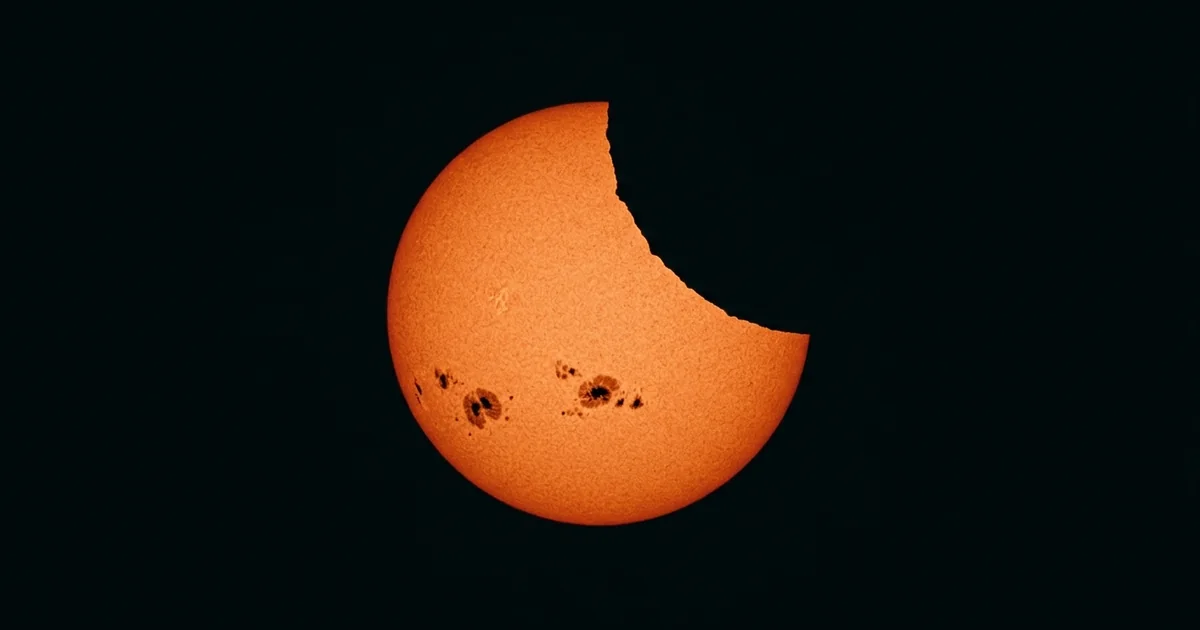
The Sun's surface is about 10,000°F. Its outer atmosphere (corona) is over 2 million °F.
This violates everything intuitive about heat transfer (heat moves from hot to cold, so how does the outer layer get hotter?). Scientists call this the "coronal heating problem" and we still don't have a complete explanation.
24. A Year on Venus Is Shorter Than a Day on Venus
Venus rotates so slowly that it takes 243 Earth days to complete one rotation (one Venus day).
But it only takes 225 Earth days to orbit the Sun (one Venus year).
So on Venus, a day is longer than a year. Time is fake.
25. Black Holes Aren't Actually Holes
They're incredibly dense objects with gravity so strong that nothing—not even light—can escape beyond a certain point (the event horizon).
They're not holes sucking things in. They're just really heavy objects warping space-time so extremely that escape becomes impossible.
26. The Observable Universe Has an Edge (Kind of)
The observable universe reaches about 46 billion light-years in every direction, or roughly 93 billion light-years across. Not because that's where the universe ends, but because light from further away hasn't had time to reach us yet.
The universe could be infinite. We literally can't know.
Animals & Nature (Evolution Got Weird)
27. Octopuses Have Three Hearts and Blue Blood
Two hearts pump blood to the gills. One pumps it to the rest of the body. When an octopus swims, the heart pumping to the body stops beating, which is why they prefer crawling.
Also, their blood is blue because it's copper-based instead of iron-based like ours.
28. Tardigrades Can Survive in Space
These microscopic "water bears" can survive:
- Temperatures from -458°F to 300°F
- Pressure six times greater than the deepest ocean
- The vacuum of space
- Radiation hundreds of times higher than what would kill a human
They enter a state called cryptobiosis where they're technically not alive but not dead either. They just... pause.
29. Crows Hold Grudges and Remember Faces
Studies show crows can remember individual human faces for years. If you're mean to a crow, it will remember you and tell other crows.
They've been observed dive-bombing specific people who wronged them months earlier.
Don't mess with crows.
30. Trees Communicate Through Fungal Networks
Trees are connected underground through vast networks of mycorrhizal fungi (the "wood wide web"). They use this network to share nutrients and even warn each other about insect attacks.
The popular "mother tree" that recognizes her offspring and sends them extra nutrients is a lovely idea, but a 2023 review found no peer-reviewed evidence for it, and how much trees share through these networks at all is still debated.
31. Mantis Shrimp Can Punch With the Force of a Bullet
Mantis shrimp can punch at speeds of 50 mph in water. The acceleration produces cavitation bubbles that implode with a shockwave strong enough to kill prey even if the punch misses.
Their punches generate temperatures approaching that of the Sun's surface (briefly).
Their eyes can see 12-16 color channels (we see 3). We literally can't imagine what they see.
32. A Group of Flamingos Is Called a "Flamboyance"
This is the official collective noun. Because the English language is ridiculous and wonderful.
History & Discoveries (The Past Was Absurd)
33. Oxford University Is Older Than the Aztec Empire
Oxford University: Founded around 1096
Aztec Empire: Founded in 1428
Oxford was already more than 200 years old when the Aztecs founded Tenochtitlan around 1325, and over 300 by the time their empire took shape.
34. Cleopatra Lived Closer to the Moon Landing Than to the Pyramids
Cleopatra's reign: ~30 BC
Moon landing: 1969 (1,999 years later)
Great Pyramid built: ~2560 BC (2,530 years before Cleopatra)
Cleopatra is closer to us than to the pyramids. History is weird.
35. Napoleon Was Attacked by Rabbits
In 1807, Napoleon arranged a rabbit hunt. Thousands of rabbits were released. Instead of running away, they swarmed Napoleon and his men.
A French military genius was defeated by bunnies.
36. The Shortest War Lasted 38 Minutes
The Anglo-Zanzibar War (1896) lasted 38-45 minutes. Britain won decisively.
37. A Japanese Soldier Fought WWII Until 1974
Hiroo Onoda didn't believe Japan had surrendered. He held out on a Philippine island until his former commander flew there in 1974 to personally relieve him of duty.
He fought for 29 years after the war ended.
Bonus: Facts About Facts
38-47. Rapid-Fire Mind-Blowers
- Your smartphone has more computing power than all of NASA in 1969
- The King of Hearts is the only king without a mustache in a standard deck
- "Queue" is pronounced the same way if you remove the last 4 letters
- A strawberry isn't a berry, but a banana is (botanically speaking)
- Otters hold hands while sleeping so they don't drift apart
- The inventor of the Pringles can is buried in a Pringles can (at his request)
- Saudi Arabia imports camels from Australia
- Cashews grow on the outside of a fruit that looks like a bell pepper
- The national animal of Scotland is a unicorn
- The plastic tips on shoelaces are called aglets
Why Your Brain Loves These Facts (The Psychology of "Holy Shit" Moments)
You didn't just read these facts. You felt them.
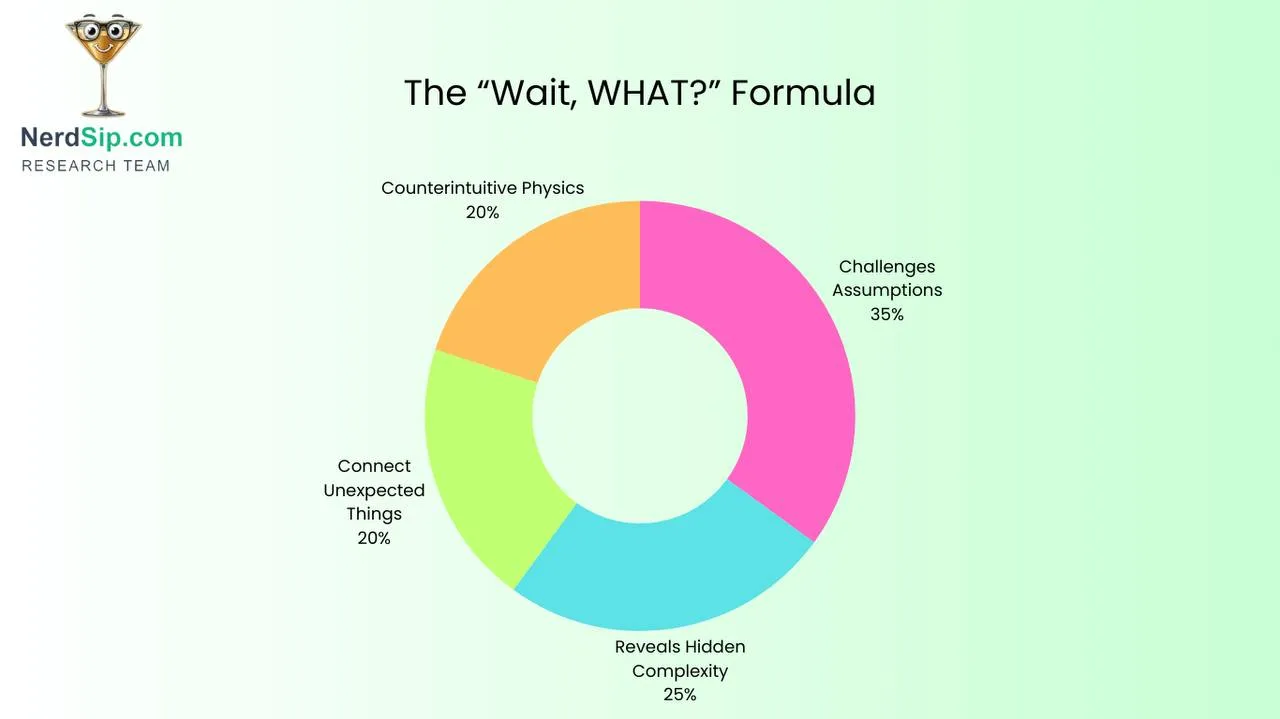
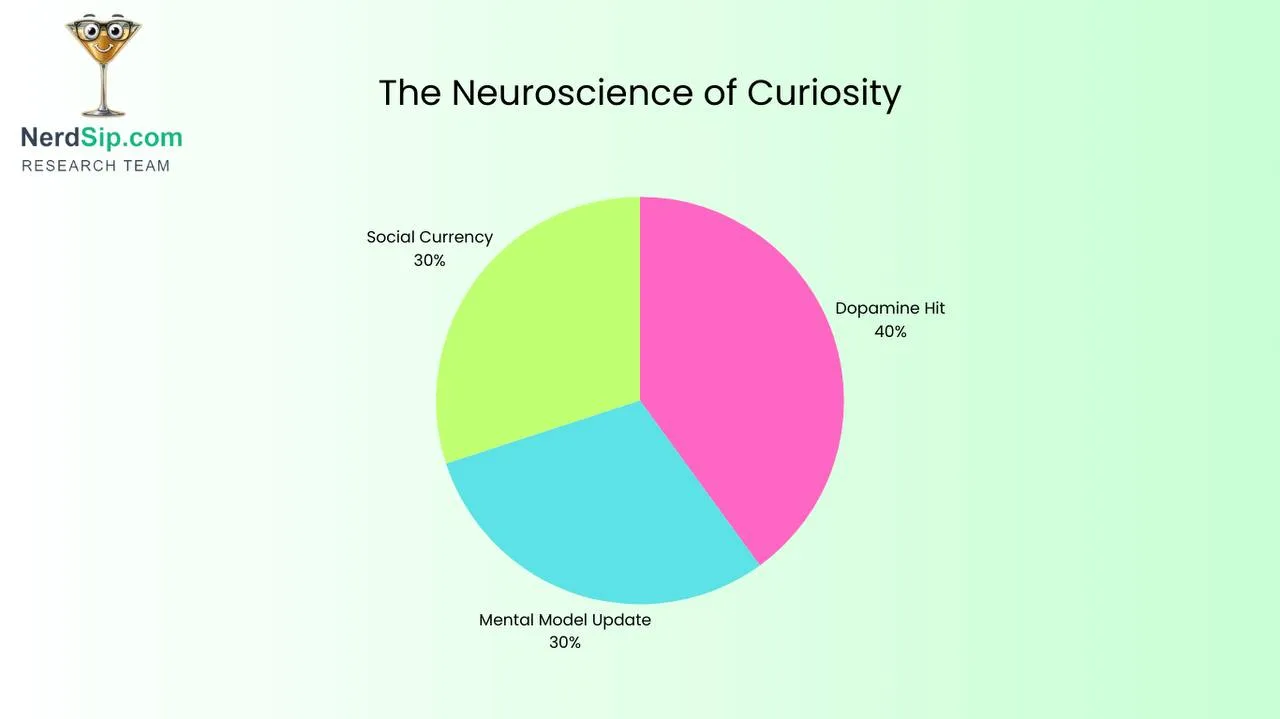
That brief moment of "wait, WHAT?" is your brain releasing dopamine in response to novel information that challenges your existing mental models.
Curiosity is literally addictive. Learning something surprising feels good because it is good—it's your brain updating its map of reality to be more accurate.
This is why Wikipedia rabbit holes exist. Why you can spend three hours watching science videos on YouTube. Why you're still reading this article instead of doing literally anything else.
Your brain is hungry for information that makes you see the world differently.
Where to Feed Your Curiosity Daily
If you loved these facts, you're someone who should be learning something new every single day.
Not shallow trivia. Real knowledge that changes how you understand the world.
Apps like NerdSip are designed specifically for people like you:
- AI generates courses on literally any topic you're curious about (quantum mechanics, Roman history, how blockchain works, medieval torture devices, why we yawn)
- Every lesson starts with a "holy shit" hook to grab your curiosity
- 5-10 minute lessons fit into any schedule
- Built like Duolingo but for everything (gamification, streaks, XP)
- Community of other curious people sharing what they're learning
Want to understand quantum entanglement? How anesthesia works? The fall of Byzantium? Type it in. Get a course. Learn in fragments throughout your day.
The alternative is hoping you randomly stumble onto interesting content, or spending hours searching for quality explanations.
Your curiosity deserves better than that.
The Bottom Line: Stay Curious
The facts in this article aren't just trivia. They're invitations to see the world differently.
Honey that never spoils makes you think about chemistry and food preservation.
Your body glowing makes you reconsider what "light" even means.
Trees communicating underground challenges your assumptions about consciousness and intelligence.
Each fact is a doorway to a rabbit hole worth exploring.
The curious people who actually explore those rabbit holes become the most interesting, creative, and insightful people you know.
They're not smarter. They're just feeding their curiosity consistently instead of letting it starve.
Ready to learn something that makes you go "holy shit" every day?
Download an app designed for curious minds. Spend 5-10 minutes daily learning something genuinely fascinating. Build a streak. Feed your brain what it's actually hungry for.
In 30 days, you'll know things that make people stop mid-conversation and go "wait, how do you know that?"
And you'll have the best answer: "I'm just curious."
Now go be curious about something.
Related Articles
- How to Learn Random Things That Actually Make You More Interesting
- Best Learning Apps for Busy People
- Random Fact Generator
Science is one of eight categories in the full fun facts library, alongside history, space, psychology, nature, health, technology and society.
Every NerdSip course clears a four-layer fact-checking pipeline before it reaches the app: grounded in live sources, scored nightly, gated on failure, and reviewable by a person at one tap. Articles on this blog are drafted with AI assistance, then researched, verified, and edited by our team.
Editorial responsibility: ai51 UG (haftungsbeschränkt). Responsible editor named in the imprint.
📚 Keep Learning
- 42 Facts That Will Blow Your Mind (2026)
- 27 Mind-Blowing Brain Facts That Will Change How You Think About Thinking
- 31 Things Everyone Should Know But Somehow Doesn't (Science, History, and Weird Truths)
- Why People Who Know Random Stuff Are Winning (The Generalist Advantage)
- Why Do Solar Eclipses Happen? The Simple Answer and the Cosmic Fluke
- 50 Fun Facts About Canada That Sound Made Up
Explore the NerdSip learning hubs
The blog is our editorial layer. When you want to move from reading into doing, these hubs organize the rest of NerdSip by format, including the app itself and the press that has written about it.
Keep going: five-minute courses on this
Pick one and finish it before your coffee cools. Every lesson ends with a quick question, so it sticks instead of scrolling past.
Courses on this topic
4.7 stars from 380 reviews · 10,000+ learners