Want to finally understand how money can multiply while you sleep?
Prompted by A NerdSip Learner
Master the core rules of financial trading.
Imagine a bustling weekend farmer's market. People are actively buying and selling fresh apples, tomatoes, and bread. Trading in the financial world is exactly the same concept, just with invisible goods and on a massive, global scale!
Instead of trading physical apples, people buy and sell little pieces of companies, foreign currencies, or digital coins. The ultimate goal? To exchange something you have right now for something you believe will be worth much more in the future.
When you buy a stock, you actually become a tiny part-owner of a real-world business. If that company creates a wildly popular new product and makes more money, the value of your little piece usually grows too. If they struggle, your piece might lose value.
Ultimately, trading is simply a massive, high-speed marketplace. Millions of people around the world are coming together every single day to make educated guesses about what will be valuable tomorrow.
Key Takeaway
Trading is a global marketplace where people buy and sell parts of businesses for profit.
Test Your Knowledge
What happens when you buy a stock in a company?
At a restaurant, you have different categories of food: appetizers, mains, and desserts. In the trading world, you also have different "menus" of things you can buy. We call these asset classes.
The most famous asset is a stock. Think of a stock as a slice of a corporate pizza. If you buy a slice of Apple or Amazon, you own a fraction of that exact company.
Then you have bonds. A bond is simply an official IOU. You are lending your money to a company or a government. In return, they promise to pay you back later, plus a little extra for your trouble (called interest). Bonds are generally considered safer than stocks.
Finally, there are newer items on the menu like cryptocurrencies. These are purely digital money, independent of any central bank. They can grow very fast, but they are also much riskier—like eating a dangerously spicy dish!
Key Takeaway
The trading menu consists of different assets like stocks (ownership), bonds (loans), and crypto (digital money).
Test Your Knowledge
What is a bond in the trading world?
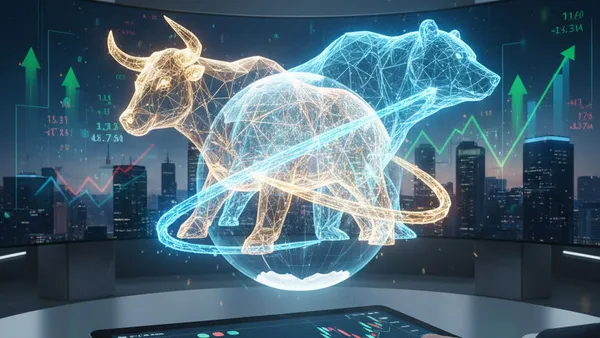
If you ever watch the financial news, you might hear reporters talking about "bulls" and "bears." They aren't talking about a zoo! These two animals represent the mood of the entire trading market.
A Bull Market means things are looking up. Prices are rising, the economy is doing well, and people are feeling optimistic. Think of a bull attacking: it thrusts its horns *upward* into the air. When traders are "bullish," they believe prices will climb.
A Bear Market is the exact opposite. Prices are falling, people are worried, and they are selling off their assets. Think of a bear attacking: it swipes its heavy paws *downward*. When traders are "bearish," they expect prices to drop.
Neither animal is inherently good or bad for a savvy trader. They simply describe the current weather of the financial world. Knowing if it's raining or sunny helps you decide how to adapt your strategy!
Key Takeaway
Bulls represent a rising, optimistic market, while bears represent a falling, pessimistic market.
Test Your Knowledge
Why do traders use the term "Bull Market"?
The most fundamental rule of trading sounds incredibly easy: "Buy low, sell high." If you buy a vintage toy at a garage sale for $5 and sell it online for $50, you just made a fantastic trade.
However, doing this in the financial markets is surprisingly difficult. Why? Because human emotions get in the way. We are naturally driven by two powerful feelings: fear and greed.
When prices are skyrocketing, greed kicks in. Everyone wants a piece of the action, so people often "buy high" out of a Fear Of Missing Out (FOMO). Conversely, when prices crash, panic sets in. Terrified of losing everything, people often "sell low."
Successful trading means keeping a cool head. It requires you to act based on a clear, logical plan rather than following the panicked or greedy crowd. The best traders are the ones who can master their own emotions!
Key Takeaway
The goal is to buy low and sell high, but managing your own fear and greed is the hardest part.
Test Your Knowledge
What are the two main emotions that often cause traders to make bad decisions?
Imagine you have ten eggs, and you put them all in one flimsy wicker basket. If you trip and drop the basket, all your eggs are smashed. But if you put two eggs in five different baskets, a single drop isn't a disaster.
In trading, this life-saving concept is called diversification. It is your ultimate safety net against risk. You never want to put all your money into just one single company's stock.
If you invest everything in a trendy shoe company and they go bankrupt, your money disappears. But if you spread your money across technology, healthcare, food, and energy companies, you are heavily protected. If the shoe company fails, your successful tech and food stocks can balance out the loss.
Trading isn't about avoiding risk entirely—that's practically impossible. It’s about managing that risk smartly. By spreading out your investments, you can enjoy the ride without fearing a single bump in the road.
Key Takeaway
Diversification means spreading your money across different investments to protect yourself from total loss.
Test Your Knowledge
What is the primary purpose of diversification in trading?
Track your progress, earn XP, and compete on leaderboards. Download NerdSip to start learning.