Ever wonder why your favorite song feels like magic in your brain?
Prompted by A NerdSip Learner
Discover how music creates a richer life.
Have you ever listened to a song and felt an instant rush of happiness, or maybe even a sudden urge to cry? That is not just in your imagination—it is science!
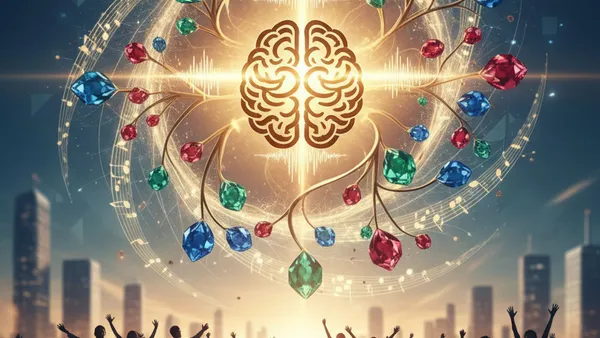
When you listen to music you love, your brain releases a chemical called dopamine. This is the exact same "feel-good" reward chemical you get when you eat a delicious slice of pizza or level up in your favorite video game. It is nature's way of making us feel alive and connected.
But music does more than just make us happy. It acts like a universal language. Even without understanding the lyrics, a sad melody or a fast, energetic beat communicates feelings instantly. This ability to share emotions across different cultures is what adds deep richness to our human experience.
By tuning into music, we are literally tuning our brains to feel more deeply. It is a free, everyday tool we can use to boost our mood, calm our anxiety, and connect with the world around us.
Key Takeaway
Music triggers our brain's reward system, acting as a universal language that deepens our daily emotional experience.
Test Your Knowledge
What "feel-good" chemical does your brain release when you listen to music you love?
Think about a song you listened to on repeat during a really great summer vacation. If you hear that song today, you probably instantly feel the warmth of the sun and remember the laughs you shared.
Our brains use music as a mental scrapbook. The area of your brain that processes music is deeply connected to the area that stores memories and emotions. When you pair a life event with a specific song, they become tightly glued together in your mind.
This is why life feels so much richer when we have a "soundtrack" playing in the background. Without music, a road trip is just sitting in a car for a few hours. But *with* music, it becomes an epic, memorable adventure.
You can use this superpower to your advantage! If you want to remember a special day or make a boring chore feel more vibrant, curate a specific playlist. You are actively painting your memories with sound.
Key Takeaway
Music is deeply linked to the memory centers in our brain, turning ordinary moments into vivid, unforgettable memories.
Test Your Knowledge
Why does music easily bring back old memories?
When we talk about a "rich" life, we usually think of money, fancy clothes, or luxury cars. But true richness is about how deeply we experience the world around us. And the best part? You do not have to be a famous pop star to live a musically rich life.
Think of music genres like spices in a kitchen. If you only ever eat plain noodles, life gets pretty boring. But if you start adding different spices—like trying out jazz, hip-hop, classical, or indie rock—your world suddenly bursts with flavor.
To increase the richness of your life, try practicing active listening. Instead of just playing music in the background while you scroll on your phone, close your eyes and really focus on the instruments. Try to pick out the bassline or the rhythm of the drums.
By exploring new sounds and truly paying attention to the music around you, you open doors to new cultures, new feelings, and a much more colorful life.
Key Takeaway
Actively listening to a wide variety of music is like adding new spices to your life, making your daily experiences much richer.
Test Your Knowledge
What is an example of "active listening" in music?
Track your progress, earn XP, and compete on leaderboards. Download NerdSip to start learning.