Why is your hair really thinning?
Prompted by NerdSip Explorer #7928
Master the science of healthy hair growth.
Before you can grow better hair, you need to understand *how* it grows. Your hair operates on a continuous, three-part biological cycle.
First is the Anagen phase (the growth phase). This lasts for 2 to 7 years. The longer your anagen phase, the longer your hair can grow. About 85% to 90% of your hair is in this phase right now!
Next is the Catagen phase (the transition phase). Lasting just a few weeks, the hair follicle naturally shrinks and detaches from its blood supply.
Finally, the Telogen phase (the resting/shedding phase). The hair rests for a few months before falling out, making room for a new hair. When we talk about "improving hair growth," our main goal is to keep follicles in the *anagen* phase for as long as possible!
Key Takeaway
Hair growth is a cycle; the secret to thicker hair is extending the "Anagen" (growth) phase.
Test Your Knowledge
Which phase is the active "growth" phase of the hair cycle?
Did you know your hair is almost entirely made of protein? Specifically, a tough, fibrous protein called keratin.
If your diet lacks adequate protein, your body will prioritize essential life functions (like keeping your internal organs running) over making new hair. This can force your hair follicles into a premature resting phase, leading to noticeable shedding and thinning.
To build strong, resilient hair, you need a steady supply of amino acids (the building blocks of protein). Foods like eggs, chicken, fish, lentils, and Greek yogurt are excellent everyday sources.
Marine protein complexes (derived from fish) have also shown strong clinical evidence in supporting hair thickness. By ensuring you hit your daily protein goals, you give your body the raw materials it needs to construct beautiful hair!
Key Takeaway
Hair is made of keratin, so eating adequate dietary protein is a non-negotiable foundation for hair growth.
Test Your Knowledge
What is the primary protein that makes up your hair strands?
When people experience unexpected hair thinning, they often rush to buy expensive "hair vitamins." But one of the most common nutritional culprits is actually iron deficiency.
Your hair follicles contain some of the most rapidly dividing cells in your body, meaning they are incredibly nutrient-hungry. Iron helps your red blood cells carry oxygen directly to these cells.
When your iron storage (measured in blood tests as ferritin) drops too low, your body diverts oxygen away from your hair follicles to support your vital organs. This lack of oxygen stifles hair growth and increases daily shedding.
If you suspect hair loss, asking a doctor to check your ferritin levels is a great first step. Iron-rich foods like spinach, red meat, and lentils—especially when paired with Vitamin C for better absorption—can be game-changers for your mane!
Key Takeaway
Low iron (ferritin) starves your hair follicles of oxygen, making it a leading cause of hair shedding.
Test Your Knowledge
Why does iron deficiency directly lead to hair loss?
Vitamin D is famous for building strong bones, but it plays a massive, often-overlooked role in the world of scalp care.
Research shows that Vitamin D is actually involved in creating *new* hair follicles—the tiny pores in your scalp where new hair grows. It also helps signal dormant follicles to wake up from their resting phase.
Unfortunately, Vitamin D deficiency is incredibly common, especially if you spend most of your time indoors or live in a colder, northern climate. Studies frequently link low Vitamin D levels to hair loss conditions like telogen effluvium and alopecia.
While you can get small amounts of Vitamin D from fatty fish and fortified milks, safe sun exposure and high-quality supplements are usually the best ways to correct a deficiency and support a thriving scalp.
Key Takeaway
Vitamin D helps create new hair follicles, and clinical deficiency is heavily linked to hair thinning.
Test Your Knowledge
What unique role does Vitamin D play in scalp health?
Walk down any supplement aisle, and you'll see "Biotin" plastered across every hair, skin, and nail product. But does it actually work?
Here is the clinical truth: Biotin (Vitamin B7) only improves hair growth if you are functionally deficient in it. And a true biotin deficiency is exceedingly rare for anyone eating a normal, balanced diet.
For the vast majority of healthy people, taking high doses of extra biotin will not give you thicker hair. Your body simply flushes the excess vitamin out in your urine.
Even worse, mega-doses of biotin can actually interfere with important medical lab tests, including thyroid and hormone panels, leading to false results. Save your money and focus on addressing real, proven deficiencies like Iron and Vitamin D instead.
Key Takeaway
Biotin supplements only improve hair growth if you have a rare deficiency; otherwise, the excess is flushed out.
Test Your Knowledge
For whom is a biotin supplement clinically proven to improve hair growth?
If you are looking for a product with decades of rock-solid clinical evidence, look no further than Minoxidil (commonly known by the brand name Rogaine).
Minoxidil is an FDA-approved topical treatment for hair loss. While scientists are still studying its exact mechanisms, we know it acts as a vasodilator. It widens the blood vessels in your scalp, delivering a rush of oxygen, blood, and vital nutrients to the follicle.
More importantly, Minoxidil acts like an alarm clock for resting hair. It forces follicles out of the shedding phase and pushes them back into the active anagen (growth) phase, keeping them there significantly longer.
It requires absolute consistency—you must apply it daily, and results typically take 3 to 6 months to become visible. But when it comes to proven topical products, Minoxidil wears the crown.
Key Takeaway
Minoxidil is a clinically proven topical treatment that widens blood vessels and extends the hair's growth phase.
Test Your Knowledge
How does Minoxidil primarily work to improve hair growth?
If you prefer natural remedies, you have probably seen viral videos praising rosemary oil for hair growth. Surprisingly, science suggests there is real truth to the hype!
A famous 2015 clinical study compared rosemary essential oil to 2% Minoxidil over a six-month period. Astonishingly, both groups saw a similar, significant increase in hair count, though the rosemary group experienced less scalp itching.
Rosemary oil is believed to work by improving microcirculation in the scalp and providing powerful antioxidant support to aging follicles.
However, context matters. Minoxidil has decades of massive clinical trials backing it, while rosemary oil's evidence is promising but much smaller in scale. To use it safely, always dilute pure rosemary essential oil in a "carrier oil" (like jojoba or argan oil) before massaging it into your scalp!
Key Takeaway
Rosemary oil is a promising natural alternative that improves scalp circulation and may rival mild Minoxidil treatments.
Test Your Knowledge
What did the famous 2015 study find when comparing rosemary oil to 2% Minoxidil?
For many people, especially men experiencing pattern baldness, hair loss isn't about a lack of vitamins—it's about internal hormones.
The main culprit is DHT (Dihydrotestosterone), a potent byproduct of testosterone. In people with a genetic predisposition, DHT binds tightly to receptors in the hair follicles, causing them to shrink over time. This process is medically called "miniaturization."
Eventually, the follicles shrink so much that they stop producing visible hair altogether. No amount of protein, vitamins, or massage will fix this if the root hormonal cause isn't addressed.
Prescription oral medications like Finasteride work effectively by blocking the enzyme that converts testosterone into DHT. On the natural side, ingredients like saw palmetto and pumpkin seed oil show mild, potential DHT-blocking properties, though they are far less potent.
Key Takeaway
DHT is a hormone that shrinks hair follicles in genetically susceptible people, requiring targeted blockers to stop.
Test Your Knowledge
What is the primary effect of DHT on genetically susceptible hair follicles?
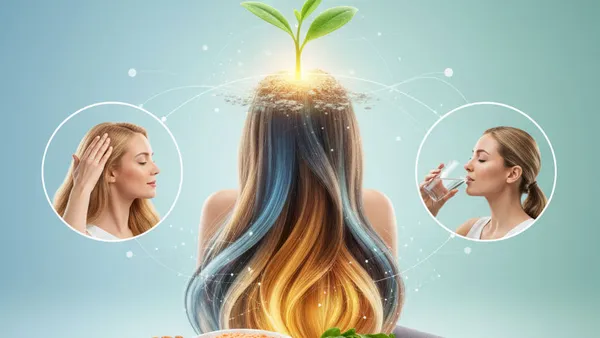
Think of your hair as a plant, and your scalp as the soil. If the soil is unhealthy, the plant simply cannot thrive. Scalp care is a free action you can take right now to improve hair quality.
Product buildup, dead skin cells, and excess oil can clog hair follicles, leading to local inflammation that disrupts the hair's natural growth cycle. Gentle exfoliation keeps the follicles clear.
Furthermore, scalp massages are a fantastic way to naturally boost growth. A daily 4-minute scalp massage has been shown to increase hair thickness by physically stretching the cells of the hair follicle, which stimulates them to produce a thicker shaft.
Massage also dramatically boosts microcirculation, ensuring that the healthy vitamins and proteins you eat actually make it all the way to your roots!
Key Takeaway
A healthy, unclogged scalp environment and regular massages boost local blood flow and encourage thicker hair production.
Test Your Knowledge
Why is a daily scalp massage scientifically beneficial for hair growth?
Have you ever noticed your hair shedding heavily a few months after a highly stressful event? This is a biological phenomenon known as Telogen Effluvium.
When you experience severe physical or emotional stress (like a major illness, surgery, drastic weight loss, or intense chronic anxiety), your body spikes its production of cortisol (the main stress hormone).
This physical shock forces up to 30% of your actively growing hair prematurely into the resting (telogen) phase. About two to three months later, all those resting hairs fall out at once in the shower or on your brush.
The great news? This type of hair loss is almost always temporary. By prioritizing actions that regulate your nervous system—like getting 8 hours of sleep, exercising, and managing stress—your hair cycle will naturally reset.
Key Takeaway
High stress pushes hair into a resting phase, causing delayed shedding that typically resolves once the stress is managed.
Test Your Knowledge
What is the medical term for temporary hair shedding caused by severe physical or emotional stress?
Track your progress, earn XP, and compete on leaderboards. Download NerdSip to start learning.