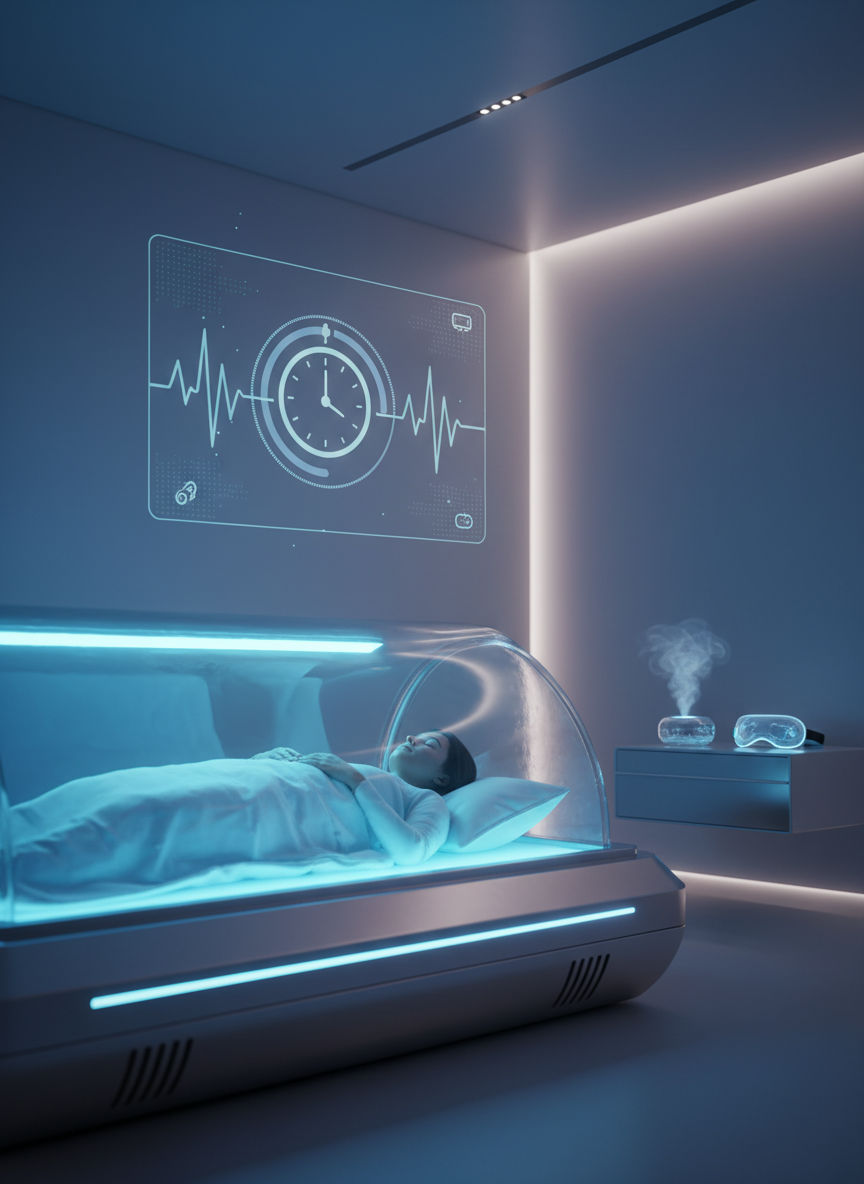
Want to wake up feeling totally unstoppable?
Prompted by A NerdSip Learner
Master the science of restorative deep sleep.
You spend about a third of your life asleep, but not all sleep is created equal. The magic happens during Slow-Wave Sleep, commonly known as deep sleep. This is the most physically restorative stage of your night.
Think of deep sleep as a heavy-duty dishwasher for your mind. During this phase, a network called the glymphatic system pumps cerebrospinal fluid through your brain. This fluid literally washes away metabolic waste and neurotoxins that build up while you are awake!
If you don't get enough deep sleep, that waste lingers, leading to brain fog, fatigue, and memory issues. You can't directly force your body into slow-wave sleep, but you can create the perfect biological environment for it to happen.
By making small, science-backed tweaks to your daily routine, you can maximize your body's ability to dive into this crucial restorative phase and wake up feeling entirely renewed.
Key Takeaway
Deep sleep acts like a biological dishwasher, clearing out daily toxins from your brain.
Test Your Knowledge
What does the glymphatic system do during deep sleep?
Did you know your body is a walking thermostat? To successfully transition into deep sleep, your core body temperature needs to drop by about 1 to 3 degrees Fahrenheit. If you stay too hot, your sleep suffers.
If your environment or your body is too warm, your brain struggles to enter slow-wave sleep. This is why sleep experts highly recommend keeping your bedroom cool, ideally hovering around 65°F (18°C). But there is a surprising, science-backed hack to speed up this vital cooling process.
Try taking a warm shower or bath about an hour or two before bedtime. It sounds entirely counterintuitive, but the warm water pulls your blood flow out to the surface of your skin.
When you step out of the bathroom, all that excess heat rapidly escapes your body, causing a steep drop in your core temperature. This sudden thermal plunge acts as a powerful biological signal to your brain that it is time to power down and initiate deep sleep.
Key Takeaway
Your core body temperature must drop for you to enter deep sleep.
Test Your Knowledge
Why does taking a warm bath before bed improve deep sleep?
Your body runs on an internal 24-hour clock known as the circadian rhythm. This biological timer dictates exactly when you feel alert and when you feel sleepy, largely controlled by light and hormones.
To get the best deep sleep, you need to sync your clock. Viewing bright, natural sunlight first thing in the morning signals your brain to start a timer. About 14 to 16 hours later, your body will naturally release melatonin, the hormone that helps you wind down.
However, late-night habits can easily hijack this system. Staring at bright screens emits blue light, tricking your brain into thinking the sun is still up and halting melatonin production.
Exercise also plays a major role. While daytime workouts are fantastic for increasing deep sleep, intense exercise right before bed spikes cortisol (your stress hormone) and raises your body temperature. To protect your deep sleep, finish heavy workouts well before bedtime and dim the lights as evening approaches.
Key Takeaway
Sync your biological clock with morning sunlight and avoid late-night intense workouts.
Test Your Knowledge
How does an intense workout right before bed affect your deep sleep?
Track your progress, earn XP, and compete on leaderboards. Download NerdSip to start learning.