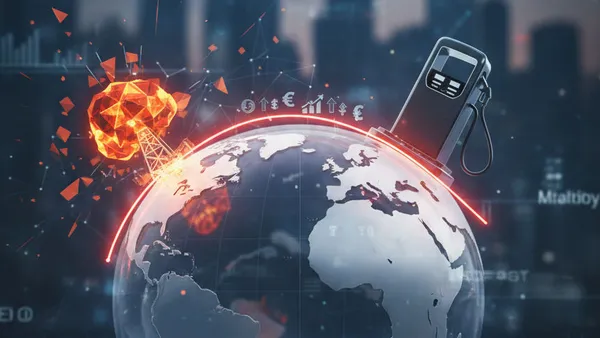
Why does a war 6,000 miles away drain your wallet at the pump?
Prompted by NerdSip Explorer #2146
Understand how global geopolitics dictate local petrol prices.
Imagine the world's oil supply is a massive, globally shared bathtub. It doesn't matter if your country produces its own oil or buys it from a peaceful neighbor; all the liquid sloshes together.
Oil is a global commodity, traded on international markets using benchmarks like Brent Crude. When a conflict breaks out 6,000 miles away and disrupts a major producer, less "water" flows into the global tub.
Because petroleum is essential for almost everything—from fueling cargo ships to manufacturing plastics—our reliance on it is "inelastic." We can't easily stop buying it. Therefore, when supply shrinks, buyers around the world immediately start outbidding each other for the remaining oil.
Even if your local petrol station buys entirely domestic oil, the supplier will still charge the new, higher global price. Why sell it to you cheaply when someone across the ocean is willing to pay double?
Key Takeaway
Oil is priced globally, meaning a supply drop anywhere raises prices everywhere.
Test Your Knowledge
Why does domestic oil become more expensive during a foreign conflict?
Sometimes, a geopolitical conflict doesn't actually destroy oil wells, but it threatens the narrow maritime roads that oil travels on.
The global energy map relies on incredibly tight shipping routes called chokepoints. The most famous is the Strait of Hormuz in the Middle East, a waterway so narrow that roughly a fifth of the world's daily oil consumption passes through it. Other vital passages, like the Suez Canal or major cross-border pipelines, face similar geopolitical risks.
When conflict erupts near a chokepoint, shipping companies panic. The risk of ships being targeted or delayed causes maritime insurance premiums to absolutely skyrocket. Some shipping companies may completely reroute their massive vessels to avoid the danger zone, adding weeks to the journey.
These massive increases in shipping and insurance costs are immediately passed down the supply chain. Ultimately, the extra millions spent on navigating around a war zone end up baked right into the price you pay at the local pump.
Key Takeaway
Conflicts near maritime chokepoints increase shipping and insurance costs, raising the final price of petrol.
Test Your Knowledge
What happens when a vital shipping chokepoint is threatened by conflict?
Have you ever noticed that petrol prices jump the *exact same day* a conflict hits the news, long before any physical supply is actually disrupted?
This happens because the price of oil isn't just based on today's reality; it's heavily based on tomorrow's fears. Oil is traded on the futures market. A futures contract is simply a financial agreement to buy a commodity at a set price on a specific date in the future.
If war breaks out, traders immediately worry that supply *might* drop in the coming months. To secure oil for their buyers, they aggressively bid up the price of these futures contracts. This sudden spike in demand is known as the fear premium.
Because local refineries base their daily prices on these financial markets, the cost of raw crude shoots up instantly. Your local petrol station then raises its prices to ensure they can afford their next delivery, hitting your wallet immediately.
Key Takeaway
Financial traders betting on future shortages cause immediate price spikes at the pump.
Test Your Knowledge
Why do petrol prices often rise before a conflict actually disrupts the physical oil supply?
Track your progress, earn XP, and compete on leaderboards. Download NerdSip to start learning.