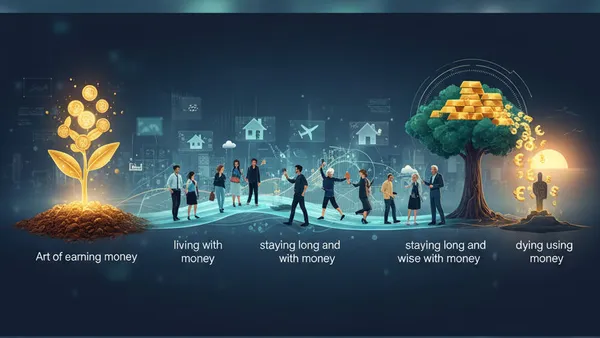
Is your money working for you, or are you working for it?
Prompted by A NerdSip Learner
Master the 4 stages of lifelong financial peace.
Imagine your money is a collection of apples. Earning money is simply gathering apples from the orchard. But the real secret isn't just about how many apples you can pick; it's about what you do with them once they're in your basket.
Living with money means making sure you don't eat all your apples at once. A great trick is the "Pay Yourself First" rule. Before paying bills or buying treats, set aside a few apples for your future self. This simple habit builds a safety net without you even having to think about it!
Budgeting isn't about punishing yourself; it's just creating a map for your money. Think of it as giving every single dollar a specific job: some are workers for today’s groceries, and some are sentinels protecting your tomorrow.
By tracking where your money goes, you take the driver's seat. You stop wondering where your money went and start telling it where to go!
Key Takeaway
Treat your money like a tool, and always save a piece of what you earn before spending the rest.
Test Your Knowledge
What does the "Pay Yourself First" rule mean?
Now that you've saved some of those apples, it's time to plant the seeds. Staying wise with money means you don't just hoard your cash under a mattress. Instead, you put it to work so it can grow over time.
The secret ingredient here is compound interest. Imagine rolling a tiny snowball down a long, snowy hill. As it rolls, it picks up more snow, getting bigger and faster. In finance, this means your money earns interest, and then that interest earns its own interest!
To let your money roll down that hill, you can "invest" it. Investing is simply buying tiny pieces of successful businesses. While the stock market goes up and down day-to-day, historically, it grows over the long haul.
Patience is your ultimate superpower. You don't need to be a Wall Street genius to build wealth. You just need to plant your seeds early, water them consistently, and let time do the heavy lifting!
Key Takeaway
Grow your wealth patiently by investing, allowing compound interest to snowball your money over time.
Test Your Knowledge
How does "compound interest" act like a snowball rolling down a hill?
Eventually, the snowball is massive, and your money tree is towering. What happens next? A common mistake is forgetting that money is meant to be *used*. The final stage of wealth is learning how to spend it and pass it on.
Think about it: the goal of life isn't to be the richest person in the graveyard. As you get older, the focus shifts from saving to safely enjoying the fruits of your labor. You've earned the right to trade your money back for experiences, comfort, and time with loved ones!
This is also when you plan your legacy. Do you want to help your children buy a home, or support a charity you love? By setting up clear instructions (like a will), you ensure your money continues to do good even after you're gone.
Ultimately, mastering money means realizing it was never the end goal. It was simply the vehicle that helped you drive toward a rich, meaningful, and well-lived life.
Key Takeaway
Money is a tool for a fulfilling life, so plan to enjoy it and thoughtfully pass on what remains.
Test Your Knowledge
What is the main purpose of money in the final stage of life?
Track your progress, earn XP, and compete on leaderboards. Download NerdSip to start learning.