Ever wonder why you do the things you do?
Prompted by A NerdSip Learner
Understand the basics of human behavior.
Welcome to the fascinating world of psychology! At its core, psychology is simply the scientific study of how we think, feel, and behave. It looks at everything from our deepest dreams to our daily habits.
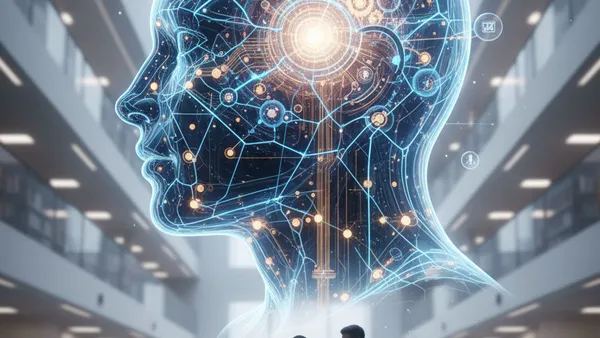
Imagine your head contains a powerful supercomputer. Your physical brain, with all its squishy cells and tangled nerves, is the hardware. Psychology focuses heavily on the software—the invisible thoughts, emotions, and mental programs running in the background that control what you do.
Why do you get nervous before a big test? Why do you instantly smile when your crush walks by, or jump when you hear a loud noise? Psychologists try to answer these everyday questions by studying the connection between our invisible mental software and our visible, physical actions.
By learning psychology, you aren't just memorizing boring facts. You are getting a secret instruction manual for yourself and everyone around you! It helps us build empathy and understand exactly why humans make the choices they do.
Key Takeaway
Psychology is the scientific study of the mind and behavior, like exploring the software of the human brain.
Test Your Knowledge
If your physical brain is the 'hardware,' what does psychology primarily study?
Have you ever ducked instantly when a ball flew at your head? You didn't even think about it! That is because your mind actually has two different ways of thinking.
Think of the first way as your Autopilot. It is super fast, completely automatic, and runs on pure instinct. It handles things like recognizing your best friend’s face or jumping away from a hot stove. It requires zero effort.
The second way is your Manual Override. This mode is slow, careful, and requires a lot of focus. You use this system when you are solving a tricky math problem, parallel parking a car, or deciding which college to attend.
Our brains love to save energy, so we spend most of our day cruising on Autopilot. But sometimes, Autopilot makes silly mistakes or jumps to conclusions based on biases. Learning to pause and switch to Manual Override is one of the greatest life skills psychology can teach you!
Key Takeaway
Your brain uses two systems: a fast, automatic 'Autopilot' and a slow, focused 'Manual Override.'
Test Your Knowledge
Which situation is the best example of your brain using 'Autopilot'?
Why does the sound of a school bell instantly make you pack up your backpack? You weren't born doing that! You learned it through a core psychological concept called conditioning.
Conditioning is just a fancy word for how our brains learn to connect two different things. There are two main ways this happens. The first is association. If you eat a specific food and then get the flu, your brain instantly associates that food with feeling awful. You might never want to eat it again!
The second way is through rewards and consequences. If you tell a joke and everyone laughs (a reward), you are highly likely to tell it again. If you touch a hot pan and get burned (a consequence), you learn to use an oven mitt next time.
Understanding conditioning is like gaining a superpower. Once you see how your habits are formed by rewards and associations, you can start rewriting your own mental software to build better daily routines!
Key Takeaway
We form habits and reactions because our brains learn to connect specific actions with associations, rewards, and consequences.
Test Your Knowledge
What is 'conditioning' in the context of psychology?
Track your progress, earn XP, and compete on leaderboards. Download NerdSip to start learning.