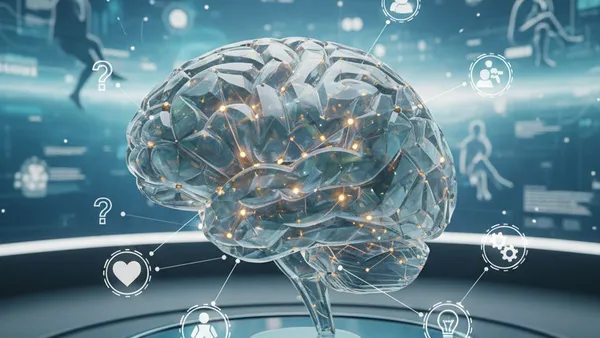
Why do you do the things you do? Uncover your mind's secrets.
Prompted by NerdSip Explorer #2054
Understand the basic drivers of human behavior.
Have you ever wondered why you suddenly crave a snack when you feel stressed, or why a certain smell brings back vivid childhood memories? Welcome to the fascinating world of psychology.
At its core, psychology is simply the scientific study of the mind and how it influences our behavior. Think of your mind as the ultimate control room of a highly advanced spaceship. Psychology is the instruction manual that helps you understand what all the blinking buttons and levers actually do.
For a long time, people thought our actions were just random or purely based on willpower. But psychologists have discovered that our brains follow predictable patterns. By learning these patterns, you can start to understand not just yourself, but everyone around you!
Whether you are trying to break a bad habit, communicate better with your partner, or just figure out why you procrastinate, psychology gives you the tools to make sense of the beautiful mess that is human nature.
Key Takeaway
Psychology is the study of the mind and behavior, acting as an instruction manual for human nature.
Test Your Knowledge
What is the best analogy for psychology according to this lesson?
Imagine driving your car on a familiar route. You arrive at home, but you barely remember the actual drive. This is your brain on autopilot. Psychologists call this fast, automatic way of thinking our first system of thought.
Now, imagine trying to parallel park in a tight space while someone is shouting numbers at you. You have to turn off the radio, grip the wheel, and focus intensely. This requires manual control, which psychologists call our second, slower system of thought.
Your brain is incredibly energy-hungry, so it prefers to stay on autopilot as much as possible to save fuel. It relies on shortcuts, habits, and quick judgments to get through the day.
Most of the time, autopilot works perfectly! But sometimes, it makes mistakes—like sending a quick, angry email you later regret. Recognizing which system is running the show is the first step to making smarter choices in your daily life.
Key Takeaway
Your brain uses a fast, automatic autopilot for most tasks and a slow, focused manual mode for complex challenges.
Test Your Knowledge
Why does our brain prefer to use its 'autopilot' mode?
Think about a dense, overgrown forest. The first time you walk through it, you have to push branches out of the way and trample down the grass. It takes a lot of effort. But if you walk that exact same path every day, it eventually becomes a clear, smooth trail.
This is exactly how habits form in your brain. When you repeat an action, your brain builds a strong, efficient pathway so you can do it automatically without thinking.
Every habit has three simple parts: a cue (the trigger, like feeling stressed), a routine (the behavior, like eating a cookie), and a reward (the result, like a temporary sugar rush).
To change a bad habit, you cannot just magically erase the path in the forest. Instead, you have to keep the same cue and reward, but consciously build a new routine—like taking a short walk instead of eating that cookie when stress hits!
Key Takeaway
Habits are formed through a loop of a cue, a routine, and a reward, creating mental shortcuts.
Test Your Knowledge
According to the lesson, what is the best way to change a bad habit?
Have you ever noticed that once you buy a new car, you suddenly see that exact same make and model everywhere on the road? The cars were always there, but your brain is only now choosing to notice them.
This is a perfect example of a cognitive bias. Think of biases as wearing a pair of tinted glasses. They change how you see the world, often without you even realizing you have them on.
One of the most common is called confirmation bias. This is our brain's tendency to only look for information that proves we are already right, while ignoring anything that proves we are wrong. If you believe Mondays are terrible, your brain will highlight every spilled coffee and traffic jam, while ignoring the friendly smile from a coworker.
Biases are not a sign of low intelligence; they are just another mental shortcut. By recognizing your tinted glasses, you can start to see the world more clearly and fairly.
Key Takeaway
Cognitive biases are mental filters, like confirmation bias, that subtly change how we perceive reality.
Test Your Knowledge
What does 'confirmation bias' make our brains do?
Picture a tiny rider sitting on top of a massive, six-ton elephant. The rider holds the reins and seems to be in charge. But if the elephant suddenly gets spooked by a mouse and decides to run, there is nothing the tiny rider can do to stop it.
This famous analogy perfectly describes the two sides of our mind. The rider represents your logical, rational self. It makes long-term plans, like deciding to save money or go to the gym.
The elephant represents your emotions and immediate desires. It wants to eat cake, binge-watch television, and stay comfortable. When the rider and the elephant agree, progress is easy. But when they disagree, the six-ton emotional elephant almost always wins.
To achieve your goals, you cannot rely purely on the rider's willpower to wrestle the beast. Instead, you have to figure out how to gently motivate the elephant and make the path ahead as easy to follow as possible!
Key Takeaway
Our logical mind (the rider) must learn to motivate our emotional mind (the elephant) to achieve our goals.
Test Your Knowledge
In the analogy of the elephant and the rider, what does the elephant represent?
Track your progress, earn XP, and compete on leaderboards. Download NerdSip to start learning.