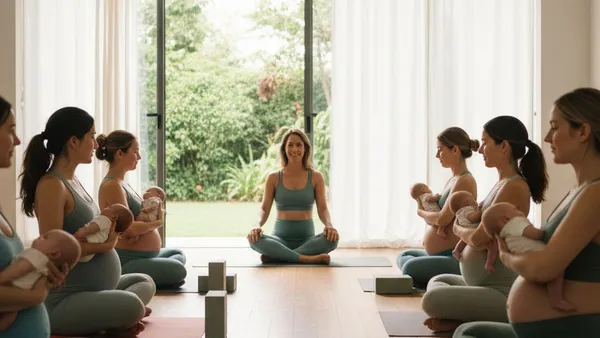
Can yoga really make birth easier and recovery faster?
Prompted by NerdSip Explorer #7204
Master safe movements for a healthy pregnancy.
Welcome to the exciting world of prenatal and postnatal yoga! When you are growing a tiny human, your body goes through a physical and emotional marathon. Think of yoga as your dedicated, supportive pit crew, helping you stay strong, flexible, and wonderfully calm throughout the entire journey.
Prenatal yoga is specifically tailored for a pregnant body. Unlike regular, fast-paced fitness classes that might leave you exhausted, it focuses on safe movements, deep breathing, and gently preparing your body for the physical demands of birth.
Postnatal yoga is the essential recovery phase. Once you are medically cleared, it safely helps you rebuild your core strength and gently stretch out the aches and pains of early motherhood. Think of it as a crucial tool for both physical healing and restoring your mental peace.
Throughout this entire journey, whether you are in your first trimester or holding a newborn, the golden rule is simple: listen to your body. We are aiming for comfort, safe stability, and self-compassion, absolutely not perfection!
Key Takeaway
Pre and postnatal yoga are specialized practices focused on safe strength, birth preparation, and gentle recovery.
Test Your Knowledge
What is the primary goal of prenatal and postnatal yoga?
During pregnancy, your body releases a fascinating hormone called relaxin. True to its name, relaxin loosens up your ligaments and joints to make room for your growing baby and to properly prepare your pelvis for childbirth.
While this might sound like a great shortcut for improving your flexibility, it actually means you need to be *more* careful during your yoga practice! Because your joints are much less stable than usual, it is incredibly easy to accidentally overstretch and injure yourself.
In prenatal yoga, the primary goal is to find stability, not to show off how far you can bend. If you could easily touch your toes before pregnancy, do not try to push past that limit now. Stay within your normal, comfortable range of motion.
Remember, relaxin stays in your body for several months *after* you give birth, too. This is why a slow, incredibly stable return to exercise is so important during the postnatal phase.
Key Takeaway
The hormone relaxin loosens your joints, so prenatal yoga focuses on stability rather than deep stretching.
Test Your Knowledge
How does the hormone relaxin affect your yoga practice?
The first trimester is often a wild ride of nausea, fatigue, and invisible changes. Even if you don't "look" pregnant yet on the outside, your body is working overtime internally to build a complex life support system for your baby!
During these first 12 weeks, your yoga practice should be all about rest and connection. There are no major physical restrictions for movement just yet, but it is absolutely crucial to avoid overheating. This means hot yoga is entirely off the table during your pregnancy.
If you feel exhausted when you step on your mat, it is perfectly fine to spend an entire class lying in a resting pose or simply doing gentle breathing exercises. Your body is doing enough work already.
Focus on gentle movements that ease daily tension. This is the perfect time to build a healthy habit of tuning in to what your body genuinely needs that day, rather than pushing through a tough workout.
Key Takeaway
The first trimester is about resting, completely avoiding hot yoga, and learning to listen to your changing body.
Test Your Knowledge
What is a major safety rule for yoga during the first trimester?
Welcome to the "golden trimester"! Your early pregnancy symptoms might be fading, and you are likely sporting a visible bump. But as that baby bump grows, your body's center of gravity shifts forward, which can put a heavy, uncomfortable strain on your lower back.
Prenatal yoga in the second trimester focuses on strengthening your legs to carry the new weight and relieving that stubborn back tension. Poses involving hands and knees are amazing for taking the weight of the baby completely off your spine.
There is one major rule change that happens right now: avoid lying flat on your back. The weight of your growing uterus can press on a major blood vessel, which might make you feel dizzy or temporarily reduce blood flow.
Instead of lying flat, yoga instructors will teach you how to modify poses using soft bolsters, letting you rest safely on an incline or comfortably rolled onto your left side.
Key Takeaway
As your bump grows in the second trimester, avoid lying flat on your back and focus on relieving lower back strain.
Test Your Knowledge
Why should you avoid lying flat on your back during the second and third trimesters?
In the final stretch of pregnancy, things can feel pretty crowded inside! Your baby is taking up a massive amount of space, which can make it harder to take a deep breath or find a comfortable sleeping position.
Third-trimester yoga is all about "making room." We focus on gently opening the hips, stretching the sides of the torso, and easing the physical discomforts of late pregnancy, like swollen ankles and tight, rounded shoulders.
Safety is key right now. Avoid deep twists that squish your belly, and skip intense backbends. You also want to avoid poses that require intense balancing on one leg, as falling is a real risk when your center of gravity is so far forward.
Think of this phase as your physical dress rehearsal for birth. We use yoga to practice the exact breathing and relaxation techniques you will rely on during labor to stay calm.
Key Takeaway
Late-pregnancy yoga avoids deep twists and focuses on gentle stretching, hip opening, and physical birth preparation.
Test Your Knowledge
Which of the following movements should be avoided in the third trimester?
In traditional yoga, the practice of breathwork is called Pranayama. During pregnancy and especially during labor, your breath is arguably the single most powerful tool you have. It is an anchor that can keep you grounded when physical sensations get intense.
When we feel pain or sudden stress, our natural human instinct is to hold our breath and tense our muscles. Unfortunately, this actually makes labor much more difficult and painful!
Prenatal yoga teaches you how to consciously take slow, deep breaths all the way down into your belly. This simple act signals to your nervous system that you are safe, naturally helping your muscles relax and allowing your body to do the hard work of giving birth.
Even after the baby arrives, these specific breathing techniques are an absolute lifesaver. They can help you stay remarkably grounded during sleepless nights or stressful moments with a crying newborn.
Key Takeaway
Deep breathing techniques (Pranayama) help calm your nervous system and manage the intense physical sensations of labor.
Test Your Knowledge
What is our natural reaction to pain that prenatal breathwork tries to prevent?
You did it! The baby is finally here. But before you even think about rolling out your yoga mat, you need to honor the "fourth trimester." This is the incredibly vulnerable, beautiful period of healing immediately following childbirth.
Whether you had a vaginal delivery or a C-section, your body has just been through a major medical event. Profound rest is your only job right now.
Healthcare providers generally recommend waiting at least 6 to 8 weeks (and sometimes up to 12 weeks for a C-section) before resuming any formal exercise, including basic yoga classes. Your internal organs literally need time to move back into place!
During this mandatory pause, the only "yoga" you should be doing is gentle, seated breathing and bonding with your new baby. Rushing back into physical activity too soon can lead to severe pelvic floor issues or delay your overall healing process.
Key Takeaway
Your body needs profound rest immediately after birth; always wait for medical clearance before starting postnatal yoga.
Test Your Knowledge
When is it generally considered safe to start a formal postnatal yoga routine?
Many new mothers experience a very common condition called Diastasis Recti. This is a totally normal occurrence where the main abdominal muscles safely separate down the middle of your stomach to make room for your growing baby.
After birth, these separated muscles need time, patience, and careful attention to knit back together. Traditional core exercises like standard crunches, sit-ups, or intense planks are actually the *worst* things you can do right now, as they can forcefully push the muscles further apart!
Postnatal yoga tackles core strength very differently. It focuses entirely on the transverse abdominis—a deep, internal layer of core muscle that acts like a supportive corset wrapped around your middle.
By carefully coordinating your daily breath with gentle, highly controlled movements, postnatal yoga safely rebuilds your core from the inside out. It heals your body without causing the belly to bulge, setting you up for true, long-term strength.
Key Takeaway
Postnatal yoga safely rebuilds separated abdominal muscles by avoiding crunches and focusing on deep, internal core breathing.
Test Your Knowledge
Why should you avoid traditional crunches if you have Diastasis Recti?
Think of your pelvic floor as a strong muscular hammock located at the base of your pelvis that holds your bladder, uterus, and bowels. During nine months of pregnancy and the process of birth, this delicate hammock takes on a massive amount of weight and pressure.
Postpartum, many women experience a weak pelvic floor, which can lead to accidental leaks when sneezing, jumping, or laughing. However, sometimes the pelvic floor is actually *too tight* from holding all that tension during pregnancy!
Postnatal yoga does not just tell you to do endless Kegel exercises. It takes a holistic approach to teach you how to bring gentle awareness back to this crucial area.
You will learn how to fully engage these muscles to slowly rebuild strength, but equally importantly, how to fully *release* them to relieve painful tension. It is all about restoring healthy coordination and balance to your body.
Key Takeaway
Postnatal yoga helps rebuild the pelvic floor by teaching you how to coordinate, engage, and fully relax these muscles.
Test Your Knowledge
What is a common misconception about fixing the pelvic floor after birth?
As a new parent, finding time for yourself can feel absolutely impossible. The beauty of a postnatal yoga practice is that it does not require a 90-minute class in a fancy, heated studio.
Even 10 minutes of gentle stretching on your living room rug while the baby naps is incredibly beneficial. It is a vital moment to check in with yourself, stretch out the stiff "nursing hunch" in your shoulders, and simply breathe without interruption.
Remember, your body took nine full months to magically grow a human being. It will naturally take time to heal and feel truly strong again. Patience is your greatest asset right now.
Yoga offers a wonderfully safe space to accept your body exactly as it is today. It is not about trying to "bounce back" to your pre-pregnancy shape; it is about confidently moving forward with strength, grace, and immense self-compassion.
Key Takeaway
Postnatal yoga is about patience, daily self-compassion, and celebrating your body's amazing journey, not rushing to "bounce back."
Test Your Knowledge
What is the best mindset to have when starting postnatal yoga?
Track your progress, earn XP, and compete on leaderboards. Download NerdSip to start learning.