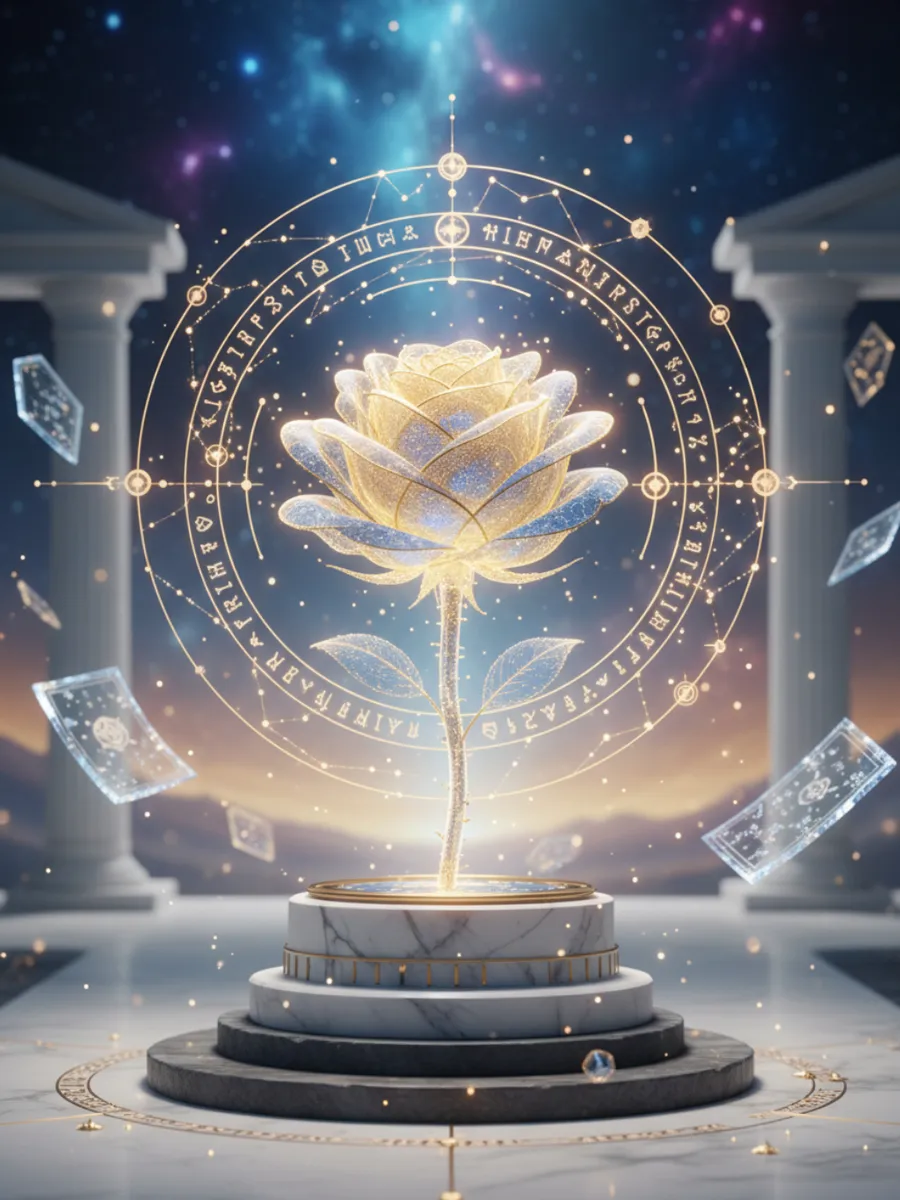
Did you know roses were once the ultimate symbol of secrecy?
Prompted by A NerdSip Learner
Discover why the rose was sacred to everyone from Aphrodite to the Virgin Mary.
In Greek mythology, the rose is inextricably linked to Aphrodite, the goddess of love. Legend has it that the rose was born from sea foam at the same moment as Aphrodite herself. However, these original roses were pure white.
The flower turned red through a tragic twist of fate. When Aphrodite’s lover, Adonis, was mortally wounded by a wild boar, she rushed to his side. In her haste, she stepped on the thorns of a white rose bush. Her blood dripped onto the petals, staining them crimson forever.
In other versions, her tears mingled with his blood, causing red roses to spring from the earth. Thus, the rose became a symbol of love that transcends death, embodying both extreme beauty and the pain that often accompanies deep affection.
Key Takeaway
The red rose symbolizes the ancient bond between love, blood, and the pain of loss.
Test Your Knowledge
What color was the rose originally according to the myth of Aphrodite?
Have you ever wondered why roses are often carved into ceilings or confessionals? The secret lies in the Latin phrase *sub rosa* (under the rose). This tradition dates back to a divine bribe in ancient mythology.
Myth tells us that Eros (Cupid) gave a rose to Harpocrates, the god of silence. He used it as a bribe to ensure his mother Aphrodite’s romantic affairs remained a secret. This act turned the rose into an international emblem for discretion and confidentiality.
In Ancient Rome, hosts would hang a rose above the dining table. This signaled to guests that whatever was spoken in confidence or under the influence of wine must never leave the room. This tradition survived into the Middle Ages, adorning council chambers and confessionals alike.
Key Takeaway
The rose acted as a guardian of the spoken word; anything said 'under the rose' had to remain secret.
Test Your Knowledge
In Ancient Rome, what did a rose hanging over a table signify?
In Ancient Rome, the rose wasn't just for the living; it was a vital part of funerary rites. During the festival of Rosalia, typically held in May or June, Romans decorated the graves of their ancestors with rose wreaths.
The rose served as a symbol of rejuvenation and eternal memory. Since the bloom withers quickly, it reminded Romans of life's fragility. Conversely, its annual return in spring embodied the hope for a continued existence in the afterlife.
Wealthy Romans took this devotion to extremes, competing in displays of luxury. They would shower guests with tons of rose petals from the ceiling or perfume their baths with rose oil. During this era, the rose was a mark of ultimate status and divine favor.
Key Takeaway
The Rosalia festival blended the beauty of the rose with ancestral remembrance and the cycle of life.
Test Your Knowledge
What was the main purpose of the Roman Rosalia festival?
As Christianity spread, the ancient symbolism of the rose was reimagined. Mary, the mother of Jesus, was given the title 'The Rose Without Thorns.' This connection highlighted her unique status in theology.
According to Christian legend, roses in the Garden of Eden originally had no thorns. Only after the Fall of Man did the plant grow prickles as a reminder of sin. Because Mary was considered 'immaculate' and free from sin, she was compared to this primordial, thornless rose.
In Christian art, white roses represent Mary’s purity, while red roses often point to the spilled blood of Christ or Mary’s sorrows. The rose thus became the 'Queen of Flowers,' just as Mary was venerated as the 'Queen of Heaven.'
Key Takeaway
In Christian mysticism, the thornless rose symbolizes Mary’s sinlessness and purity.
Test Your Knowledge
Why is Mary often called the 'Rose Without Thorns'?
The word 'Rosary' is derived from the Latin *Rosarium*, literally meaning 'rose garden.' In the Middle Ages, this referred to a collection of texts or prayers woven together like a wreath of spiritual roses.
The prayer beads themselves served as a tool for counting. Each 'Hail Mary' was viewed as a spiritual rose offered to the Virgin Mary. By the end of a full cycle, the believer had symbolically woven an entire crown of roses for her.
Interestingly, the color of the beads often held significance. White beads represented the joyful events in the life of Jesus, while red ones symbolized the painful ones. Thus, the physical flower transformed into a purely spiritual tool for meditation.
Key Takeaway
The Rosary is symbolically a 'garden of prayers,' where each prayer represents a rose for the Mother of God.
Test Your Knowledge
What does the term 'Rosarium' originally mean?
In Persian and Islamic mysticism (Sufism), few images are more iconic than the nightingale’s love for the rose (*Gül ve Bülbül*). Here, the rose represents divine beauty or the Creator Himself.
The nightingale represents the human soul, longingly striving to reach the perfection of the rose. Because the rose is protected by thorns, the path to divine love is often painful. Famous poets like Rumi used this imagery to describe the ecstatic love for the Divine.
A beautiful Sufi belief also suggests that the rose sprang from the sweat of the Prophet Muhammad during his heavenly journey. Therefore, in the Orient, the scent of a rose is often considered a breath of the holy.
Key Takeaway
In Sufism, the rose embodies divine perfection, while the nightingale represents the soul seeking God.
Test Your Knowledge
What does the nightingale usually stand for in Sufi poetry?
For medieval and Renaissance alchemists, the rose was much more than a flower. It was a symbol of the ultimate goal of their 'Great Work': the union of opposites.
In alchemical drawings, one often sees a white rose (the feminine principle, silver, moon) and a red rose (the masculine principle, gold, sun). When these two roses join, they form the 'Chemical Wedding'—a state of perfect harmony and spiritual enlightenment.
The rose, with its concentric petals, also served as a mandala for meditation. Those who reach the center of the rose discover the secret of life. This brings the symbol full circle, from the ancient goddess of love to a modern icon of self-discovery.
Key Takeaway
In alchemy, the rose symbolizes harmony between opposing forces and the path to spiritual completion.
Test Your Knowledge
What does the union of the white and red rose symbolize in alchemy?
Track your progress, earn XP, and compete on leaderboards. Download NerdSip to start learning.