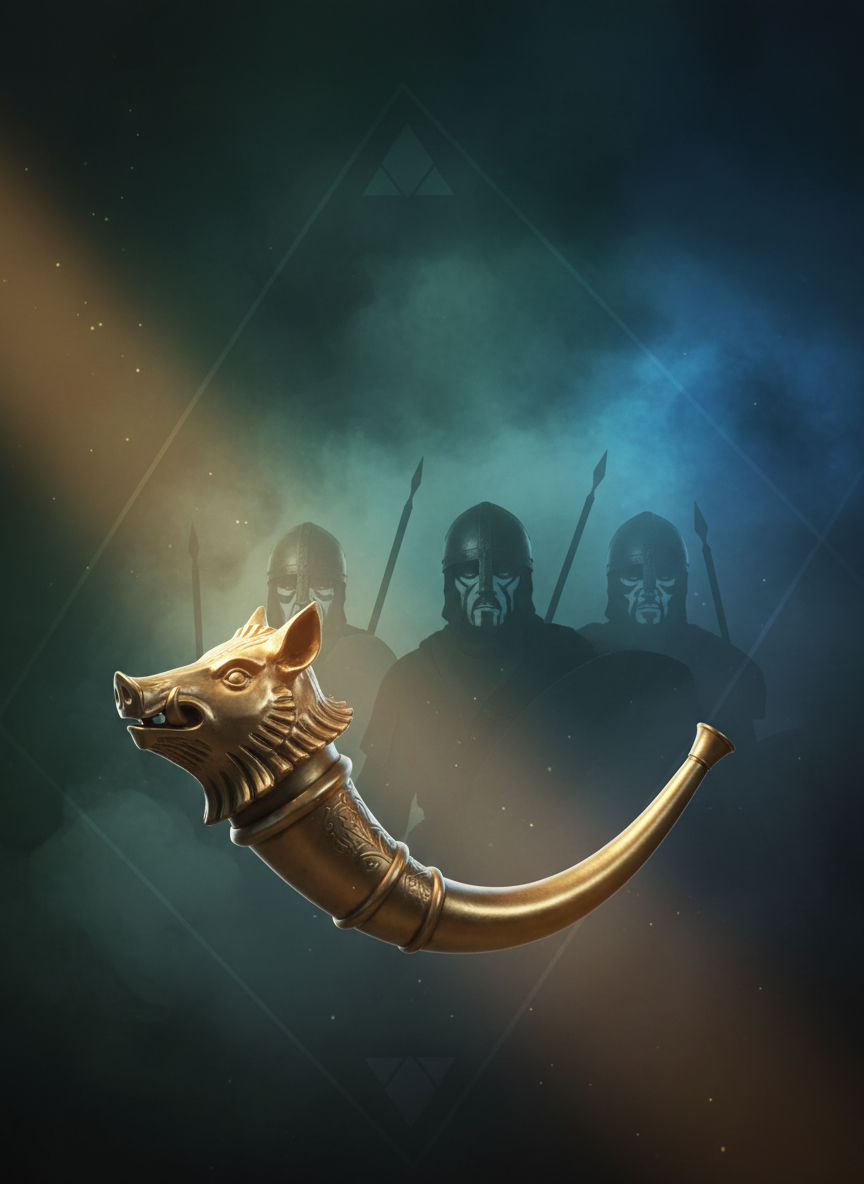
Discover the ancient bronze beast designed to break minds.
Prompted by A NerdSip Learner
Understand Celtic psychological warfare.
Imagine facing an army of fierce ancient Celtic warriors, roughly between 300 BC and 200 AD. But before you see them, you hear them. They are wielding the Carnyx, an incredible bronze wind instrument that was as much a weapon as a sword.
The Carnyx wasn't your average marching band trumpet. It was a massive, S-shaped tube that was held completely vertical, towering high above the heads of the warriors—sometimes reaching up to 12 feet tall!
The most striking feature was the top. The bell of the horn was crafted into the shape of an open, roaring animal head—most commonly a wild boar, wolf, or serpent.
It wasn't just built to be heard; it was designed to be intensely intimidating. Towering above the chaotic battlefield, these gleaming bronze monsters looked like a pack of metal beasts charging into war. It was the perfect fusion of art, music, and raw intimidation.
Key Takeaway
The Carnyx was a towering, animal-headed bronze horn used by ancient Celts to dominate the battlefield visually and audibly.
Test Your Knowledge
What was the top of a Carnyx typically shaped like?
Imagine standing in the damp fog of ancient Europe, completely unaware of where the enemy is hiding. Suddenly, the silence is shattered by the sound of metal beasts screaming. When played by a skilled musician, the Carnyx produced a haunting, multi-tonal shriek.
The Celts mastered the art of early psychological warfare. They used the Carnyx to intentionally strike fear into the hearts of their enemies, most notably the highly disciplined Roman legions. Hearing a chorus of these unearthly wails cutting through the fog was enough to break a soldier's nerve.
Because the instrument had no valves, players controlled the pitch entirely with their lips and breath. But the Celts had a terrifying acoustic trick up their sleeves!
Many of the animal heads featured loose, movable parts—like a wooden or metal tongue. When blown hard, these parts would vibrate violently, adding a jarring, rattling buzz to the shrieking noise that sounded incredibly unnatural.
Key Takeaway
The Celts used the eerie, shrieking sound of the Carnyx—often amplified by rattling loose parts—to terrify enemies before a battle.
Test Your Knowledge
How did the Celts make the Carnyx sound even more terrifying?
Why was a musical instrument such an effective weapon against incredibly organized military forces like the Roman Empire? The secret lay in how the Carnyx perfectly weaponized human psychology and clever battlefield acoustics.
It was pure sensory overload designed to break the mind. Because the instrument was held completely vertically, the roaring animal head sat far above the massive crowds of soldiers. This allowed the loud, piercing sounds to carry across incredible distances without being muffled by the bodies of the troops.
This chaotic wall of sound served a genius tactical purpose. First, it easily drowned out the shouted orders of enemy commanders, causing total confusion. Second, it masked the sounds of the Celtic troop movements, adding an element of chaotic surprise to their attacks.
The Carnyx wasn't just an instrument; it was a symbol of unyielding Celtic ferocity. By seamlessly combining monstrous visual imagery with an alien, deafening sound, the Celts successfully managed to weaken their enemy's morale before a single sword was swung.
Key Takeaway
The vertical design of the Carnyx allowed its sound to travel far, drowning out enemy orders and masking the movement of Celtic troops.
Test Your Knowledge
Why was the Carnyx played by holding it completely vertically?
Track your progress, earn XP, and compete on leaderboards. Download NerdSip to start learning.