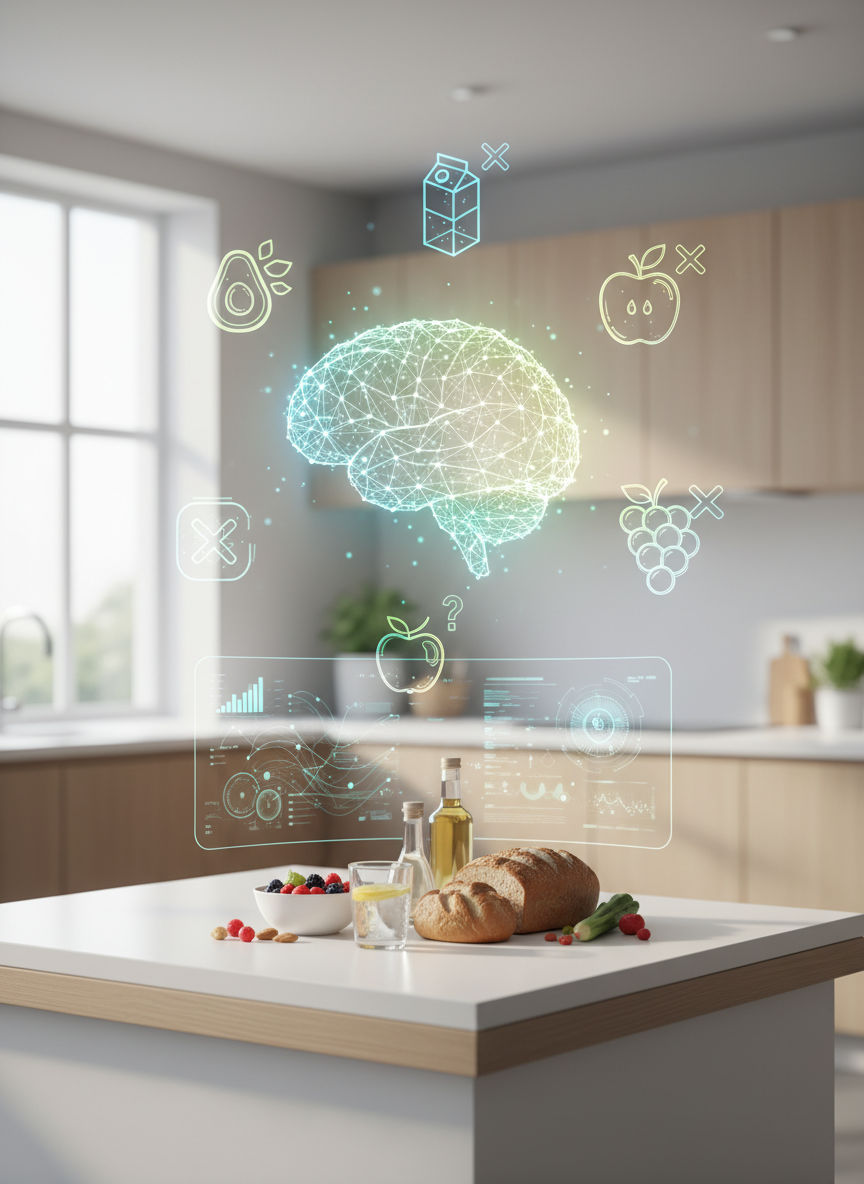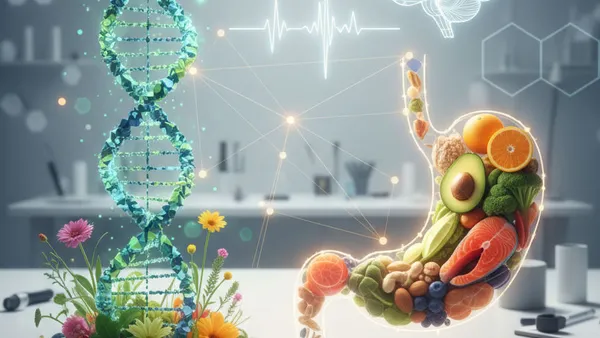
Ever wonder how an apple becomes the energy that powers your thoughts?
Prompted by A NerdSip Learner
Understand the biological basics of how food fuels you.
Imagine your body is a bustling construction site. To keep everything running smoothly, you need three main types of supplies. In the world of biology, we call these macronutrients—'macro' simply means you need them in large amounts!
First up, we have Carbohydrates. Think of these as the direct electricity powering the work site. They give your body the quick, ready-to-use energy it needs to move, think, and even just breathe.
Next is Protein. If carbs are the energy, protein is the lumber, bricks, and concrete. Your body breaks protein down to build and repair muscles, organs, and skin. It is the ultimate structural building block!
Finally, there are Fats. Do not let the name fool you; fats are absolutely essential! They act like the site's insulation and heavy-duty backup generators. They protect your delicate organs, help absorb vital nutrients, and store long-lasting energy. Getting a mix of all three keeps your bodily 'construction site' thriving!
Key Takeaway
Macronutrients are the main fuels and building blocks your body needs in large amounts to survive and thrive.
Test Your Knowledge
Which macronutrient acts like the 'lumber and bricks' used to build and repair your body?
If macronutrients are the bulk fuel and building materials for your body, micronutrients are the spark plugs and oil that keep the engine running smoothly. You only need them in tiny ('micro') amounts, but without them, the whole system breaks down.
Micronutrients are what we commonly know as vitamins and minerals. Your body cannot produce most of them on its own, so you have to get them from the food you eat—especially colorful fruits and vegetables!
Vitamins are organic compounds created by plants and animals. They play incredibly specific roles. For instance, Vitamin C acts like a microscopic shield, helping your immune system fight off invaders, while Vitamin A keeps your vision sharp.
Minerals, on the other hand, come from the earth and water. Calcium helps build a sturdy skeleton, while iron acts like a tiny delivery truck, carrying oxygen through your blood to every cell in your body. They may be required in tiny amounts, but they have a massive impact!
Key Takeaway
Micronutrients (vitamins and minerals) are needed in small amounts to act as crucial tools and regulators for bodily functions.
Test Your Knowledge
What is the primary difference between a vitamin and a mineral?
Have you ever wondered how a whole piece of food turns into invisible energy for your brain? The answer lies in digestion, which is essentially a biological disassembly line working in reverse!
When you take a bite, the process begins in your mouth. Your teeth physically crush the food, while your saliva introduces special chemicals called enzymes. Think of enzymes as tiny, biological scissors that start snipping the food into smaller chemical pieces.
As the food travels down into your stomach, it meets a powerful acid bath. This acid breaks the food down even further into a thick, soup-like mixture. It is a highly efficient melting pot!
The real magic happens in your small intestine. Here, the food is broken down into its most basic molecular building blocks. The walls of your intestines act like a smart filter, absorbing these tiny nutrients and passing them directly into your bloodstream, where they can be shipped off to feed your cells.
Key Takeaway
Digestion is a mechanical and chemical process that breaks food down so nutrients can be absorbed into the bloodstream.
Test Your Knowledge
Where does the absorption of most molecular nutrients into the bloodstream actually take place?
So, your food has been digested and the nutrients are floating in your bloodstream. But how do your individual cells actually *eat*?
Your cells are like microscopic factories, and they are surrounded by a protective barrier called a cell membrane. This membrane is incredibly picky. It has special doorways that only open for specific nutrients, acting like bouncers at an exclusive club.
One of the most important VIP guests is glucose, a simple sugar that comes from the carbohydrates you ate. With the help of a chemical key called insulin, the doors open, and glucose rushes into the cell.
Once inside, glucose is sent straight to the mitochondria—the famous 'powerhouses of the cell'. The mitochondria act like tiny power plants, burning the glucose to create pure biological energy. This energy allows the cell to do its job, whether that is making your heart beat or helping you form a thought!
Key Takeaway
Cells absorb broken-down nutrients from the blood and use their mitochondria to turn them into usable biological energy.
Test Your Knowledge
What is the role of the mitochondria inside your cells?
You have probably heard people talk about counting calories, but what exactly is a calorie in the world of biology? It is much simpler than it seems: a calorie is simply a unit of energy!
Think of calories as the biological currency your body uses to pay for its activities. Just like a lightbulb needs a certain amount of watts to glow, your body needs a certain amount of calories just to stay alive. This baseline energy keeps your heart pumping, your lungs breathing, and your brain dreaming.
When you eat food, you are depositing calories into your body's energy bank account. When you walk, talk, or exercise, you are spending them.
If you eat more calories than you spend, your body cleverly saves the extra energy for later by storing it as fat. If you spend more than you eat, your body taps into those fat reserves. Understanding this simple energy exchange is a foundational key to understanding nutrition!
Key Takeaway
A calorie is just a unit of energy; your body stores excess energy as fat and burns fat when energy is lacking.
Test Your Knowledge
In a biological context, what does a calorie actually measure?
Track your progress, earn XP, and compete on leaderboards. Download NerdSip to start learning.