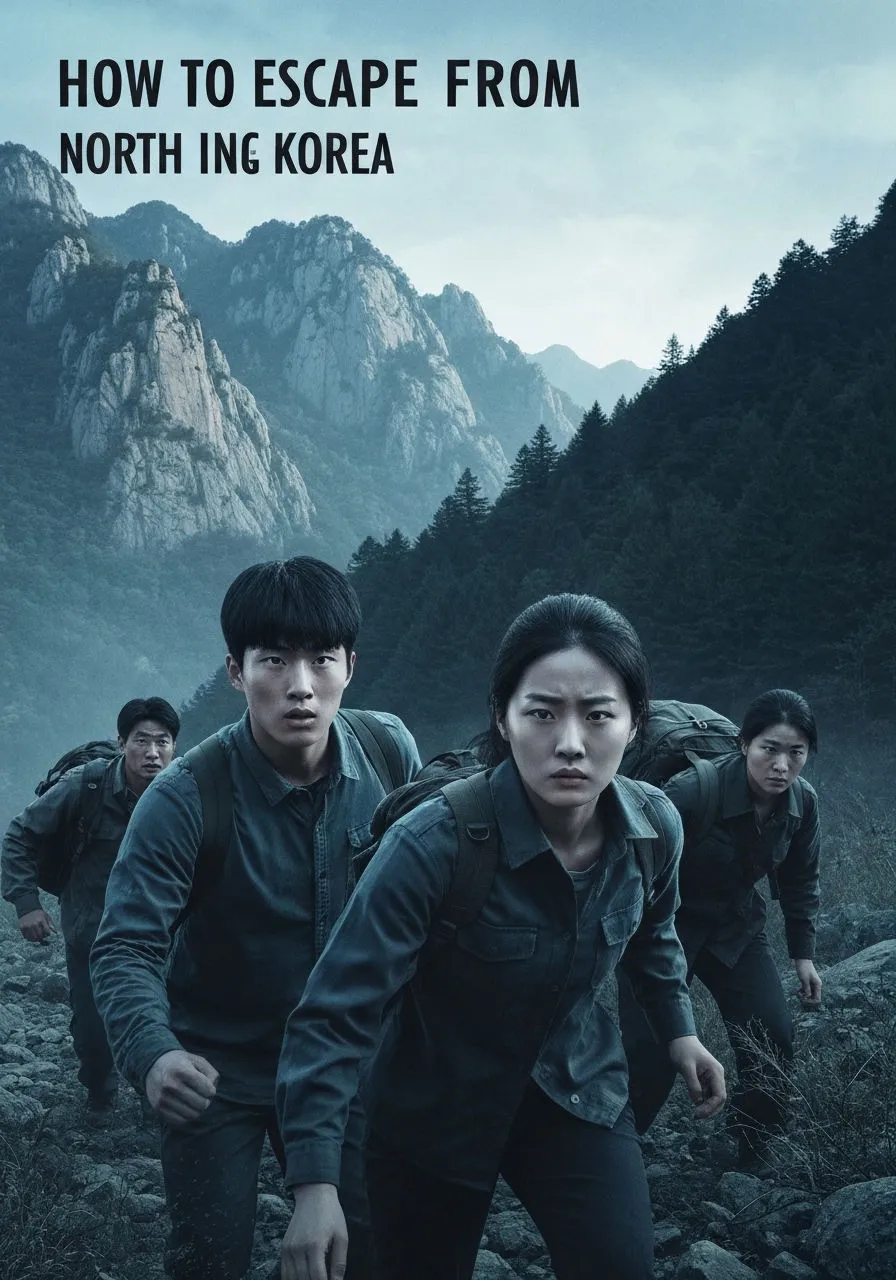
Why is the world's most guarded border the least used escape route?
Prompted by A NerdSip Learner
Map the secret paths and risks of North Korean defectors.
Imagine living in a place you aren't allowed to leave. To understand how people escape North Korea, we first have to look at the map! While the Demilitarized Zone (DMZ) separates North and South Korea, it is nearly impossible to cross. It is filled with landmines, high-voltage fences, and thousands of soldiers. It’s the most heavily fortified border in the world!
Because the southern route is a death trap, almost all escapees head North instead. They aim for the border with China, which is defined by two major rivers: the Yalu and the Tumen. These rivers are easier to cross, especially in the winter when the water freezes into solid ice, creating a temporary bridge to the outside world.
However, crossing isn't just about swimming or walking. It requires incredible stealth. Guards patrol the banks constantly, and in recent years, the North Korean government has added layers of barbed wire and high-tech surveillance cameras. Success often depends on finding a 'blind spot' or hoping the guards are distracted for a few crucial moments.
Key Takeaway
The DMZ is too dangerous to cross, so most escapees attempt the northern river borders into China.
Test Your Knowledge
Why do most North Koreans avoid escaping directly into South Korea?
Reaching the Chinese side of the river is a huge relief, but the danger is far from over! China does not view North Koreans as refugees; instead, they are classified as illegal economic migrants. If caught by Chinese police, they face repatriation, which means being sent back to face severe punishment.
To survive this 2,000-mile journey, escapees rely on a secret network often called the Underground Railroad. This isn't a train, but a hidden system of safe houses, activists, and secret routes. Because they have no ID cards, escapees cannot use public buses or trains without risking arrest. They must stay invisible in a country with millions of cameras.
The goal for most is to reach a third country, like Thailand or Laos. Once they cross into these Southeast Asian nations, they can claim asylum at a South Korean embassy. It is a grueling trek through mountains and jungles, often lasting weeks or even months, requiring nerves of steel and constant vigilance.
Key Takeaway
Escapees must travel secretly through China to Southeast Asia to avoid being caught and sent back.
Test Your Knowledge
What is the primary danger for an escapee while traveling through China?
How do people navigate such a complex escape? Many use Brokers. These are professional guides who arrange transportation, find safe houses, and even bribe officials. However, this help is incredibly expensive, often costing thousands of dollars. Families who have already escaped often save for years to pay for a relative's journey.
Once a defector finally reaches Seoul, their journey takes one final, fascinating turn. Every new arrival must spend three months at a facility called Hanawon. Think of it as a 'Life School.' Because North Korea is so isolated, defectors have to learn how to live in a modern, high-tech society.
At Hanawon, they learn everything from how to use an ATM and pay utility bills to understanding South Korean slang and democracy. It is a massive 'reboot' for their lives. While the trauma of escape is heavy, the resilience of these individuals is inspiring. They aren't just survivors; they are people who risked everything for the simple right to be free.
Key Takeaway
Escapes are often funded by brokers, and survivors must attend Hanawon to learn how to live in a modern society.
Test Your Knowledge
What is the main purpose of the Hanawon facility in South Korea?
Track your progress, earn XP, and compete on leaderboards. Download NerdSip to start learning.