What links ancient nomads, blue-tiled cities, and Soviet architecture?
Prompted by A NerdSip Learner
Understand the heartbeat of Central Asia.
Imagine a massive, mysterious puzzle piece right in the middle of Europe and Asia. This is Central Asia, a vast, breathtaking region primarily made up of five countries: Kazakhstan, Kyrgyzstan, Tajikistan, Turkmenistan, and Uzbekistan.
You might be wondering about that famous suffix, "-stan." It simply means "land of" in ancient Persian! So, Kazakhstan translates to "Land of the Kazakhs," and Uzbekistan means "Land of the Uzbeks." It is exactly like how the word "land" works in country names like Scotland, England, or Finland.
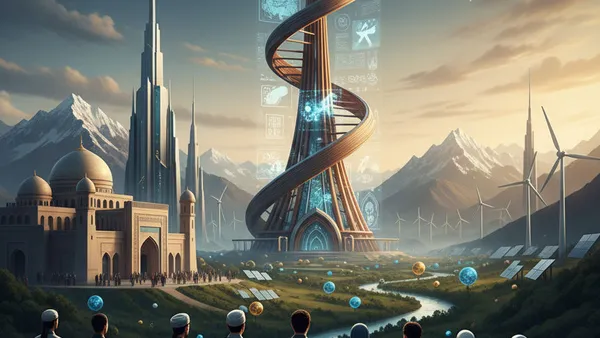
For centuries, this massive region was a bit of a mystery to outsiders, safely locked behind towering mountain ranges, endless grassy plains, and sweeping deserts. Today, it stands out as a fascinating, fast-changing blend of ancient historical traditions and shining modern cities.
While these five nations share a common geography, a history of empires, and intertwined roots, each one boasts its own highly unique flavor, language, and cultural vibe. Welcome to the ultimate crossroads of the world!
Key Takeaway
Central Asia consists of five main countries, and the suffix "-stan" simply means "land of."
Test Your Knowledge
What does the suffix "-stan" translate to in ancient Persian?
Long before high-speed trains and airplanes, the people of Central Asia were the ultimate road trippers. Many of the region's ancestors were nomads, meaning they moved from place to place rather than settling in one permanent city.
Their home was the steppe, a massive ocean of flat, grassy land stretching for thousands of miles. To survive and thrive in this open wilderness, they relied heavily on horses. In fact, historians believe wild horses were first tamed by ancient peoples in this very region!
Because they were always on the move, these early Central Asians lived in yurts. A yurt is a genius piece of ancient engineering: a portable, round tent made of wooden frames and covered in thick animal felt to keep the freezing winter winds out.
Even today, you can find this beautiful nomadic spirit alive and well. In countries like Kyrgyzstan and Kazakhstan, horsemanship, eagle hunting, and spending summers in high-mountain yurts are still proudly celebrated traditions.
Key Takeaway
Many Central Asian ancestors were nomads who mastered horsemanship and lived in portable tents called yurts.
Test Your Knowledge
What is a yurt?
Imagine a sprawling, ancient version of Amazon's delivery network, but powered by camels instead of delivery trucks! This was the Silk Road, a massive network of trade routes connecting China all the way to Europe.
Central Asia was the literal center of this global highway. Merchants didn't just carry silk; they transported spices, gold, new technologies, and even fresh ideas across the globe. As a result, Central Asia became incredibly wealthy, educated, and diverse.
This incredible wealth built jaw-dropping oasis cities in the middle of the harsh desert. Cities like Samarkand and Bukhara (located in modern-day Uzbekistan) became sparkling metropolises filled with stunning blue-tiled mosques, busy bazaars, and brilliant scholars.
It wasn't just about money, though. The Silk Road made Central Asia a vibrant melting pot of cultures. People from all over the known world met here, swapped stories over warm tea, and created a legendary legacy of trade that changed world history forever.
Key Takeaway
Central Asia was the wealthy, cultural hub of the Silk Road, a massive ancient trade network.
Test Your Knowledge
What was the primary function of the Silk Road?
Fast forward to the 20th century, and Central Asia underwent a massive, sudden transformation. In the 1920s, the region officially became part of the Soviet Union, dramatically shifting how people lived, worked, and communicated.
The Soviet era brought rapid modernization to the region. Nomads were forced to settle on collective farms, and massive concrete apartment buildings quickly replaced many traditional neighborhoods. The Russian language was introduced and taught in all schools, acting as a convenient bridge between the different nations.
It was also during this specific time that the modern borders of the five "Stans" were officially drawn by Soviet mapmakers. Before this, people identified much more with their local tribes or oasis cities rather than a strict national identity.
In 1991, the Soviet Union collapsed, and these five countries suddenly became independent nations! Today, you can still easily spot this chapter of history in their bold architecture, the widespread use of Russian, and a fascinating mix of Eastern and Soviet culture.
Key Takeaway
The 20th-century Soviet era modernized the region, drew its current borders, and introduced the Russian language.
Test Your Knowledge
What language became a major bridge between Central Asian countries during the 20th century?
If there is one thing you must know about Central Asian culture today, it is their world-famous hospitality. Guests are deeply respected, and locals will often go entirely out of their way to feed and warmly welcome you, even if they have just met you!
The absolute superstar of the dinner table is Plov (also known as Pilaf). It is a hearty, deeply flavorful dish made of rice, carrots, onions, and tender meat slowly cooked in a massive cast-iron cauldron. It is so culturally important that it is recognized by UNESCO!
You simply cannot have a meal or a good conversation here without tea. Whether it is green or black, tea is poured with great ceremony. It is often served in small, handle-less bowls, acting as a symbol of warmth and lingering friendship.
Alongside the delicious food, you will instantly notice vibrant textiles. From intricate, colorful carpets to beautifully embroidered clothing, Central Asians express their rich history through art. It is a welcoming culture that invites you to sit down, eat, and stay awhile.
Key Takeaway
Central Asian culture is defined by deep hospitality, shared tea, and famous dishes like Plov.
Test Your Knowledge
What is Plov?
Track your progress, earn XP, and compete on leaderboards. Download NerdSip to start learning.