The world’s most mysterious book: Is it an alien code or a brilliant hoax?
Prompted by A NerdSip Learner
Compare the top three linguistic theories of the Voynich code.
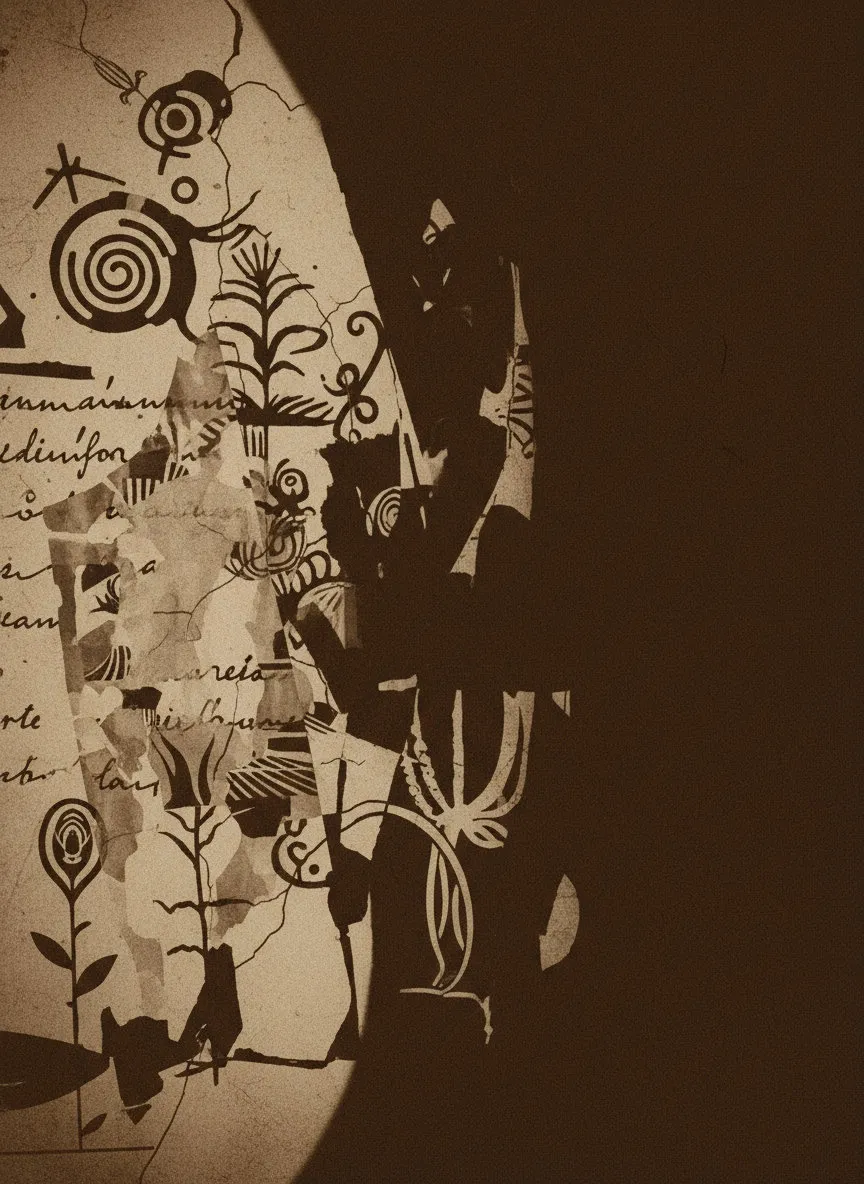
Imagine finding a book full of beautiful illustrations and neat handwriting, but when you try to read it, the words make absolutely no sense. Welcome to the world of the Voynich Manuscript! Discovered in 1912 by Wilfrid Voynich, this medieval codex is filled with drawings of plants that don’t exist, naked figures in strange plumbing systems, and zodiac symbols.
The real star of the show, however, is the text itself. It is written from left to right in a unique script that has been dubbed 'Voynichese.' The handwriting is fluid and confident, suggesting the scribe knew exactly what they were writing—there are no crossed-out words or hesitation marks.
For over a century, the world's best codebreakers—including those who cracked the Enigma machine in WWII—have tried to decipher it. They have all failed. In this course, we are going to dive into the top theories explaining what this book actually is.
Key Takeaway
The Voynich Manuscript is a centuries-old illustrated book written in an unknown script that no one has been able to read.
Test Your Knowledge
What is a unique characteristic of the handwriting in the Voynich Manuscript?
Before we look at the language theories, we have to ask: Is this a modern fake created to fool antique collectors? To answer this, scientists turned to the physical evidence. The manuscript is written on vellum, which is prepared animal skin.
In 2009, the University of Arizona performed radiocarbon dating on samples of the vellum. The results were shocking! The parchment dates back to between 1404 and 1438. This places the creation of the physical book squarely in the early 15th century, during the Italian Renaissance.
Furthermore, analysis of the ink and pigments shows they are consistent with minerals and recipes used in the medieval period. While this proves the materials are old, it doesn't prove the *meaning* of the text—but it does rule out a modern forgery on modern paper.
Key Takeaway
Radiocarbon dating proves the vellum used in the manuscript is from the early 15th century (1400s).
Test Your Knowledge
What did radiocarbon dating reveal about the manuscript?
If the text is just gibberish, why does it look so much like a language? Enter Zipf’s Law. This is a statistical rule that states in any natural language, the most frequent word occurs twice as often as the second most frequent word, three times as often as the third, and so on.
Amazingly, the Voynich Manuscript follows Zipf’s Law perfectly. The word frequency distribution matches what we see in English, Latin, or Chinese. If someone faked this in the 1400s, they would have had to invent complex statistical linguistics centuries before the field even existed!
This mathematical structure is the strongest argument against the book being random nonsense. It suggests that there is a genuine underlying system, syntax, or language waiting to be unlocked.
Key Takeaway
The text adheres to Zipf’s Law, a statistical pattern found in all natural languages, suggesting the text is not random.
Test Your Knowledge
Why is Zipf’s Law important to the Voynich mystery?
Now for the first major theory: It is a cipher. This theory suggests the text is a known language (like Latin or Old English) disguised by a code. In the medieval era, scholars often encrypted secrets to protect them from the church or rivals.
Cryptographers have looked for 'substitution ciphers,' where symbols replace specific letters. However, standard substitution creates patterns that are easily cracked, and this text hasn't yielded to those methods. Some suggest a more complex 'polyalphabetic' cipher or even a system of 'micrography,' where tiny details in the letters hold the key.
The main argument against this is the sheer volume of text. Writing a 240-page book in a complex, uncrackable code without making a single mistake would be a superhuman feat of mental endurance.
Key Takeaway
Theory 1 suggests the text is a code hiding a known language, but the lack of mistakes makes a complex manual cipher unlikely.
Test Your Knowledge
What is the main argument against the text being a complex cipher?
Theory number two is fascinating: What if it's not a code, but a phonetic script for a language we simply don't recognize? Some linguists believe it could be an extinct dialect of a European language, like 'Proto-Romance,' or perhaps a transcription of a non-European language.
For example, some researchers have proposed it could be a version of Nahuatl (Aztec) brought to Europe by missionaries, or a Manchurian dialect. This would explain why the syntax feels real but the words don't match known European dictionaries.
However, every time a scholar claims to have 'translated' it using this theory, the translation usually ends up being nonsensical or grammatically broken. While plausible, we haven't found the 'Rosetta Stone' that links Voynichese to a known dialect yet.
Key Takeaway
Theory 2 suggests the script is a phonetic transcription of a lost or exotic natural language.
Test Your Knowledge
Which of the following is a candidate for the 'Lost Language' theory?
The third leading theory is the most cynical: The Voynich Manuscript is a meaningless hoax. But who would make it? Some point to medieval con artists like Edward Kelley, who might have created a 'magical' book to sell to the Holy Roman Emperor Rudolf II for a fortune.
To pass the 'Zipf’s Law' test, the creator might have used a 'cardan grille' (a stencil with holes) to generate words, or simply engaged in 'glossolalia'—writing in a trance-like state where the brain naturally produces rhythmic, language-like patterns.
If this theory is true, the meaning of the book is... nothing. It’s a beautiful, expensive prop designed to look mysterious. While this explains why it hasn't been cracked, it doesn't fully explain the incredible labor and cost of the vellum and pigments used.
Key Takeaway
Theory 3 argues the book is a hoax or gibberish created to fool a wealthy buyer or produced during a trance state.
Test Your Knowledge
If the Hoax theory is true, why hasn't the book been deciphered?
So, where do we stand today? We have a 600-year-old book that is physically authentic, mathematically structured like a language, but completely unreadable. The debate between Cipher, Language, and Hoax continues to divide the academic community.
Recently, Artificial Intelligence has joined the hunt. AI models are excellent at pattern recognition and have analyzed the text against hundreds of languages. Some AI studies lean toward the Hebrew or Proto-Romance theories, but none have produced a coherent translation of full sentences yet.
Until we find a key, the Voynich Manuscript remains the Everest of linguistics. Whether it holds the secrets of medieval medicine or is just the world's most successful prank, its mystery keeps our imagination alive.
Key Takeaway
AI is now analyzing the manuscript, but no theory has been proven, keeping the mystery alive.
Test Your Knowledge
How is modern technology aiding in the study of the Voynich Manuscript?
Track your progress, earn XP, and compete on leaderboards. Download NerdSip to start learning.