Is this punctuation mark a stroke of genius or a writer's worst habit?
Prompted by A NerdSip Learner
Trace the evolution of literature's most versatile punctuation mark.
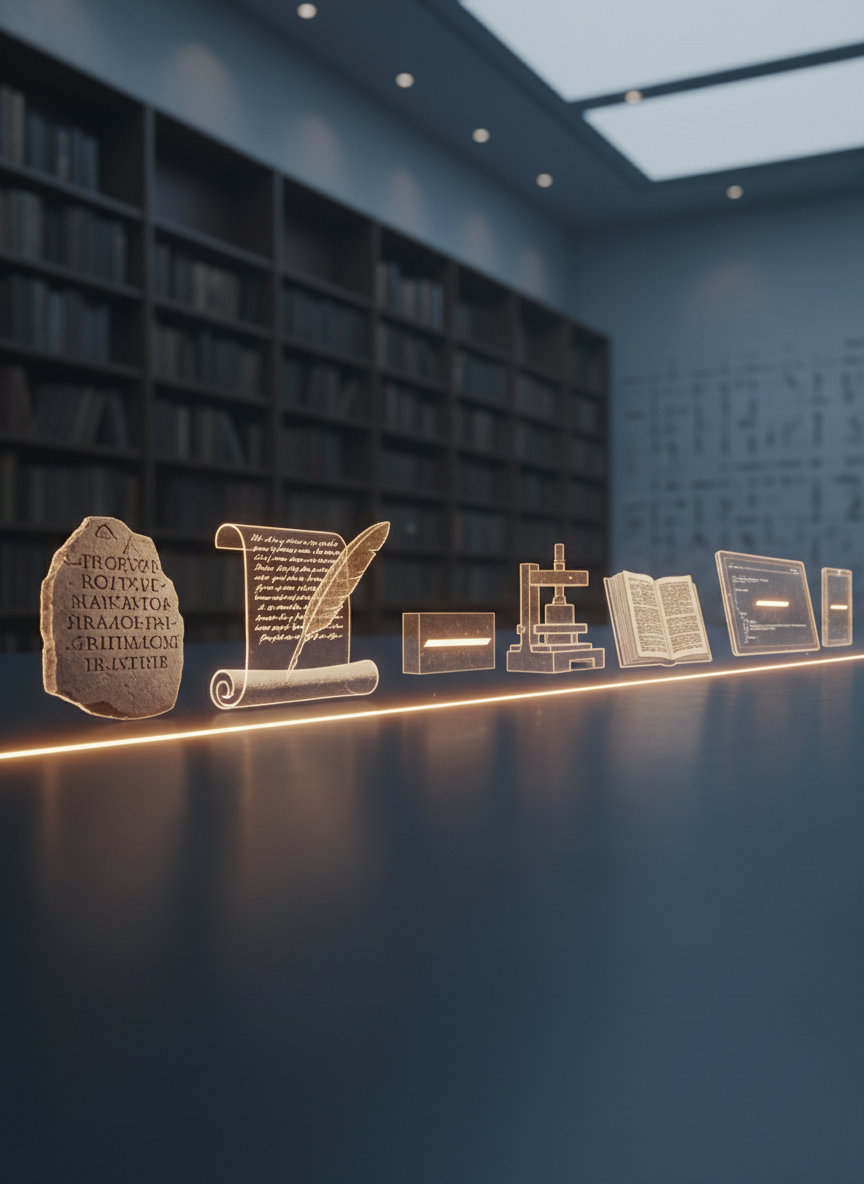
Welcome to the fascinating world of punctuation! Let’s start with the basics: why is it called an em-dash? It’s not just a random name. In the days of traditional letterpress printing, typesetters placed individual metal blocks for each character into a frame. The widest block in the set was usually the capital letter “M.”
The dash that equaled the width of that “M” block became known as the em-dash. In contrast, the shorter en-dash was roughly the width of a capital “N,” and the hyphen was the smallest of all. This wasn't just about grammar; it was about physical space and engineering!
Today, we don't handle lead blocks, but the terminology stuck. The em-dash remains the heavyweight champion of punctuation marks—long, visible, and impossible to ignore. It is distinct from the hyphen (used for compound words) and the en-dash (used for ranges, like 1990–2000). Understanding this physical history helps us appreciate why it carries so much visual weight on the page.
Key Takeaway
The em-dash is named after the physical width of the capital letter 'M' block used in traditional letterpress printing.
Test Your Knowledge
In traditional typesetting, what determined the length of the em-dash?
If you are around 30 years old, you might have a specific habit: typing two hyphens (--) to create a dash. Have you ever wondered why? This habit comes from the era of the manual typewriter. To save money and space, typewriter manufacturers minimized the number of keys on the board.
Because of this mechanical limitation, the dedicated em-dash key was sacrificed. Writers had to improvise! The standard workaround was to hit the hyphen key twice. This signal told editors and typesetters, "Hey, please turn this into a real em-dash when you print it."
As we moved to word processors like Microsoft Word, software developers built in auto-formatting to recognize those double hyphens and snap them into a single, sleek em-dash. While we now have keyboard shortcuts (like Shift-Option-Minus on a Mac), that double-tap heritage remains a nostalgic link to the mechanical constraints of the past.
Key Takeaway
The double-hyphen shortcut originated as a workaround on typewriters, which lacked a dedicated key for the em-dash.
Test Your Knowledge
Why did writers traditionally type two hyphens to represent an em-dash?
Now that we have the em-dash in the digital age, how do we actually use it? The em-dash is the rebel of punctuation. It is used to indicate an abrupt break in thought, a significant pause, or an emphatic parenthetical statement. It is much more dramatic than a comma and less formal than a colon.
However, a great debate rages in the publishing world: spacing. If you read a newspaper (following AP Style), you will see spaces on either side of the dash — like this. But, if you pick up a novel (following the Chicago Manual of Style), the dash touches the words—like this.
Neither is strictly "wrong," but they serve different aesthetic goals. AP Style adds spaces to prevent narrow newspaper columns from looking cluttered. Book publishers prefer the closed-up look because it keeps the text flowing as a cohesive unit. As a writer, your choice depends on the vibe you want to set!
Key Takeaway
Newspapers (AP Style) usually add spaces around the em-dash, while books (Chicago Style) generally leave no spaces.
Test Your Knowledge
Which major style guide typically recommends putting spaces around the em-dash?
Track your progress, earn XP, and compete on leaderboards. Download NerdSip to start learning.